Breakdown of Public Institutions and related Politics in Belize by: Aria Lightfoot


government

Who is government?

The tragic death of three teenagers in Belize, the “forgery” or likely illegal accommodation of identification cards from the institutions that hold our Belizean identity in trust; the death of thirteen babies in the public hospital; the failure of the police and judiciary to hold more than five percent of criminals accountable; the education system focused only on top performers – pick an issue or scandal and you will likely find several key elements creating problems. Some of those key elements undermining Belize’s governmental system are apathy among Public Officers; non-experts as key decision makers; lack of accountability; a system that discourages meritocracy and a deteriorating moral compass.

In order for us to understand the role of government we must define the players. The major players in government are the public officers. Public officers are duly elected representatives such as your elected area representatives from both parties; appointed citizens chosen by elected officials such as the Governor General, judges, magistrates, senators, CEOs and heads of departments; and general workers and service providers benefiting from public funding thru salaries or service contracts such as teachers, doctors, office workers and contractors.

The job of public officers is to collectively govern the great nation of Belize. In an idealistic environment government has a social and legal contract for which they are remunerated with citizens’ taxes and are constitutionally mandated to uphold, legislate, adjudicate, maintain, uplift, review laws, policies and practices. Government’s responsibility is outlined within the legal framework of the Constitution of Belize. Government provides infrastructure, healthcare, security, education etc. and government maintains institutions, provides services and works for the public good.

The public good is the services/commodities or benefits that is provided for the well-being of the society. A public good should be non-excludable, meaning that all should have access to it and it should be non-rivalrous. The use of public goods by one does not diminish the others use. Examples of public goods are roads and schools.

Why is government failing in Belize?
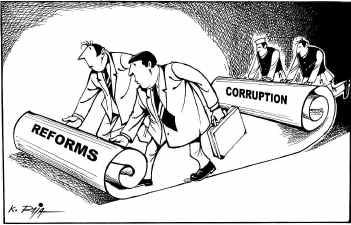
corruption2

Government is failing in Belize because there is a key misunderstanding of government’s role and responsibilities by Belizean society. Government in Belize has intentionally been redefined as only encompassing elected/appointed Cabinet members. Government is generally defined as the political party with the most elected seats. I suspect that the redefinition of government is done for two reasons. The elected cabinet uses it to showcase that they are in control of the money, careers and military. Additionally, it allows them to use public funds for political party business without causing outrage by the society. The Opposition uses the same definition to negate their responsibilities and to motivate supporters to fight for the “spoils” of electoral success and undermine the ruling party. Added to the misrepresentation of governmental role is  leadership formed with close blood ties and marital relationships making it increasingly difficult to create a system of meritocracy. Additionally, the current system creates a barrier for ordinary citizens to advance to leadership positions. How can leaders realistically give key positions to the best of the best, when wives, siblings, cousins, children, in-laws have the same motivation?  This plays out in political party leadership and in key appointments.  Sadly , many times, it is not the best who are working key positions but rather the most connected. In a country as small as Belize, the lines are easily blurred between professionalism and nepotism.

Another identifiable problem is the belief that all opinions are equal. In the professional world, opinions are measured through learning and practice. In the TV, radio,  newspaper and social media world,  opinions of the loudest advocates, not necessarily from the most learned advocates,  gets addressed.  There is no  systematic and engineered process to finding solutions  and people who are completely clueless about the mechanics of the system offer strong suggestions that many times override professional opinions and it has  caused the trained public servants to operate in apathetic robotic mode; public servants are often the sacrificial lamb to the whims of electorate opinions and winds of change.

How do we solve this?

Today a doctor posted a meme that said “Your google search cannot replace my medical degree”. It is a profound statement. In today’s information age, there are people who jump on google to engage in epic online battles. They offer opinions backed up by twenty minutes of Google research but they lack the expertise in the subject matter to determine if the information should be treated as credible. They lack the expertise to find credible solutions but they possess the confidence to make suggestions and the louder they speak, the more people attach to their ideas because it sounds right, even when it is completely wrong. The political system that is highly dependent on the voter therefore reacts to public opinion swiftly but moves slowly on expert opinions. Experts have flooded Belize with articles and researches on how to solve some of our pressing systematic problems but there are no evidence of implementation and reports are likely collecting dust  on some non-expert shelf who may not understand how to implement solutions.

Belize is in great need of project managers, engineers, and policy makers to help structure a working system, not just a system a system built on theory, not just a spoils system to reward loyalty but a system to govern legally,  effectively and efficiently. Unfortunately for Belizeans, the role of government cannot continue to function in its present state and it will eventually lead to a complete breakdown of the system. The cracks and leaks of the system are highlighted with each scandal that breaks seemingly on a weekly basis. When one crack is sealed, it creates pressure in another area and it breaks somewhere else.

bursting pipes

The third term win for the Prime Minister Dean Barrow and the United Democratic Party will be their toughest term. They are facing a world that is growing weary of corrupted governments worldwide. The first world countries will hold countries like Belize accountable for the breakdown in the system because breakdown in developing countries exposes the first world to terrorism, cyber crime, drug trafficking and money laundering. The casual manner in how we govern makes Belize vulnerable and Belize must take a proactive approach to address this. Public servants must become a professional body built on meritocracy. The average citizen must know that the system works for the average man because they are becoming cynical with the process.  Citizens must trust their government and recent scandals have highlighted a strong distrust and cynicism from electorate. The opposition will need to agitate because they want a better governing system and they must move away from petty, distracted politics. They must rebuild into a party that advocates transparency and accountability by examining their own internal leaks and cracks.  Belize must turn to experts to address this crisis.

The citizens will grow more dissatisfied as these breakdowns continue. The United Democratic Party will be judged now by their merits. There will be no one to blame anymore, so they MUST identify key people to assist with this rebuilding of Belize’s integrity and trust.  The rise of the communication age, people will be able to disseminate and organize and agitate…Democracy is alive and kicking, but we need government- all parties to work!

A reflection on Garifuna History: After the celebration, what next? by: Jerry A. Enriquez, Amandala, November 15, 2015


Jerry Enriquez

Jerry Enriquez


A reflection on Garifuna History: After the celebration, what next?

Garifuna Settlement Day, which is observed on November 19th each year since 1943 in the southern districts and 1977 countrywide, draws many Belizeans together to celebrate the arrival of the Garinagu to Belize in 1823.

Around 1823, the Spanish republics were preoccupied with endless cycles of civil wars, assassinations attempts and revolutions. Around that time most Garinagu and their communities were (and still are) found in these republics, their population having spread across the region ever since their banishment from their homeland, St. Vincent in 1797 – about twenty five years earlier. 1823 was also the pivotal year in which the short-lived Federal Republic of Central America (then, a single nation comprising of the provinces of Guatemala, El Salvador, Honduras, Nicaragua and Costa Rica) declared itself independent of Mexico.

The fear of persecution and the mere business of keeping alive within that environment of bloody revolution, necessitated the mass migration of Garinagu to join others who were already peacefully residing south of the Sibun River.

Each year, the celebrations seem to have drowned the fact that the mass migration of Garinagu in 1823 was really not their first arrival to Belize. As noted in Sir John Alden Burdon’s Archives of British Honduras Vol 2 : 1801 -1840, the decision to formally admit the first Garinagu into the settlement was made by Superintendent Richard Bassett at a Magistrate meeting held on August 9, 1802.

Nancie Gonzalez’s Sojourners of the Caribbean noted that even as early as 1799 or 1800 Garifuna men were already secretly hired by white timber businessmen to cut mahogany outside the legally designated territory. These men soon became skilled woodcutters and incomparable smugglers. It was most likely that with their assistance, Deep River and the Stann Creek area soon became occupied. That first clandestine arrangement might have provided the impetus for the white timber businessmen to later seek the permission of the Magistrate to import more Garifuna labourers.

With a total population of 2,881 persons in 1802, (of which 735 were free persons and 2,146 enslaved Africans) the settlement of Belize required a much larger labour force to meet the sharp increase in demand for mahogany in the European market.

The remaining strands of mahogany within the established territory north of the Sibun River had been largely depleted and new sources needed to be exploited south of the Sibun River, which was then outside the territory limits that was established by the 1786 Convention of London.

The persistent escape of enslaved Africans from the settlement to nearby territories also compelled the white forestocracy to seek new source of reliable labour. By that time, Garinagu had developed a reputation in the region as exceedingly friendly, energetic, intelligent, reliable and honest hardworking people who had been sought after as labourers in Spanish plantations.

Beginning in late August 1802 and again in December 1802, a total of about 150 Garifuna labourers were shipped from Roatan and neighbouring territories to the settlement of Belize to be employed to cut mahogany. As one of the first free Blacks in the Americas, the Garinagu were not allowed to live in the settlement for fear that they would join forces with the enslaved Africans to foment rebellion. Furthermore, because of their spiritual practices and their history of rebellion they were viewed with fear and great suspicion even while their labour was needed.

Consequently, they were only allowed to live south of the Sibun River where almost all of their communities have remained ever since. Slavery was still in existence then, until the Abolition of Slavery Act was put into force on

August 1, 1834 (over ten years after the mass influx of Garifuna to southern Belize) and the final instalment of Emancipation in 1838.

Only five years earlier, in 1797, the Garinagu were exiled from their homeland of St. Vincent after unsuccessfully attempting to defend their fertile communal lands against the British whose interest was to expand their sugar plantations. Failing to bribe and cajole the Garinagu to give up their lands, the British resorted to military force to engage the Garinagu in all-out war. When the Garinagu refused to surrender, the British hunted them down, burnt their houses and canoes, and destroyed their crops and food.

Between July 1796 and February 1797, about 4,338 Garifuna (mostly women and children) were captured and transported to the barren rock island of Baliceaux. There, about 2,100 died from typhus or yellow fever, which was aggravated by malnutrition.

On March 11, 1797, the 2,238 Garifuna survivors were loaded onto a convoy of eight to ten ships to be banished forever on the island of Roatan, hundreds of miles away. Over two hundred died on that perilous one month voyage. On April 12, 1797, 2,026 Garinagu (664 men and 1,362 women and children) were landed on Roatan and left to the mercy of the elements.

These stalwart ancestors formed the root stock of the estimated 400,000 Garifuna people and their richly unique culture that is predominantly found along the Caribbean coast of Honduras, Nicaragua, Guatemala and Belize.

The arrival of hardworking Garifuna labourers in 1802 significantly impacted the economy of the settlement. Burdon’s Archives of British Honduras, 1801-1840, recorded that the shipment of mahogany rose steeply from 2.1 million board feet in 1802 to 4.5 million board feet in 1803, and 6.5 million board feet in 1804, although there was an unexplained sharp decline to 2.4 board feet occurred in 1805.

The hard labour of enslaved Africans and Garinagu as they roamed through wild jungles to harvest mahogany and other timber, established the foundation of Belize’s early economic history. Such foundation was recognized in Belize’s original Coat of Arms that reflected two Black men. Interestingly, Belize’s national motto, “Sub Umbra Floreo” – meaning under the shade (of the mahogany tree) I flourish – does not reveal who was the “I” who really flourished from their labour.

For well over a century and a half since their first arrival, Garinagu communities were also known to be very productive. Small farms and productive family plots provided food and income for the family. Fishermen harvested enough for their families and for sale in their communities. In the late 1800s several Garifuna farmers were selling bananas and coconuts to steamers from New Orleans for export. From the late 1800s to mid-1900s, the port at Commerce Bight provided a stable source of income for many in Dangriga. With their multi-lingual skills, Garinagu were also known to provide best source of teachers for expanding education to remote areas of Belize. Their vibrant music, dance and food and other aspects of their culture has enriched Belize’s multicultural landscape.

While there is much to celebrate and be thankful for, all is not well in Garifuna (and Black Creole) communities. The emphasis on celebratory drumming and dancing should not overshadow the socioeconomic realities that have persistently threatened the quality of life and positive human values in our communities. After the celebrations, then what?

Indeed, the labour of Garinagu and enslaved Africans in the early settlement of Belize was pivotal to its economic foundation and country’s formation and development. Yet their descendants continue to face increasing threats of economic and social marginalization.

Divisive political party loyalties have not only torn communities apart but have also discouraged any emergence of unifying and transformational leadership. By now it ought to be clear that when one fanatically locks himself or herself into the perspectives of political parties, reactions become predictable, defensive and conflict-ridden. This does not allow for fresh unifying perspectives for building strong, caring and prosperous communities.

Overall a sort of complacency and apathy have set in while issues of discrimination, historically exploitative socio-economic opportunities, high levels of poverty, lack of self-reliant productivity, alienation from resources, alcoholism, poor dietary habits and diabetes, disengaged youths, and conflicting cultural values have all continue to negatively impact Belizean Garifuna communities – as is similarly seen in Garifuna communities in Honduras.

Traditional values and knowledge about ancestral spiritual connections, medicinal plants, natural healing and healthy foods are being lost as many elders remain disconnected from the youths. Caring community relations are increasingly being lost to the onslaught of individualistic, materialistic values that disconnect people from their inner source, their families, communities and natural resources.

This situation can and must change, starting with the awareness the wellbeing of each person is inseparably linked to the wellbeing of all. The timeless values of Garifuna ancestors are embedded in their motto: “Au bu, amürü nu” (I am yours, you are mine). As in in the African spirit of Ubuntu they recognize that, I am only what I am because of all who have contributed to my growth and wellbeing, however insignificant it may seem. The individual, family and community support for the success of each member benefits the community and future generations. Such values can go a long way to return to the path of transformation. And we can’t rely on divisive politics to do this.

Just thinking out loud as the measured rhythmic Garifuna heart drum echoes the beat of our hearts – since Africa and since Yurumein.


Winning Entry : Citizenship – Why I will vote on November 4th, 2015 written by: Jaime A. Burns Jr.


Citizenship – Why I will vote on November 4th, 2015

I have never bore witness to a purer, more innate sense of patriotism than that of the collective Belizean people. Belize boasts a national haven of resource, both human and natural. “Mother Nature’s best kept secret” remains only on the fringes of secrecy, because our earthly divinity is rapidly becoming world renowned and internationally beloved. Who then, will be selected as caretakers of our Belize? Furthermore, who will be held accountable for those choices? How do we vet and vie the candidates who seek to subscribe to the guardianship over the “Land Of The Free”? Democracy – the process which harkens our participation and gives content to the speech of the populace; therein lies the engine of our governance. My vote is my voice, and I will vote on November 4th, 2015.

In direct opposition to the carefree cliché, ignorance is not bliss, certainly not when it comes to general elections. To abstain from voting when you possess the eligibility to cast a ballot is tantamount to being wilfully mute in the discourse of our national regime. Your voice is inevitably drowned amidst the ones of those who practiced their right and adhered to their responsibility to see the one, true victory present itself on Election Day: democracy. Some vocally defeat the value of their vote, convinced that their say will not sway an election. If I may contravene from a logically-parallel perspective: one vote is resonant in adding to or subtracting from the eventual majority or minority. If there is strength in numbers, then there can certainly be weakness in few. I, for one, crave progress so mightily for Belize; my vote is my strength, and I will vote. I would be remiss not to mention, however, that even in the abstinence of voting, the candidate who is elected is nevertheless your representative. Still, refraining from voting diminishes your stake in assessing the performance of your representative, for you veiled yourself in silence when the remainder of your fellow constituents lent their voice on your behalf. Ergo, accountability – your vote is your solemn invocation of your involvement in computing Belize’s prosperity.

Men and women who both possess and present the integrity, interests, goodwill, and compassion of Belizeans are oftentimes the ones who solicit our confidence. The Belizean citizenry, however, must confront the political stigma that concurrently connotes itself with elections; i.e., corruption. It can be defeated, but only when we are willing to inject the vaccine of diligent democracy to provide for governmental health. My vote is my vaccination; I will vote. Naïveté assumes immunity from corruption; national pride compounded by wilful virtuousness asserts the fervent combat against it. My vote is my fight; I will vote. My sincere respect for the legacies of great Belizean figures – Phillip Goldson, George Price, and even Antonio Soberanis – and my gratitude for the historic strides they effected, shames any inclination on my part to abstain from the rectitude of voting. My vote is my honour; I will vote.

While most people may assess any government on a utopian premise, I implore them to accede to the position which accepts that harmony is the ideal goal, but success through respect is the realistic one. Administrations will perpetually contain divergence – we toil for the attainable synergy of all comprised, which eludes us. Admittedly, in the history of Belize, we have elected both martyrs and tyrants to our government. I feel we have been too complacent in granting communal clemency to the latter. As for the former, I have bore witness to manifest proof of the absolute and inherent patriotism in the blood of the Belizean people. That bloodline must live on, and my vote is my life. I am Belizean; “I am Belize.” On November 4th, 2015, I will vote.


Submitted by:

Jaime A. Burns Jr.

Best Entry wins $200.00BZD – Citizenship: Why I will vote on Nov 4th 2015


vote

Election Date has been set for November 4th, 2015.  Michelle Obama once said that you should not be cynical about politics – Voting is an important part of democracy and extremely important to forge a nation forward. Additionally, we the people elect our leaders who are accountable to us ….When you don’t participate, you allow someone else to make a choice on your behalf.

In commemoration of voting in the upcoming elections-

Please write a short 500-1000 word essay

or submit a video presentation-5 -10 minutes long

Citizenship – Why I will vote on Nov 4th 2015.

Win $200.00 BZD

Deadline for Essay is 10/23/2015.

Submit entries to: twocanview@gmail.com

Open to all Belizean Citizens in Belize -18 years and older


Winning Essay/video will become the property of twocanview.com


Leader of the Opposition Independence Day Speech 2015


Leader of the Opposition- Hon. Francis Fonseca

Leader of the Opposition- Hon. Francis Fonseca

Today we celebrate our 34th anniversary of Independence.
As always, we do so with a deep sense of national pride.
And, as always, we recognize and acknowledge with deep gratitude the sacrifice and courage of the leaders of Belize’s Nationalist Movement who, over many years, worked tirelessly to free Belize from the oppressive chains of Colonialism.

In these 34 years we have faced challenge and adversity as a nation and people but our spirit has remained strong and resilient.
Belize has claimed its rightful place in the global community as a proud, sovereign nation deeply committed to justice and equality for all peoples.

Indeed there are important lessons to be drawn from the past 34 years but today, for me, the more important question is: what will we make of the next 34 years? What is our national vision for this next chapter of our young nation’s history? , and are we, each of us, prepared to work and sacrifice to achieve that vision and create the society we say we aspire to?
How can we stand and work together to give focused and urgent attention to job creation; to fixing our ailing education system; to ensuring that all our people, whoever they are and wherever they live, have access to affordable quality healthcare; to fighting the scourge of crime and violence.

Nation building is not about wishful thinking, it is about hard work, commitment and participation.
Each of us as citizens of this, our beloved Belize, has a duty and obligation to be engaged in its growth and development.
This, after all, is the central message of Independence-One Nation, One People united in purpose to build a stronger, better society in which hope and opportunity abound.

This Spirit of Unity and Sense of Purpose was on full display for all the world to see just over a month ago on August 16th when a group of some 200 Belizeans under the banner of the Belize Territorial Volunteers gathered in Barranco, Toledo and journeyed to the southernmost boundary of Belize on the Sarstoon.

This journey was a peaceful, powerful statement that Belize, all of Belize, from Rio Hondo to Sarstoon, from our Cayes and Atolls to our western border is ours to protect and defend.
A clear, strong message of unity and determination in the face of the unfounded Guatemalan claim.

I repeat today what I said on this occasion only last year, “ without the ability to quickly reach our borders, patrol our seas, and safeguard our natural resources, proclaiming our sovereignty and territorial integrity risks becoming nothing more than empty, clamorous rhetoric.”

34 years into Independence, our efforts to combat poverty and inequality demand and require an equal sense of purpose and unity.
True development calls for profound qualitative change not only of the economy but also of the society.

Central to this change is Governance Reform.
Governance is the hallmark of a democratic, peaceful, just society and is fundamental to eradicating poverty and corruption, bringing about economic growth and social progress.
It is concerned with the rules, regulations and procedures that apply to the decision making process.
Decisions made in our governance systems and structures determine how the collective wealth and resources of the nation is managed and allocated and ultimately the quality of life of each and every Belizean.

34 years after Independence. 17 years of PUP. 17 years of UDP. Our responsibility and obligation is to work together in good faith to change, improve and strengthen the failing systems and structures we have in place to govern and develop Belize.

On this Independence Day, let us embrace Governance Reform by: Committing to the appointment of the 13th Senator; to re-activating the Integrity Commission; and to restructuring the Public Accounts Committee.
On this 21st Day of September let us resolve to renew our commitment as a nation and people to building a society based on equality, justice and opportunity.
This must not only be our hope and dream. It must be the foundation of who we are as a people.

Delivering his National Day Address on September 10th, 1962 the Father of Our Nation, then Premier George Price had this to say:
“ Full internal Self-Government and Independence are neither easily achieved nor successfully maintained without great effort on our part. We must work harder, produce more and improve our skills more quickly and extensively.” End of quote.

53 years later the simple clarity and relevance of this message rings loudly. Today we must work harder, produce more, and improve our skills, all with a sense of purpose and urgency.

A few months later in a National Radio Address on December 11, 1962 George Price brilliantly and passionately captured the true essence of Independence:
“The dignity of the individual as a human being cannot be fully realized unless he or she is the citizen of an Independent country, unless he or she can proudly point to their national flag among the flags of nations, sing the anthem of their country, and carry a passport issued by no other country but their own.” End of quote.

That, my fellow Belizeans, is the true spirit and meaning of Independence.
Let us awaken that spirit in each of us.
I wish you all a peaceful, safe and happy Independence Day!!

Feliz Dia de Nuestra Independencia a todos en nuestro Pais!!
May God Bless each of you and our beloved Belize.

Prime Minister of Belize Independence Day Speech 2015


Prime Minister of Belize  Hon. Dean Barrow

Prime Minister of Belize
Hon. Dean Barrow

Independence Day

September 21 this year arrives to the accompaniment of an even greater than usual celebratory chorus. And the multiple positive developments occurring during the first three quarters of 2015, have appeared to reach a flood just in time for Independence Day. Thus it is that we have now procured vindication in what was an ongoing battle to win final acceptance of our decision to take back the Belizean patrimony constituted by our nation’s essential public utilities.

For my Administration, It is almost impossible to overstate the significance of the BEL and BTL settlements. After all, this has been for us a kind of second sovereignty campaign. Now, after six years of struggle, those two fundamental Belizean assets are ours to have and hold forevermore. And to further concretize this achievement, let me announce right away that Government will be offering an additional 10% of the shareholding in both companies to the Belizean-and I stress Belizean-public, including the two companies’ employees. In the case of BEL it will mean a seat on the Board for the small shareholders, and in the case of BTL it will mean a second seat for those small shareholders. Altogether, then, it will give citizens a chance to participate in the running of the nationalized entities; and, perhaps more important, to share in the profits that the two companies are making and will continue to make. We therefore think it meet and right that all Belizeans embrace this second coming; and that this year, in these circumstances, we give particular swell to the strains of patriotism that annually animate our anniversary festivities.

The settlement capstone coming now, is a fitting acme to all that’s been happening since the start of this year. For truly the nine months between January and this day, saw social and infrastructural advances in our country that took us to the summit of those heights we have been scaling since 2008. And there is yet more infrastructure progress to come, as you shall hear in a moment.

But on the social side I want at once to express my great satisfaction at the record salary increases that, for the second year in a row, we have been able to give to our civil servants: to our teachers and nurses and doctors and soldiers and policemen and all public officers.

Our economy is doing well. The great growth of the first quarter was succeeded by a small contraction in the second, due to some difficulties with commodities and in particular the huge resource decline in oil. But grains will recover from drought, shrimp from disease, and citrus from the market conditions that saw a temporary fall in price. Meantime we are still at 2.7% in GDP year-over-year increase, inflation is just about the lowest in the region, and unemployment is significantly down.

Because we expect continued economic and revenue growth, next year should see a third salary raise for Government workers and this is really quite extraordinary. They are the largest individual sector workforce, and the multiplier effect of these big boosts in their disposable income cannot be stressed enough. They are also the bulwark of our middle class. And this Administration has always been focused on two things: bootstrapping the poor, and expanding the middle class. It is with pride, then, that we point to the social protection and job-creation efforts (especially in construction) we have chartered for those at the margins; and the growing of the public service middle class by the reclassification of administrative grades and the net rise of pay scales. In both cases, our National Bank has completed the equation by providing hitherto undreamed of access to affordable, indeed cheap, credit.

Talking about employment and wages, gives me a chance to address the situation of the workers at the Karl Heusner Memorial Hospital. Their case is a special one. They are not, with the exception of a few seconded from the public service when the KHMH Authority came into being, Government employees. So strictly speaking their conditions of service, including salary, have nothing to do with GOB. But you can’t tell them that. They know that Government still subsidizes the KHMH, and in fact to the tune of 36.4 million dollars annually. It is out of this subsidy that their salaries come, they see that GOB has been able to find more to pay its public officers, and they want equal treatment, the same access to Government’s bounty. While the situation is not quite as straightforward as they make out, we have heard their cry. And the position is that GOB will find the funds to provide them with the salary increase that, after negotiations, was agreed with the KHMH Board and the Cabinet sub-committee. We demanded something in return, though. We expect that the staff and administration at the KHMH will begin to demonstrate immediately their ability to engage in efficient cost recovery and the cutting of waste; and that they will start to move now towards the financial self-sustainability that autonomy for the KHMH was supposed to mean. Also, as a matter of principle GOB does not want simply to hand over the monies for the salary increase as a gift. We will therefore treat it as a buyout of the debt owed by consumers, by the Belizean public, to the KHMH. As of year-end 2014, that total in unpaid bills amounted to around 9 million dollars. Of course, in trading off these bills that people owe to the KHMH, we won’t be giving KHMH dollar for dollar. We will, though, pay them enough to do two things. The first is to fund the salary increase to the expected tune of just about 2 million dollars. And the second is to assist with residual costs for the new, state of the art, PICU/NICU that is to be opened next month.

The figure for this should not exceed another million dollars, since the bulk of equipment and construction monies has already been provided by the fund-raising efforts headed by my wife. At the risk of being accused of nepotism by those that do not know the proper meaning of the word, I pause now to ask you for a round of applause for Kim Simplis-Barrow; and for all, especially Oak Foundation, that contributed to making the PICU/NICU a reality.

So… This write-off to the public of 9 million dollars in their unpaid KHMH bills, which the collection agency hired by the KHMH will now no longer be hounding anyone for, is this year’s Independence Day gift to people from the Government of Belize. For the sake of completeness, and to make that gift even greater, we will also forgive all monies currently owing by patients to all Government hospitals throughout the country. This amounts to another 2 million dollars and, we are sure, will be especially appreciated by residents of our towns and villages.

Ladies and Gentlemen, my fellow Belizeans:

I said I would return to the issue of infrastructure and I do so now.

I want to point out that I had said earlier this year that we were going to roll out PetroCaribe to the rural areas, and we have done so with a vengeance. Since March we have spent around 20 million dollars in village constituencies, and we are not done yet. We have reached every single constituency, if not every single village, and this UDP transformation phenomenon is now truly countrywide, truly national.

A while ago I spoke of the economy and was pleased to emphasize its basic soundness. What I wish now to do, is to underscore that tourism remains our single largest driver, and talk a little about our plans to continue encouraging its star turn. These include additional marketing and quality improvement efforts. But they also include destination infrastructure improvement, and there are three projects in that connection that I wish to highlight. First, there is the continuation of the North Ambergris Caye road project. We have just signed a contract for the construction of another 4 miles of the road providing land access to the premier resorts on North Ambergris, making for a total of 11 miles that we have already funded. When this next phase is completed we will sign for the last few miles to take us to the Basil Jones airstrip, which we will redevelop, redesign and expand into an international airport. I am also happy to announce that Basil Jones will be renamed the Efrain Guerrero International Airport in honour of the eponymous, recently deceased San Pedro patriot. With this, we expect a phenomenal new opening up, a veritable tourism explosion, in Ambergris Caye, which is of course already our market leader.

We are also constructing a new road to Lamanai via Bermudan Landing and Lemonal. That contract has also been signed, and this will mean that Lamanai will now form part of the day trip circuit for cruise passengers and provide increased tourism opportunities to Orange Walk and to the Belze Rural North villages along the route.

Finally, and this really will constitute a new jewel in the tourism crown, we are going to do a paved highway to Caracol, with two points of origin from Georgeville and Santa Elena. We are funding locally, and have already signed the contract for, road rehabilitation from Cristo Rey to San Antonio and thereafter to the junction with the Georgeville road. Then the OPEC and Kuwaiti Funds, which are already doing the rehabilitation of the Hummingbird Highway, will partner together to take us the 40 plus miles from the junction to Mountain Pine Ridge and then to Caracol. In addition to the huge tourism boost this will provide, it also carries tremendous implications for a quantum improvement in our security protection arrangements for the Caracol area.

Talking about security, we are pleased with the disbursement start now of the 30 million U.S. Cabei loan. As has been detailed, the monies will assist the police, the BDF and the Coast Guard.

The improvement in forensic capability that is part of the deal should, together with improved policing, lead to a better crime solving and conviction rate. The community outreach of the police especially on Southside Belize City, will combine with a second surge in hope and improved living and job conditions that the commencement now of Southside Poverty Alleviation Project Phase 2 represents. Under that programme, a total of 37 million dollars is being spent on the Southside constituencies. The money funds improved streets and drains; land reclamation and landfill for low-lying yards; construction of new homes and home improvement; education, training and social development. This dramatic GOB infusion of money and resources, together with the revised Southside strategy of the police high command, should contribute to the reversal of the spike in the Belize City murder rate that this year brought.

The Coast Guard will get two new, latest model vessels for maritime protection and illegal drugs and fishing interdiction. And the BDF will be able to acquire multiple additional assets that, along with the one helicopter already confiscated and the two more coming from Taiwan by Christmas, will greatly increase its capacity as the front line guardian of our territorial integrity.

Of course, the BDF will also build the forward operating base on the North Bank of the Sarstoon River as it continues to assert and exercise Belizean sovereignty in that area. This is a sovereignty that Government and all our security forces, as a matter of first principle and existential duty, will always wholly maintain. But we do not need civilians, however well-intentioned, to complicate matters. In flashpoint situations, preservation of the sovereignty and security equation must be left to our trained, professional, and highly skilled military; a military that has time and again demonstrated its ability to take care of business and perform at a level out of all proportion to its small size.

Before I close, a word to our private sector.

The settlements with Fortis and the former BTL shareholders, will in time no doubt bring increased opportunities to partner with Foreign Direct Investment. But even now, relying only on local resources, chances are going begging. There is, for example, still not enough advantage being taken of the excess liquidity in the system. Government is therefore committed to helping you, the Central Bank and the commercial banks, work through issues that continue to bedevil the lending institutions and access to credit. Tax reform, which will rationalize the business climate and provide breaks even as it closes loopholes and seeks to address abuse, is at long last in train. And Government is determined to make doing business in this country easier, something that has to become the foremost mandate of the ministry of trade and commerce.

But I repeat that our economic fundamentals are good. Our debt trajectory, especially with compensation for the nationalizations being way below what the pessimists had projected, is eminently manageable. And with the buyout of high interest SuperBond debt with low interest PetroCaribe funds, our prospects are excellent over the longer term. As with the other sectors, then, the world-or at least Belize’s corner of it-is your oyster. We urge you, therefore, to go forth and profit.

Ladies and Gentlemen, My Fellow Belizeans:

I conclude by saying that the shades of our National Heroes, of George and Philip, are keeping watch over us. George Price was the father of our Independence and Philip Goldson the defender of our democracy. There is, in my view, quite a confluence occurring now and we are proceeding to build on two foundational legacies. We do so by consolidating economic sovereignty and cross hatching it with George Price’s political sovereignty and territorial integrity; and by expanding social protection and increasing individual opportunity to make perdurable Philip Goldson’s free speech, libertarian democracy.

In doing this my Administration, as always, seeks to do right by all the people of Belize. And as a Government on this last Independence Day before the next general elections, we stand before the bar of history fully expectant of a judgment recognizing us as the good and faithful servants we have always striven to be. So, confident in the job we have done and the support of our citizens, my Cabinet and I wish each and every Belizean, at home and abroad, a Happy Independence Day.

Que viva Belize y Dios nos bendiga.


Continue Fighting or Settle? The ongoing BTL Saga by: Aria Lightfoot


backroom-dealsThe Belize Telecommunications Limited now Belize Telemedia Limited has existed in Belize for decades and arguably one of the highest income/profit generators of any other business entity that currently exists in Belize. The profitability of the BTL has translated into financial and political manipulation resulting in one of the worst parasitic, unscrupulous and corruptive investment environment during the Musa years. The high level of questionable business and legal practices; the backroom wheeling and dealing by Belize’s elected officials; the historical fire sale of BTL’s assets escapes the memory of quite a few people and therefore the discussion has been reduced to sound bites, innuendos and further manipulation of the complex issues.

The previous caretakers had complete and wanton disregard for the people of Belize. A very powerful investor manipulated elected officials into creating an atmosphere of corruption unseen in Belize’s history. So bad was the level of corruption that the Caribbean Court of Justice, the highest court, used very strong language to describe the secret accommodation agreement. The CCJ described the ministers behavior as “repugnant”. The court further described our political leaders actions as “malignant tumors”, malignant tumors on our democracy potentially setting back Belize’s democracy by some three hundred years. With no shame as to how he acquired BTL, the very same investor represented by prominent politically tied attorneys of the previous adminstration, seemed hell bent at destroying Belize’s economic and investment climate after nationalization. Like a big bully who was put in his place, he had a lot of money, legal prowess and minions to accomplish just that.

The settlement agreement is a very complex issue. Mr. Barrow won a moral victory when he nationalized BTL. However his moral victory still does not satisfy local and international laws. The government would and has been bogged down in litigation for years. Dean Barrow’s choice was either -continue depleting the country’s resources in an unending fight or settle. Most international tribunals prefer settlement. From some indications BTL currently generates over 70 million dollars a year. The Belizean people love to talk and communicate, therefore BTL proves to be a profitable entity. The settlement of 162 million dollars may be a worthy investment for the people of Belize promising to remain for generations. Recall pre-nationalization – the secret accommodation agreement guaranteed a 15% return to the investor whether or not the company made money. So when the union members say that Mr. Barrow is just like Musa- I find their claim incredulously lacking accurate historical comparison. The union’s response is disingenuous, simplistic and political. The publicly worded reaction seemed like a knee jerk emotional tirade of egos and maybe political underpinnings. Election season must be on the horizon and feigned moral anger is brewing at every corner.

While I understand that the union wanted to be part of the negotiations, the reality is that Mr. Dean Barrow represents the citizens of Belize (everyone) and not the union of BTL. BTL does not belong to its employees; BTL belongs to the taxpayers of Belize. There are many people who depend on others to think for them, to explain the issues to them and to accept the information without further research. I implore my readers to research the history of BTL.


Force Ripe Baby: Written by and reprinted with the permission of Lisa M. Shoman


Lisa M. Shoman

Lisa M. Shoman

This is important. It is about domestic violence/ violence and abuse of women and girls in Belize. It is not pretty, and it is long, but I ask your attention.

FORCE RIPE BABY

“Every woman is entitled to the free and full exercise of her civil, political, economic, social and cultural rights, and may rely on the full protection of those rights as embodied in regional and international instruments on human rights. The States Parties recognize that violence against women prevents and nullifies the exercise of these rights.” Article 5, BELEM DO PARA CONVENTION 1994

This starts and ends with personal anecdotes but it is not about me. It is about the abuse that women in our Jewel have endured and still endure. It is about a culture, and it cuts across all classifications, ethnicity, economic class, education level, rural/urban. This does not present solutions. It is meant as provocation.

This is about unmasking. It is about facing our evil because I think we have lived with it so long, we don’t even really see it anymore.

At age 12, I had a young woman’s body. I don’t recall being proud of that fact, rather, instead of running around freely and energetically like the skinny tambran branch I’d been at 11; I began to slouch inward, and I stopped running. Generous breasts hurt when they bounce, and attract attention from people. People like your mother’s friends who call you “force ripe” in accusatory tones – as if you had wrapped yourself in brown paper with a banana to achieve ripeness. People like your father’s friends who suddenly began to ask for a big hug for “Tio “.

No, I was not hurt, but I was abused. Abusers by adults who could not leave my innocence alone anymore, because my body was “force ripe”. It didn’t get better either. It got worse.

Random men on the street would shout things, demanding acknowledgement , insisting that I smile at them, sleep with them, eat them, allow them to eat me – all without shame. And this was mostly when I was walking to/ from primary and secondary school in my white uniform. Comments about “poke” and “bread” were commonplace. No, I was not hurt, but I was abused. And I became an angry child/young woman with a smart, sharp, even vicious tongue. It was all the defence I had.

Why start there? Because a smart, sensible woman who is friend and mentor, seemed genuinely surprised that this vulturine hovering around girls who had developed early and could pass the 100-pound test, didn’t happen only in her home village.

What 100-pound test? The one where men consider you “ready”, she explained, once you weigh 100 pounds. But she seemed rather shocked to learn that an urban, middle class kid with educated parents had faced male abuse that was overtly sexual in nature, and the corollary female disapproval and suspicion that runs with it.

This came up because we were discussing the recent case of the 14-year-old Belizean child, found in Mexico, drunk, nude and raped. The question was asked – where were the parents? Her mother? Speculation about her background began. And somehow it ended up at my force ripe angry tween self and the 100-pound test.

That 14 year old child was abused, her faith, trust, and personhood viciously violated. She was severely hurt. And no one since has made any outcry, me included. What can we say? Better yet, what can we do? Do we even WANT to do anything? Are we unfeeling? Numbed into paralysis? Or is it something even more insidious, in our culture that still demands that women must be quiescent flesh, fair game for consumption of any kind by a man? Yes, that is angry feminist talk. But it is also true.

Week after week, reports of men arrested for “having sex” with minors appear in newscasts – and those are the few who are caught. Inevitably the comments on social media get around to accusing the girl child of being “wah lee hot crutch”, selling herself for money and gifts, “wanting it bad”, of being immoral, force ripe, and reckless. It is standard commentary, virulent, heat seeking and laser-sharp. It is lacerating.

The men can be bad. The women commenting are worse. The victim is abused again, verbally raped by adults, all of who, in Belize are legally obligated to protect her. Yes, ALL.

The law mandates, albeit without penalty, all adults in Belize to report all forms of child abuse. Of course, we noh bizniz. Or rather, few care, fewer see, fewer yet do report.

Both men and women in Belize watch young girls like brown hawks riding the thermals on a lazy afternoon. Like the hawk, both see prey. Women with suspicion, men, avidly. This is our ugly truth. It is so etched in our culture that it is perceived as normal, natural, inevitable. We never question it, let alone condemn it.

Girls (and women) are reduced to the sum of their flesh, breasts and butts, legs and thighs like poultry parts. We are like that old Suzanne Vega song where “backs are cheap and wings are nearly free.” Hearts are offal, along with livers and kidneys.

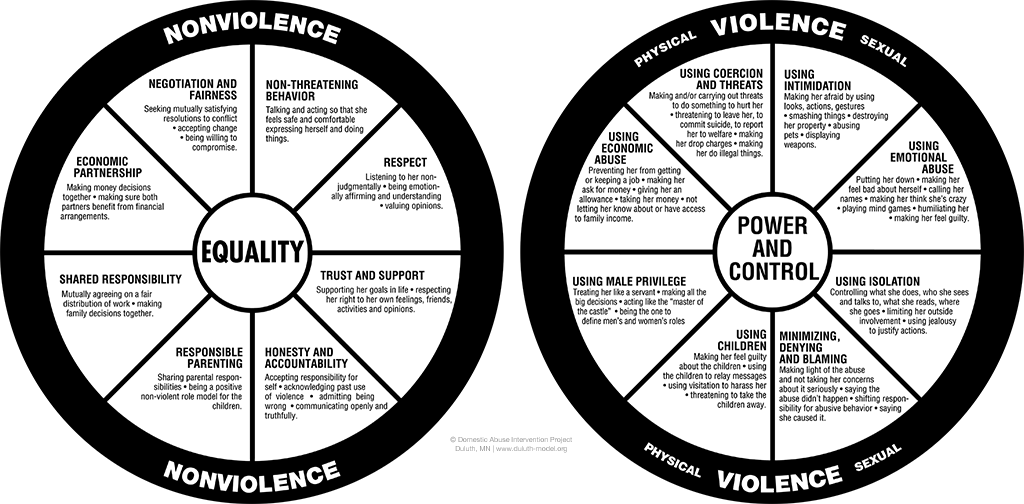
No wonder, too many girls and women in Belize end up in violent, abusive relationships with men who repeatedly abuse their human dignity, denigrate them as persons, beat them unmercifully, rape and sexually assault them, isolate them, keep them economically vulnerable, hold them hostage to their children, imprison them in their home, stab them multiple times in front of their children, shoot them, kill them. All because they fail to be cooperative flesh for the abuser.

It isn’t about sex. Sex is the weapon. It is ultimately about power, specifically, male power.

That is why I co-wrote the first Domestic Violence Act. We had no specific law in Belize against any of this in 1988. It is why, with the support of Dorla Bowman and Women Against Violence (WAV), I drafted a model Sexual Offences Bill, and a Sexual Harassment Act in the early 1990s, the latter of which was passed, but has not, to my knowledge ever been used.

It is why I helped to push for, promoted and supported the creation of the Family Court. It is why I welcomed the fact that Belize was one of the signatories of the OAS- sponsored Belem Do Para convention in 1996, which states in Article 3 that “Every woman has the right to be free from violence in both the public and private spheres.”

And still we have failed to change our culture of violence. I feel that I have failed.

I thought, in the 1990s, that all this advocacy and legal work would help to change our culture. When my friend and client, Leslie Maud Smith was murded by multiple stab wounds at the hand of her violent abusive ex on a Good Friday at her home, in front of her mother and young children, days after I had obtained a protection order for her; I thought it couldn’t happen again.

I thought that we would wake up, cry out, shake the heavens and stop this. The outpouring of grief promised it, but did not deliver. I was fatally wrong. More women died, all over the Jewel in ways that were just as brutal.

And fast forward to more than two decades later, where in April 2015, Colleen Sharp was found, battered and shot in her own home at the hand of her husband who committed suicide thereafter. Then in July 2015, just days apart, we learned of the horrific murders of Juana Cardinez-Cowo and Keisha Buller at the hands of men who claimed to love them, in the sanctuary of their home. Ms. Buller’s grandmother and child were at home when the homicide occurred, and reportedly witnessed this traumatic event.

Two days ago, yet another woman, Merlin Elizabeth Herrera Mejia was found in her home with her throat slashed, and her ex is currently missing and wanted for questioning by the Police. She may have been murdered in front of her four-year-old son.

And there have been many, many more Belizean women murdered before them. Do we even remember their names?

And it’s not just the women who have been murdered…what of those who have killed after experiencing unrelenting abuse and violence, like Nora Parham, Cruzita Godfrey, Melanie Staine, Laverne Longsworth, and most recently, Keyran Tzib.

What help did they get? Who heard their cries? Who refused to help? Who said that “dah man an ooman” business? What physical and mental health assistance did those women get?

Yet, the Minister of National Security is proposing, as his sole contribution to deal with domestic violence in Belize, that women who seek to discontinue domestic violence cases should not be permitted to do so by the State, and should be forced to “mandatory counseling”. Why? Is serious counseling available to women before arrest or trial? Will it be available after? Is any form of protection available to safeguard these women who do proceed to testify at trial?

Why is it always the women/victims who are the ones who have to bear the brunt of the criminal justice system and its disadvantages? In an article on the Amandala about Ms. Mejia, the Deputy Commander of the Southside Belize City Police formation, says that “the situation is being monitored and that the Women’s Department is taking steps to address the troubling issue.”
Don’t you feel safer already?

I have had clients who have been isolated from family and friends and forbidden to make calls; who have endured psychological torture on a sustained basis; being called mule, animal and made to feel utterly worthless, ugly and fat despite being rail thin and model pretty. I have known women who have had to beg for money for food, and even sanitary napkins, while being forbidden to work. I know another woman who was locked inside her home and had to escape by tying a sheet over a concrete third story balcony.

I had a client whose senior policeman husband would play ‘Russian roulette’ with her, and who was dragged by her hair in front of her teacher colleagues out of a nightclub by him. She moved out of her own home, only to find him sitting on the bed in her rented room, and her landlord begged her to go back home to the policeman so he could avoid any reprisal. This same senior police officer told the magistrate in my presence that my client wanted no further action. She finally left, one day, in the middle of the day with only her handbag and the clothes on her back, on a one-way flight out of Belize to safety and has not returned since.

I have physically gone to the home of women, and helped them to move out, only to watch them return – to abuse. And these are but a few, in my 25+ years of practice. And yet, I feel like a failure on the issue of violence against women, despite my advocacy and effort at law reform. One woman who I respect deeply, reminded me today that we are in crisis. In her small community alone, eight women in close proximity to her in the past seven weeks have been the subject of domestic violence. It is endemic.

You know a woman/girl who has been abused in her home. What have you done for her? If you did, did it matter? Can we change our violent culture? Do we want to? Or are we more interested in the juicy art of “shush and yerisoh” and the blood sport of “slut-shaming”?

And that brings us to that recent “sex tape” circulated on Face Book and elsewhere. How many of us watched it, instead of reporting it, sharing it, rating the ‘action’ and the ‘actors’ and commenting salaciously? How many condemned the girl?

What about the bullying/cyber bullying over nude photos of so many Jewelizean girls and women, most recently on the internet and in social media? From the one circulated to shame a female politician in the 80s, to photos of girls being circulated on Instagram, examples abound. Seven years ago, in 2008, nude photos of a young teacher on a website featuring Belizeans “babes” almost cost her job and took me about two weeks of persistent harassment of the web host to remove them. It was not obscenity concerns, but privacy considerations that made them remove the photos, because she had not consented, and we threatened to sue.

In so many ways, nothing has changed. In fact, we have gotten worse. We have new and creative ways, unrelenting in the public gaze, to shame and abuse women and girls.

So now we will have to accept that we are the evil. We are the wrong because we just tacitly accept it. We are silent about it. And no NGO/activist/law will fix this. Please don’t ask ME what to do. Ask what YOU can do, because we must all fix this. Fix this culture of treating our women like flesh to be consumed; like subjects over whom male power can be exercised at will.

I hope we want to change this. I hope. I’m not very optimistic, but I still have some hope.

That brings me to my closing anecdote. I was recently invited to a meeting – one where I sit at the table as an equal among equals. I am infamous at that table for my unvarnished speech and ‘firm opinions’. One misogynist in attendance who has long had “issues” with my facy feminist self, decided it was time to try the feel of his boots on my neck. He called me out on an issue, addressing me in that meeting as “baby” and when I protested, as “honey”. I exploded on his head. You might think it a small thing, but that day I was feeling powerful and at the same time, raw.

Raw from the constant battering that Belizean women get. Raw from being 51 and still being treated like “a girl” when I have earned my adulthood and I am due my rightful dignity. Raw, sick and tired from the constant grind of being a badass to just to survive as a woman in Belize without any visible male protector. And yes, I have survived. Survived and even thrived, in my own way – but at a cost.

To be clear: what I face is nothing at all compared to what my sisters face daily, but that day, it got on my last nerve, as we say and the kraken was released to roar in protest.

Men will continue to try to exercise power over women in the Jewel by whatever means possible – social, political, economic, sexual, religious; because that power is hard to relinquish. It is too hard to stop being a boss when society expects it of you.

As the feminist writer Chimamanda Adichie reminds us, it is not only that women have to raise our girls differently. It is also that we must raise our sons differently, or nothing changes.

Until there is a culture change, women and girls in Belize, indeed in the wider Caribbean, will continue to be force ripe babies, vulnerable to a power dynamic that see us a commodities for consumption in a society that thinks that is normal. And no. It is not. It is not normal. It is not acceptable.

Women are people too – people with dignity, worth and power. Stop trying to “strong” our power away from us, to mash it or beat it out of us. Stop trying to jack our rightful power.

Stop, think, change. Easy to say. Hard to do.

Ed note:

It is beyond an epidemic- it has to change. I dedicate this to the women who have died,  who are suffering and continue to suffer…and especially Earlet

domestic violence

The Mayan struggle for integration within Belize’s modern day society By: Hubert Pipersburgh


Hubert Piperburg

Hubert Piperburg

The rule of law is for all Belizeans and no one group should be excluded from her protection.   If we are truly going to live in a peaceful constructive nation as envisioned by our forefathers then we must have laws that promote and uphold justice for all Belizeans from the Rio Hondo to the Sarstoon. In a liberal constitutional democracy the constitution is the supreme law of the land. Mayan, Garifuna, Creole, Mestizo, East Indian and all other ethnicities that live in our nation are protected by the Constitution of Belize.

In the case of indigenous or customary communal rights, as worthy as they may be; human rights, common decency, and societal norms cannot take a back seat to it, in short, those rights ends where international human rights begins. Sweeping the Santa Cruz incident under the rug and kicking the proverbial ball down the road only leads to more of the same. It will continue to fester just below the surface.

The Santa Cruz event grants us an opportunity to seek some concrete solutions. We can live and let live or we can tackle the issue of race relations, as uncomfortable as it may be.

Despite where you fall in this debate or whomever side you chose to believe. For some, there is something that’s still not quite right with what went down in Santa Cruz. Some are willing to dismiss the symbolism of the photos and videos; regardless of the conclusions that are drawn from them, for me, they are disturbing. That incident should serve as a cautionary tale as to where intra-race and ethnic relations are heading in Belize if allowed to fester.

Now that the we have had time to reflect I can say, without reservation, that it appears as though Mr. Myles ran amuck of the manner in the way the Mayans traditionally do things via their Alcalde system. From all reports, if accurate, appears as though Mr. Myles actually built a structure on a sacred Mayan mound. If so, that’s wrong on many levels. However, It does not summarily excuse the alleged inhumane treatment of Mr. Myles by the Alcalde and his crew.

Undoubtedly, there are many that feel something is seriously wrong as it relates to race relations in Belize. However, society as a whole has been reluctant to admit this and face the issue squarely and seek solutions.

As a humanist, I unequivocally support the rights of the indigenous people down south.

However, I’m not in support of the creation of a Bantustan type enclave where tribalism and racial considerations are deciding factors. The Caribbean Court of Justice (CCJ) is the final word and foremost authority on any litigation. The court recently issued a consent decree that instructs both the government of Belize and the responsible Mayan leadership to reach an amicable solution; all parties involve must find a lasting solution that not only places Mayan land rights on a legal and administrative footing. It must also ensure customary indigenous land rights not lead to any racial separation and isolation. The CCJ consent decree was important in Belize’s struggle against racial isolation because it granted the Mayas an opportunity to find peaceful constructive ways for peaceful coexistence with all other ethnicity.

In addition, if Belize is going to avoid further Santa Cruz type incidents that can make racial separation worse and more difficult to overcome. It’s the duty of the government of Belize to develop a comprehensive policy that will make the Indigenous Mayans a permanent part of our Belizean family.

Our Mayan brother and sisters struggle is the epitome of liberation struggles where land tenure and access to and who controls land is a lynchpin for debate of private v communal lands.

My hope is that we are not missing the underlying principle of this unfortunate episode. Certainly, many Belizeans will need time getting use to the new reality that International Covenants of which Belize is a signatory grants the right to self-determination and a limited from of self government to indigenous peoples within national states

Culture Clash. Written by Aria Lightfoot


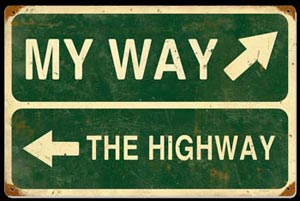
my way or highway

I have gone back and forth with my thoughts regarding the incident in Santa Cruz. Unlike many people, I was not taken aback seeing a Black man hogtied by the Mayans because I have seen that image before. The time before that, the detained man was a child molester in a village somewhere in the Cayo District.

I grew up in a smaller community in Belize, I know that residents many times take matters into their own hands, with follow up help of the police department. Village justice if you will. However, when I heard Myles’s claim of discrimination and eviction due to that discrimination,  I was taken aback. He claims that he was a victim of racial discrimination. The feisty Mayan woman in the background seems to support his claim, even though she said nothing, her body language suggested a frustrated woman. The video showing the interview with Myles also presented a young polite Mayan police obviously carrying out the will of someone else. There were several follow up photographs and video images; one with Christina Coc using a rag over her face as a sign of rebellion maybe;  and then Coc being confrontational with a local politician;  and then finally a video of the Mayans chasing out a videographer out the village with machetes in hands. All these videos were aimed to inflame emotions but really shared little information about what truly transpired, leaving the conspiracy theorists to their active imaginations. As expected, social media lit up with many opinion pieces regarding the incident, most supporters of either side accepting a one- sided version of events to make a point.

I am someone who attempts to see things from all perspectives. Many times I examine issues through heated discussions and many times I would reread the discussions and rethink my position.  I love learning about cultures and I have an affinity for Mayan culture because I grew up in a household with a young archeologist aunt who absolutely loved everything cultural and Mayan. I was also told that my great grandmother, part Ketchi, had a sister who was a traditional Ketchi woman who visited often when my mother was young. I preview that story with my opinion because I want to highlight how many of us in Belize have multi cultural interactions and relationships regardless of how we look or which culture we currently subscribe to.

Belize is a melting pot of cultures and to some extent I understand the Mayan’s plight to secure a permanent place in Belize due to changing demographics, demand and exploitation of land that has equated to a loss of security and stability for many. Recently Nigel Petillo had a similar fight and was able to secure a large plot of land divided into individual lots. I think overall many Belizeans can admit to having a fleeting sense that Belize has caught the attention of those with bigger wallets and more influence over our leaders. To another extent I see why they fight for communal land is a preference over individual properties.  The same fleeting sense warns of a foreboding that individuals would be susceptible to the influence of Big Oil and money especially in an environment of poverty made worse by the influence of western images of wealth. Ultimately, I think each side saw this dispute from different understandable angles.

Myles is in a common law marriage to a Mayan woman and have decided to live amongst the Mayans. I am not sure where Myles grew up and how he perceives power in Belize but I think that he may be ignorant to the ways of the Mayan people. This ignorance helped fuel this incident.  Evan X Hyde advocated for Indigenous and African History to be taught in schools because we were subjected to Belize history as written by the Europeans instead of Belize History – the true story. The first time I learned about the Alcalde system was taking my paralegal course at UB. The very idea was foreign to me and arguably foreign to Myles. Myles wanted to build a home with his family – a Mayan woman and children who would likely be part Mayan. The laws of Belize allows one to defend their home to the extend of death if they feel threatened and maybe Myles felt he was defending his home and did not understand the Mayan tradition or the power of the Alcalde.

On the flip side of things, the Alcade system is deeply rooted in the Mayan culture and coupled with a recent ruling with the CCJ, the Mayan has the Alcalde system and the highest court backing. They also have many international attorneys, association and financial backers, so they have become a powerful voice. They saw the actions of Myles disregard for their traditions and laws so severe that they decided to arrest and evict him. However, according to our laws, they are not granted the power of eviction and arguably they may or may not have the power of arrest based on the facts available.

The question is who is wrong and who is right? Both arguably have laws allowing them some level of power; one the power over his home and domain and the other the power over the affairs of the village. My mother use to say that power is something that many people want and few can truly handle because many have power and lack discretion.

First Myles wanted to live in a Mayan village and he ought to understand that in a small village, you have to live and socialize with your neighbors. In small places, individualism is viewed as rebellion and disrespect. He lacked the understanding of the system in place and probably didn’t take time to become a full participating citizen in the community. He lacked discretion to understand that fighting a community could ultimately become volatile fast.

Second, Christina Coc showed poor leadership during this incident. This should have been her opportunity to educate while advocating. Even with an Alcade in place, it seems that she plays a powerful role in her community. She has the respect of her people. Wearing a mask and demanding respect is no way to gain respect. When one juxtaposes Myles rebellion to the Alcade system as Coc did to the Belize legal system, you see two very stubborn people who want things their way only. Coc has powerful lobbyist friends on her side and she has well respected attorneys at her call.   She could have used the same power of the media to force the government to address the situation before it reached deteriorating levels. It has now deteriorated into derogatory cultural biases from different sides.

Third, the Alcalde maybe should have sought out the help of a higher authority before ordering action. The government moves at a snail pace and maybe a rush to action may have help to contribute to this. However I understand that as a leader in his community, there had to be some decisive action to undo the perceived threat and disrespect.

Finally, the police could have carried out the arrest in a different manner. How much of a threat did the Mayans really pose to the gun carrying officers? Arresting them at night may have been strategic so as not to cause a riot, but allowing them to dress properly should have been the very least respect shown to the Mayans who were merely acting according to the will and tradition of their leaders.

Finally, the gas-throwing politicians in the mix- you know who you are! You are fanning a dangerous flame in Belize. Racial divide in a multicultural community will blow up in your face.   Belizeans are a very interrelated people. Many of us carry the DNA of every race in Belize and we have close family members and friends from every race and culture in Belize. This is the best time for discretion- withhold the urge to gain brownie points from this incident because there are absolutely no winners. This incident was a teaching moment for me. It highlighted to me many different issues of Belize cultural identity and ignorance about cultures. The media is so heavily based in Belize City that the nation of Belize is really served up  lopsided views of cultures, news and information. The books and teachers have not done much in teaching real Belizean history and culture and the media personalities and politicians are agenda driven to divisiveness that they serve no purpose except to make what could have been settled by a mediator into an international incident.

It leads me to reach out different opinions from people I respect.  Please take time to read the entries from Christopher Nesbitt, Dr. Jerome Straughn, Mario Lara, Hubert Pipersburg and Jeremy Enriquez. Please click on the names below to read their essays

Jeremy Enriquez

Mario Lara

Dr. Jerome Straughn

Christopher Nesbitt

Hubert Pipersburg