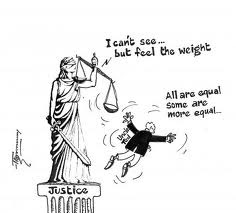
Fanning racial divisions will distract Belizeans from bigger national issues By Jerry A. Enriquez, Amandala June 28, 2015


Jerry Enriquez

Jerry Enriquez

Last Sunday afternoon, when my friend Wil Maheia shared with me his video clip and photos of Mr. Myles, a Creole Belizean man, handcuffed and tied in the Maya village of Santa Cruz, shortly after the incident occurred, I was stunned with utter disbelief, confusion and anger.

It was the same sinking feeling that haunts whenever I learn of the discriminatory and brutal harassment of disadvantaged, impoverished Black men in Belize City by U.S.-trained and funded Belizean security forces. The pointless, persistent and eager incarceration of Black men for minor non-violent offences and the consequent destruction of their families for generations also evoke within me such disgust even as it seems to have become an accepted, ministerial-complicit part of our racially color-coded postcolonial society. Such behaviour is also intertwined with history and continues to be a dominant practice in many countries.

That is why the image of Mr. Myles handcuffed and bound with rope was poignant, powerful and emotionally provocative. Despite the request by many for media persons to relate the context and facts that led to this image, none was forthcoming for several hours. Consequently, outside Santa Cruz, the general population around Belize had no other information except for hours of replay of Mr. Myles’ convincing narrative, thereby unearthing deep raw public emotions about discrimination, ethnicity and racism.

On the other hand, having also worked voluntarily with the Maya leadership for a number of years in support of their struggle for their indigenous land rights, I can affirm that making blanket statements about any race of people is itself a hallmark of discrimination. Over the years, I have had countless hours of positive interactions and richly informative discussions with the Maya leadership. This has brought about deeper appreciation of one another’s cultures and their struggles to maintain their traditions amidst the onslaught of an increasingly encroaching money-driven individualistic values that destroy self, culture, communities, and nature.

Such support was also nurtured by my personal experiences working with indigenous peoples of Suriname whose land rights struggles against their government are similar to the Mayas. Yes, there are positive and negative persons within all ethnicities. Unfortunately, people tend to highlight and remember mainly negative impacts over positive ones for years.

What Mr. Myles did to the Mayas and the response of the Mayas to Mr. Myles did not have to reach this stage if systems were in place and responsive to mediate their behaviour. Without sharing much details, Mr. Myle’s alleged that his being handcuffed and tied was as a reflection of racism by the Mayas. The Maya leaders had a different narrative. They alleged that Mr. Myles consistently disrespected their community by building his house within an archaeological site. According to the leaders, neither the police, BDF nor NICH responded to their request to assist in dealing with the alleged violation by Mr. Myles. Allegedly, when he threatened gun violence, the leaders were forced to defend themselves and subdue Myles in the way that they did.

By the time the Maya leadership shared their thoughtful narrative the following day about the series of events that led to their actions, it was too late. In these days of media soundbites, images have become more convincing than mere words. The emotional impact of an unforgiving public had taken root and quickly spread like toxic fumes across the social media, thereby threatening to erode the cautious public respect that they had earned after winning major court cases to protect their internationally recognized indigenous rights.

This incident evoked a catharsis of sorts – to unleash years of underlying pent up feelings about experiences with racism. However, we as a nation cannot remain there. We must interact and engage constructively to seek ways to nurture a healing process, to rebuild trust and community spirit. All Belizean groups were hurt and are evidently still hurt by racist experiences. The persistent marginalization and impoverishment of Black Creoles in Belize City, Garinagu and Mayas of southern Belize, for example, are not by coincidence and have deep historical roots not yet effectively addressed.

We the people have to be very careful that this concentrated emotionally divisive national response does not distract from the bigger picture of our national development. When reactive emotional responses take root, individually or collectively, genuine listening, critical thinking and the objective analysis of all angles of facts and information can get lost, and the truth blinded.

Ironically, it is the lack of understanding, awareness and goodwill, the lack of respect and connection with our common humanity and the rush to judgement of others that form the seeds of discrimination, sexism, and racism. These very qualities have prevented true nation building and have kept our nation torn by political, religious, social and ethnic divisiveness.

Through mediation, Mr. Myles and the Maya Leadership can still reconcile and resolve this issue peacefully. They ought not to allow this to drag on for long.

What this incident reveals is that there is still need for dialog towards genuine respect for all cultures in Belize. We haven’t yet begin to heal as a nation as political divisiveness continue to cloud many nation building issues. Our nation is yet to articulate a common vision and long term plan derived from the people. There is a paucity of leadership while political parties are engaged in narrow destructive ego games. Political discourse have remained destructive, immorally distorting of truth and bearing of false witness against others: – most embarrassingly poor examples for our upcoming generation.

While we try to resolve these and many other issues, we have to check our proverbial small change. We might be grossly distracted by the noise around to avoid looking at more pressing issues such as Belize’s burgeoning and unsustainable debt, unresolved unfounded Guatemalan claim, increasingly fractured democracy, discriminatory justice system, lack of accountability in the management of public finances and resources, the paucity of leadership to nurture a robust democracy, and so many other issues.

The need to heal our racial divide speaks to the failure of such institutions like our archaic churches that have remained uninspiring in their hollowed sepulchre of increasingly alienating European traditions and deities. It was their role to nurture peace, and to inspire love and community, respect and the foundations that fuel the human spirit through these challenges. They cannot even attract the youths.

Our education system also has not effectively prepared our youths to engage in critical national development issues either. Many still graduate without the awareness of Belize’s history, our Constitution nor understand how we are governed. As a result, many are rendered emotionally vulnerable to whims and fancies of slick politicians who can easily sway their decisions. A more dynamic education could have also nurtured more cross cultural experiential learning opportunities for it is the lack of such in depth understanding that have a number of leaders (hardly exposed to the lives and culture of others) ingrained in a condescending discriminatory ego-filled behaviour against others who they view as lesser beings.

It is the gross lack of understanding about indigenous rights, as well as the rights of Afro-descendant people nationally and internationally, including its historical roots and objectives that is also causing a rift in the nation. There is need for a serious discussion about this, but people must take the initiative to also do their own research about our common oppressive histories and current trends.

We cannot continue to fan discrimination against each other as Belizeans. Rather we need strategies and actions for bridging gaps, for healing and for appreciating one another. The intent to continue to divide and conquer us as a people is from a much bigger source. As Belizeans squabble, there are international interests for continuing to own more of our land and resources while we prevent our own fellow Belizeans from living as they wish. When hundreds of thousands of acres of Belizean land are granted to foreign entities in concessions or for ownership, for example, no one seems to mind. Certainly those blocks of foreign-born owned lands are totally out of bounds for any Belizean.

In this global play of huge stakes, if we as Belizeans continue to fan the seeds of division and continue to assault our own fellow Belizeans, we shall perish together. As the saying goes, “It’s not about the noise around the market, check your change.” Check? Dividing Belizeans against one another is a game that the colonizers played well to achieve their selfish objectives.

There are big people who feel hurt that the rights of the Mayas are constitutionally and internationally recognized and affirmed. They have their greedy interests. As they seek to continue to undermine plans for indigenous management of resources, they seek to set up native Belizeans to fight against each other. While they seek to hoodwink us, others are working to dominate and play “footsie” with our natural resources, our economics, our public finances, our governance and eventually all of us. Those who speak out, they want to hush.

Just check around your towns and cities, for example. Who owns most of the resources? Who are becoming richer? Who are becoming poorer? We have to rise above the jealousy, the deceit, the alienation of one group against the other and see the big picture of what is happening to our nation. Let’s stop the quarrel and channel our energies resolving the bigger picture. Let’s heal and unite, all of us. The power is in our hands. We the people. Belizeans. Respect!


Mario Lara’s thoughts on the Santa Cruz incident in Belize


Mario Lara

Mario Lara

July 3, 2015

Most people who read this essay may already have strong opinions about the Santa Cruz incident, the characters involved, the subsequent aftermath, and all the various related issues. A lot has already been said about this incident as it seems to have dominated the radio airwaves and social media. I must admit that I’m feeling very intimated as I attempt to put my thoughts on paper because I’m not entirely sure that there is anything more that can be said and I am not a blogger. But, a new friend of mine, Aria Lightfoot, with whom I’ve already had some very spirited debate on this and other topics, has invited me to write on her blog. And, I decided that this might be a good opportunity for me to step back and do a bit of reflection. I have been accused, by Aria and by others, based on some comments that I’ve made, of romanticizing the Maya and being biased in their favor. Perhaps by forcing myself to reflect some more, I might be able to disabuse myself of any negative bias that I may have. I encourage all Belizeans to step back a bit and do the same. While it is important for us to speak our minds, it is equally, if not more important, to step back and reflect a bit.

First of all, this is a very unfortunate episode in Belize for all parties involved. In the heat of the moment, there seems to be no winners here at all. But, I am of the conviction that something positive can and must come out of this tragic set of circumstances and that Belize and Belizeans can get through this stronger and more united with a clearer sense of who we are as a nation and a people, and what it means to be a Belizean in all of our various multicultural and ethnic flavors.

One of the related issues that have been front and center in the discussion is that of racism and bigotry in Belize – the darker side of a multicultural and diverse society, if you will. The allegations made by Mr. Myles Rupert that he was unwelcomed in the village of Santa Cruz, and that as a result he was ultimately insulted, humiliated, and wrongfully detained by the Santa Cruz Maya village community and village police simply because he’s black, is very disturbing and sad. The video clip of a black man in handcuffs and tied with a rope is very jarring, especially at this time when we have been bombarded on social media with images of black people being abused by those in authority. The hash tag black lives matter message resonates not just with those of us living in America but with black people everywhere within the sphere of influence of America, especially with those who have access to the Internet. So, this unfortunate incident and that video clip that instantly went viral in the Belize social media circuit have sliced open a gaping wound in the Belizean social fabric, exposing the racial bigotry and ethnic tensions that have simmered beneath the surface of Belize’s fragile haven of tranquility for decades. We’ve all been aware of it, but never before, at least not to my recollection, has it polarized us in such a quick, dramatic and tangible manner.

So moving were the images of the video clip and the news of a black man allegedly humiliated and unlawfully detained by members of the Maya community that it compelled the Prime Minister of Belize and law enforcement to spring into action and come down like a hammer on the accused perpetrators of such a heinous act.   News media outlets informed the public that the Prime Minister pronounced immediately that what the Mayan people did to Mr. Rupert was outrageous and that their disregard for the man’s human rights was unjustifiable.

Given the measured and tepid responses by the GOB to recent aggressions by Guatemala and incidents such as the grounding of a Guatemalan military vessel on Belize’s precious barrier reef, and the capture of a group of Belizean citizens by Guatemalan forces, the quick and forceful manner in which the Maya villagers were arrested, and then the public pronouncements by the Prime Minister that they were guilty even before a proper investigation or much less a court trial had been conducted was quite a shocking display of indignation toward the Maya by the Prime Minister. The fact that the Prime Minister himself is a black man is not easily overlooked in this situation; and one has to wonder whether the alleged actions of the Maya community touched a core nerve with the Prime Minister that is rooted in his black (not his Belizean) consciousness and identity.

At any rate, it has sparked a debate about race and bigotry in Belize that hasn’t fully dissipated and perhaps never will because, as I’ve said, the issue of racism and bigotry simmers beneath the surface of Belize’s tranquility.

Not surprisingly, the version of events offered up by Mr. Myles differs significantly in details compared to the version of the events offered by the Maya community. The story is well known at this point. The leaders of the Maya community assert that Mr. Myles was trespassing and living on Maya communal land to which he had no rights or permission, and that he behaved in a disruptive and threatening manner when asked to leave said land.

This brings us to another related issue that has been front and center in the discussion – the issue of Maya customary and communal land rights and the reluctance of the GOB to recognize and protect those rights.   The Maya community have engaged in a decades-long struggle in order to gain legal recognition of their customary land rights; and they recently scored a massive victory when the Caribbean Court of Justice ruled in their favor and against the GOB affirming a 2010 Supreme Court ruling that indigenous Maya land tenure does exist in Toledo and also mandating the Government to take affirmative action to protect Maya rights.

This too has caused a rift in the Belizean social fabric and even among the Maya themselves. Some, myself included, are in favor and support of Maya customary land rights while others are strongly opposed and of the opinion that there ought not be any special rights conferred to the Maya and that such customary land rights are incompatible with a modern land management system based on private ownership of property. Here too, the Prime Minister felt it necessary to make a pronouncement on the matter and he stated that the consent judgment entered earlier this year by the Caribbean Court of Justice in the Maya Land Rights case did not supersede the Constitution and laws of Belize, nor did it transfer sovereignty over any part of national territory from Government to any particular ethnic group.   The Prime Minister’s statements are not entirely inaccurate.   The Maya communal land rights certainly did not transfer sovereignty to the Maya. But, this was never in question. Clearly the Prime Minster, being on the losing end of the ruling by the CCJ, is not very supportive of the Maya customary land rights despite the courts mandate for the GOB to take affirmative action to protect Maya rights. This then casts yet a different light on why the Prime Minister may have been moved to act in such a quick and forcefully manner against the members of the Maya community, and why the Maya may have felt, that given their ignored requests for assistance from the GOB in dealing with Mr. Myles, they had no choice but to act on their own.

This then brings us to the question of whether or not the Maya community had any authority whatsoever to act on their own and to detain Mr. Myles. According to the Prime Minister, they clearly do not. He stated that they needed an eviction order from the courts to enforce land rights and remove Mr. Myles. He further stated that no alcalde system, no cultural remit can supersede the laws of Belize. Here, the Prime Minister is speaking as a legal expert; and, while he presents a strong argument, the Maya leaders of Santa Cruz differ in opinion and are likely to argue their case in court. At this juncture, since they’ve been arrested, it seems they will have no choice but to do so.

The Alcalde system has existed in Belize since colonial days.  Yet, it remains unfamiliar to many Belizeans who did not grow up in or near Maya villages that have used it as a means of administration. The Alcalde system permitted Mayan cultural practices to continue under colonial administration and has continued to function in much the same way even after Belize gained its independence.   Indeed, it is one of the pillars upon which the Maya have been able to make their case for continuity with their ancestors and upon which their claim of customary land rights is partially based. O. Nigel Bolland in Colonialism and Resistance: Essays in Historical Sociology writes:

The British authorities attempted in the 1860s and 1870s to control the Maya directly, through a system of police and appointed alcaldes, and to confine them to rented land or reserves on Crown land. When this attempt proved impracticable, the colonial administration in the 1880s shifted its policy to one of indirect rule, through elected alcaldes, and largely abandoned the idea of granting reserves to the Indians.

The evolution of this Indian policy was, in part, influenced by general financial and humanitarian consideration then prevalent in the Colonial Office, but the tiny, poor settlement of Belize was not given much attention by the chief policy makers in London. More important in the evolution of this local policy were local considerations, namely the changes occurring in the colonial political economy and, in particular, the role of the Maya themselves.

The decline of the mahogany trade and the beginnings of plantation agriculture caused the colonists to change their view of the Maya, from a threat to the timber reserves to a potential labour force. But when the hopes for plantation agriculture faded, the colonial authorities were more inclined to leave the Maya to get on with their traditional agriculture.   The role of the Maya in shaping British policy [and the shift toward indirect rule on a whole] is important, though hard to assess.

Maya customary land rights today, much as it has been in the past, are caught in the cross hairs of the local political economy and future development potential of Belize. There are powerful and high financed groups (logging companies, oil companies, hoteliers) that have interests in the lands that have traditionally been occupied by the Maya and both the history and the present day situation help to explain why the Maya are so protective of their communal lands and why the State has been so slow moving to protect those rights; and why the alcaldes and Maya activists are becoming more and more vocal in asserting their rights.

An article published in The Amandala dated June 30 references further statements made by the Prime Minister Dean Barrow as follows: “Barrow said that all Belizeans must see Government’s acceptance of the Maya’s special rights as a signal, advancement to achieving multiracial harmony in Belize, and a demonstration of respect for and pride in our Maya heritage and legacy. He said that the move to legislate these rights must move as quickly as possible with everyone embracing the process – a work which he said would be “epic in scope” and “problematic and tortuous in the extreme.” While these are nice sounding words, taken within the context of all that has been said and done over the past several decades and especially in the last few days surrounding the incident at Santa Cruz, it is difficult to accept the Prime Minister at his word and difficult to remain optimistic about the future of Belize. But, we must remain optimistic and must hold him and each other accountable.

This Santa Cruz incident has revealed some difficult truths about who we are as a nation and as a people. Our image as a tranquil haven of democracy has been tarnished and our multicultural harmony is sounding rather discordant these days. And it begs the question, are tranquility and multicultural harmony ideals that we value and are willing to work hard to protect? I hope and believe that the answer is yes. Based on some of the discussions that I have read, heard, and participated in, that hard work and introspection that is part and parcel of moving forward has already begun.   Most reasonable sounding Belizeans whether their arguments lean more toward the defense of Mr. Myles or the defense of the Maya community acknowledge that there was wrongdoing on both sides and that we can do better as a people. I find hope and something quite optimistic in that tone. Even the jarring video clip of Mr. Myles in handcuff and tied with a rope, reveals the image of what appears to be a supportive Mayan wife or girlfriend in the background and a detained person being allowed to freely speak to the camera and state his case. This video clip, unlike the images of police brutality that we’ve been accustomed to viewing, upon further review, doesn’ t simply leave us numb; it makes us question exactly what is going on in the larger context not caught on tape.   The debate that has been sparked by the video clip and tragic set of circumstances, although unnerving at first, appears to be a healthy one, or at least moving in that direction, as far as I can tell.

But, we can’t stop at the issues of racism and bigotry. It is important that all Belizeans educate themselves as much as possible about the broader issues of Maya customary land rights, the Alcalde system, the role of GOB in developing a framework or mechanism that protect the rights of Maya and the rights of all Belizeans. How can we as Belizeans claim all of the Maya history, heritage, and temples and reap the benefits that these bring to our nation in the form of significant tourism dollars that contribute toward economic growth and all of our well being, yet ignore the present day Maya struggle to assert their communal land rights? How can we honor the Maya history of resistance that is part of our Belizean identity as we resisted colonialism and struggled for our independence and as we sing in our national anthem, “For freedom comes tomorrow’s noon,” without considering the plea of our present day Mayan brothers and sisters for their rights to be respected and not overlooked, as the lands that they have traditionally occupied and administered get parceled off and allocated? Whose freedom comes tomorrow’s noon? Our own? Those of the multinational corporations? Or, those of a multicultural society insistent on forging its own unique way forward? We cannot simply allow ourselves to be easily manipulated like crabs in a barrel and pitted against each other. We need to educate ourselves, hold our leaders accountable and hold each other accountable.

Those who are interested in reflecting some more on this issue and finding out more about Maya communal land rights, the court cases and rulings, etc. can start by going through some of the information at the following web site: http://www.law2.arizona.edu/depts/iplp/outreach/mayaBelize.cfm.

I also recommend an article written by Filberto Penados titled, “Reflections on the recent developments in Toledo.” http://frombzwithhope.blogspot.com/2015/06/reflections-on-recent-developments-in.html


Mario Lara

cowfootsoup@yahoo.com

Myles Away: The Meaning of Santa Cruz and the Possibility of Ethnic Conflict. Written by Dr. Jerome Straughn


IMG_1431

It has been almost two weeks since an incident in the village of Santa Cruz in the Toledo district when a black Creole Belizean by the name of Rupert Myles was unlawfully detained by Mayan villagers and the photos of him handcuffed and surrounded by villagers have sparked an at times heated discussion about his detention. Based on his account of what happened, his detention is seen as a clear case of racism and proof is in the photos.

But in the immediate aftermath of the incident Mayan community leaders backed by the Maya Leaders Alliance stated that they did not discriminate against Mr. Myles but were simply enforcing their communal land rights. The MLA later issued a statement regarding the attempted eviction and detention of Myles. Mayan leaders stressed that Myles was detained because he showed little respect for the Alcalde of the village and was belligerent. Worse, he threatened villagers telling them he had firearm in a vehicle.

Today there are some Belizeans who believe Mr. Myles story of experiencing racial discrimination in the Mayan village of Santa Cruz, some who don’t believe his story, and some who believe that the truth lies somewhere in between. One thing is as clear as the pictures that were taken,  is whether one believes his story or not has a lot to do with their view of racial and ethnic relation in Belize, their perception of the southern Maya and their traditional culture, their support for one of the two mass parties in Belize, and most important their support or opposition to Mayan communal land rights. Within a week of the incidents Belizean were separating into two camps, and polarized individuals in each camp considered themselves to be right.
Race and Racism in Belize
           “Racism or something else” was the bold caption on a photograph posted on the Facebook page of the reporter Patrick Jones. The photo showed hancuffeed black Belizean Rupert Myles (with a rope that had been tied to his foot attached to the handcuffs) surrounded by Mayan villages armed with machetes. Because of the instantaneous nature of social media, the photo was likely one of the first photos of the incident. A responsible reporter, Mr. Jones was intentionally trying to be a responsible journalist, but nevertheless he was accused of irresponsible journalism.

In the midst of Belizean discussing the incident in social media a video was posted of Mr. Jones giving an interview about what transpired in Santa Cruz, and stating that the Alcalde of the village and firebrand Mayan nationalist Cristina Coc of the Mayan Leaders Alliance made racist comments about him living in the village. The Toledo Alcaldes Association and the Mayan Leaders Alliance would later issue a release rejecting what Myles had said and gave a detailed account of Myles actions in the village that led to his detention.
Though there has always been racism in Belize, the issue of race is often a difficult thing for many Belizean to talk about because of their views of Belize as a multi-racial and multi-ethnic country with a history that differs significantly from countries where there is deep racial divisions. But race and racism has been very much a part of Belizean history, before the Ex-Servicemen’s Riot of 1919 (often see as a race riot).

Nevertheless, Belizeans continue to believe that there is little or no racism in Belize and some Belizean who live in the United States continue to say that they never experienced racism until they came to the US. Often when the issue of race and racism is brought up there are many who feel that such discussion is divisive, and those who engage in it are often racist. But it is important to note that unlike a country like the United States, the sort of racial discrimination that exist in Belize tends to be subtle and not institutionalized. And so applying the word racism to what often occurs in the country is to use the word loosely.
The claim by Rupert Myles that he experienced racial discrimination in the Mayan village of Santa Cruz and him accusing the leaders of Santa Cruz village of violating his rights brought the issue of racial discrimination and Mayan communal land rights to the forefront. There were some who dismissed his claim and accused Myles of playing the race card. A people who have experienced discrimination and overall oppression that has resulted in them being marginalized and at the bottom stratum of countries in which they live, it has been hard for many Belizeans to believe that some Mayans such as the villagers are capable of anti-black racial discrimination.
But for some black Belizeans this was not difficult to believe, and days after the incident they recalled their experience living in a Mayan village and their experience with Mayan racism against blacks. Regardless, this claim of racism and the response to what happened was considered a distraction by supporters of the Mayan land rights struggle. In their steadfast support a discussion of Mayan racism was less than substantive or simply avoided – considered not worthy of being discussed.
What was worth talking about was what Myles did in the village. In his essay on the incident in Santa Cruz, Penados states that the incident brings to the fore number of important issues that can easily fall through the cracks. But none of those issues related to the discrimination Mr. Myles claimed he was subjected to. Nevertheless, Penados did address the issue and stated: “While in no way should we be insensitive to Mr. Myles’ claim of racism, we cannot ignore the question of Mr. Myles trespassing on Santa Cruz lands. The 2007 and subsequent rulings have affirmed that Santa Cruz residents own their lands. The village has a customary land tenure system.”

As for those who opposed Mayan communal land rights, the claim by Rupert Myles provided an opportunity to portray the Santa Cruz incident as a harbinger of things to come where Mayan communal lands rights is concerned in the aftermath of the CCJ consent order. The Amandala editorial titled “A Belizean Crisis in Toledo” suggested that in making a “big mistake” the Maya leadership “walked into a trap” when Myles was detained. But there is no indication that this was a trap. The incident simply reflected the rough road ahead in relations between Mayan and non-Maya in Toledo

   While many might not want to believe Mr. Myles story about racial discrimination in Santa Cruz, they must consider the extent to which race was a factor in the incident and address it. If there might have been an absence of deep-seated bigotry on the part of Mayan villagers, it is possible that because of his actions (seen as belligerent and allegedly threatening villagers) Myles was eventually racialized, his size helping to define him as a black man in a Mayan village. (As it relates to crime, black men in the town of San Pedro are very much racialized).In the heat of an exchange between himself and members of the community, there is a good possibility that his race became a factor in how he was perceived as a threat. He might not have experienced racial discrimination but there is a good possibility that there was the radicalization of Rupert Myles in the village of Santa Cruz.

Changing Views of the Southern Maya

If not for his accusation of racial discrimination and a rope being attached to a handcuff used to restrain him, the detention of Rupert Myles by a group Santa Cruz villagers would have not been so unusual for most Belizeans. They would have suspected that he had committed a serious crime in the village, and this was the kind of village justice they had seen before. Belizeans remembered that in the village of San Jose Succotz in 2011 there was the beating and hogtying of 62 year-old Roy Cumberbatch was accused of trying to rape a 14 year-old boy in the village. Cumberbatch was handed over to the police.
But Belizeans also remember that in 2010 Mayan villagers from San Marcos outside of Punta Gorda in the Toledo district burned down the American Crocodile Education Sanctuary of U.S. crocodile expert Vincent Rose. They did so after being told (supposedly by a local fortune teller) that two Mayan children were abducted by the couple who ran the sanctuary and were being held there. After conducting a search for Onelia and Benjamin Rash at the sanctuary and not finding the children, the ransacked sanctuary was burned down.
Lastly, fresh in the memory of many Belizeans was the 2014 illegal “communal detention” of the family of a suspected murderer in the quiet village of San Pedro Colombia, in their search for a suspect in the gruesome murder of 61 year old Agripina Coc. There was the concern that the villagers desperation for justice was taken too far.

In its editorial the Amandala newspaper tangentially suggested that Belize City Belizeans should ask themselves if they are not in need of some of the old-fashioned discipline the Maya felt pressured to resort to when they detained Rupert Myles. The editorial thought such village justice was much needed in high crime Belize City. Sympathetic to the Mayan land rights cause, but recognizing that they “did wrong,” the Amandala editorial was expressing a positive view of the Mayas, many aspects of their traditional culture, and their sense of community that many Belizean hold.

Like the Mennonites, Mayans in the villages are seen as living a virtuous life. Mayan villages that are still steeped in a traditional way of life, but confronting modernization, are what the German sociologist Ferdinand Tönnies calls the Gemeinschaft (communal society). In such a society there is greater social control and this is reflected in the role the Alcalde plays in the community and how members of the community who commit crimes and violate norms are dealt with. Focusing on the actions of Rupert Myles,
But many Belizeans no longer romanticize the Mayas and give the group an “ethnic pass.” They feel that in such a community a high level of social control can often create social problems. Belizeans also know that in seemingly tranquil Mayan communities there are crimes that remain hidden to outsiders. They are also critical of certain Mayan traditions and feel that Belizeans should not engage in cultural relativism where the some Mayans continuation of some traditional cultural practices are concerned. (Addressing the detention of Mr. Myles Penados had this to say: “The truth is that tying someone to detain and restrain him/her is not unusual in Maya communities as far as I understand.”). Lastly, with the land rights struggle the Mayas way of life (especially as it relates to communal land vs. title) has come under greater scrutiny.
It’s likely that over the course of the land rights struggle to the point where the Maya were triumphant at the Caribbean Court of Justice, the views and attitudes of the non-Maya resident of Toledo towards the southern Maya have changed. The same holds true for Belizeans in other parts of the country. And after the Rupert Myles incident, it’s likely that there is greater change in the views and attitudes of non-Maya Belizean towards the southern Maya.

Myles may have been simply dismissed by some as playing the race card when he was detained, but what cannot be dismissed is the views many Belizeans might now hold on the issue of Maya communal land rights (more negative). This should be of great concern to Maya leaders as the government of Belize moves forward in trying implement the consent order.
Communal Land Rights and Other Belizeans

In his essay Penados stated that there was a need to clarify what Maya land ownership and governance means for other Belizeans. I agree with him, but I thought he could have went further in noting how land rights is often the source of racial and ethnic conflict. Implicit in the writings of those who have addressed the incident at Santa Cruz is that after the long legal struggle that culminated with the CCJ consent order all it takes now is for the government to implement the [decree] in consultation with the Maya.
There is no mention of possible conflict in a multi-ethnic Belize of the type that occurred in Santa Cruz as a result of the communal land rights issue. All that is needed now in our “tranquil haven of democracy” is reconciliation and healing, not any attempt at critical examination of understanding why an incident described by some as a distraction had many Belizeans reacting in very emotional ways and Belizeans becoming more polarized over this issue. Myles is simply described as just a pawn in other people’s game and Joseph Estephan agent provocateur in chief.

Furthermore, some saw what occurred in Santa Cruz and the outrage expressed by many as fitting into the classic divide and conquer strategy that would benefit those interested in using and exploiting Maya land and resources. Overall, they accused the government of being part of a deliberate strategy to deny the Maya their communal rights. “We have seen what State inaction can produce in the case of Santa Cruz.” Penados states. Other went further in accusing he government of inciting non-Maya Belizean against the Maya..
In focusing on Myles on Estephan there is no acknowledgement of the genuine concerns, anxieties, and even fears of some Belizean about the issue of communal land rights for the Mayas. No provocateur was needed to stoke the fires of division. There is also no recognition of the fact that ethnoracial groups such as Creole, the Garifuna or East Indians often act in their own self-interest.

With the CCJ consent order, there is certainly a need for the government to move ahead in consulting with the Maya or their representatives, develop the legislative, administrative and/or other measures necessary to create an effective mechanism to identify and protect their property and other rights arising from Maya customary land tenure, in accordance with Maya customary laws and land tenure practices. But doing so will not be as easy as some may think.
Writing about the incident in Santa Cruz the Amandala newspaper Henry Gordon address the difficulties the government of Belize will have in implementing the consent order for what he calls special land rights. “Few seem to want to admit that is not as simple as that” he noted. ???. Globally, the issue of land rights is often a source of conflict between ethnic groups. In the case of a multi-ethnic Belize, trying to determine the possibility for such conflict rest on the country’s history and the views Belizeans hold of the country’s diversity. ???. The various ethnic groups of Toledo have coexisted for over a century, but the incident in Santa Cruz raise questions about a breakdown in ethnic coexistence over what Henry Gordon calls special land rights for the southern Maya.

Family Ties to Toledo and Learning about the Mayas
         Growing up in Belize City Toledo, and more specifically Punta Gorda was some far off place. My mother often lovingly called it the forgotten district. But my father’s family is from Toledo, Reflecting the diversity of the district and ethnic coexistence, my mother often spoke of my paternal Esther Adderly knowing some Garifuna and one of the Mayan languages.

As for the southern Maya themselves, I still remember as a child going to Friday market day at the Belize City Central Market and meeting a short Maya woman barefoot and dressed in traditional clothes. “Dah who dah woman?” I asked my mother as the woman sat beside the produce they were selling at Court House Wharf. “She is a Maya” my mother responded, “and she came from Toledo.” At that time the southern Maya were not much integrated into Belizean society and few had migrated to other parts of Belize.

Before she passed away, two Maya women from the south help take care of my mother doing domestic chores around the house. The younger women whom I often spoke to on the phone and the older woman whom I met highlighted Maya migration to different areas of Belize in search of employment and other opportunities. Before my mother passed away, I often spoke with Mrs. Balam about Mayan culture and life in the village.
Tensions in the future and the potential for Conflict


     In his essay Penados described the process in which an outsider becomes a member of a Mayan community, and how such membership is restricted. Where communal ownership of the land is concerned, he further described how one could enter Mayan village but not have permission to settle there. The Mayas struggle for communal land rights and consequently a sense of rootedness to some extent stands in contrast to the movement of the Mayas out of the villages and out of Toledo.
Where such movement and the communal land rights issue is concerned, some Belizeans in the heat of the discussion over the detention of Mr. Myles suggested that if what the Mayas are ultimately seeking is a homeland as discussed by O. Nigel Bolland, then how should other Belizeans think about them living freely in others parts of Belize. (Some also continue to question the indigenous status of the southern Maya, namely the Kekchi) Of course such suggestion of sort of an internal passport for the southern Maya highlight how divisive the land rights issue has become or can become
For over two decades the Mayas have been moving to Punta Gorda from Maya villages, and I was told by a long term resident of Toledo that this migration in the 1990s from the villages resulted in a sort of resentment by people of the town, especially Creoles and Garifuna, who noted that while the Mayas could freely move to the town, they could not freely move to a Mayan village.
In the aftermath of the Santa Cruz incident a video was circulated of a January 2015 exchange between Joseph Estephan and Cristina Coc of the MLA. In the video Estephan argued that he had a right to enter any Mayan village and while he might ask permission, which was just an act of courtesy. In response, and with a sense of power, Coc said that if he went into the village unannounced, he could be arrested for trespass. Non-Maya Estephan might be a provocateur, but this exchange highlight why there is likely to be continued tensions in Toledo and highlight one of the challenges the government will face as it tries to implement the CCJ consent order.

I like Filberto Penados believe that there will be other incidents like the one that happened in Santa Cruz. But we very much differ on why those incidents will occur. He believes these incidents will occur because the Government of Belize failed to address the situation as mandated to by the various court rulings and because agents provocateurs are busily at work trying to undermine the peace.

I also disagree with Jeremy Enriquez, who in an Amandala column titled “Fanning Racial Divisions Will Distract Belizeanssuggested that it is the gross lack of understanding about indigenous rights that is causing a rift in the nation. In some ways he is right that many Belizeans lack and understanding about indigenous rights. Indeed many paid little attention to the various court decisions. But whatever understanding they do have about indigenous rights, especially as it relates to the recent incident at Santa Cruz, there is every indication that many do not have a favorable view.

After Santa Cruz

A lot has happened since the incident at Santa Cruz where the unlawful detention  of  Rupert Myles is concerned, race and racism in Belize,  and the wider issue of Mayan customary land rights. First, the  discussion  continues – at times becoming heated – in social media and on various call-in talk shows in Belize.
On Facebook, some  have expressed their concern and disappointment about some of the comments made (mostly against Mayan land rights and the Maya) and few have stopped commenting on threads discussing the issues. As stated, the incident brought put certain emotions in Belizeans and it clarified or reinforced their views on the land rights issue. For the most part it has been a meaningful  discussion of the issue.
While  I have not been listening to the call-in talk shows,  I am sure the  comments have been interesting, but have also made  some Belizean  concerned about  the direction  in which this is heading in terms of the possibility of  ethnic conflict .
Lastly, a number of  newspaper editorials, newspaper columns , essays and blogs  have been written about the incident. There are many insightful things that have been said in some, but quite frankly, cloaked in the language of academia and intellectual discourse,  there have also been a lot of nonsensical or meaningless things said in some. What is being said is quite divorced  from the concerns of many Belizean in terms of what  Mayan communal land right will mean for Belize, especially in terms ethnic relations.
A few days after the incident of Santa Cruz,  the police before dawn raided the villages of  Santa Cruz and arrested 12 villagers. The MLA spokesperson Cristina Coc was also arrested. The villagers were taken to the Punta Gorda police station and charged with the unlawful detention of Rupert Myles (two were charged with unlawful assault) and Coc was charged for conspiracy to commit unlawful imprisonment.
The pre-dawn raid was condemned for the way in which it was conducted and the way in which the men and Coc were taken to court and were arraigned. Several of the men were shoeless and shirtless on their way to court and this image was just as shocking for many as the detention of Myles. It gave an impression of the Mayas being reigned in by the government and reporting on their arraignment Isani Cayetano, stated that “the striking image of  Mayan men disrobing outside of the Punta Gorda Police Station was as poignant an impression as the parading of Rupert Myles through Santa Cruz a few days earlier.”
But the way in which walked to court with with a red rag covering the lower half of her face and wearing a tee shirt depicting a woman with a rag over her face, in the style of the revolutionary Zapatistas the Mayan resistance movement from southern Mexico reinforced her image as a Mayan nationalist. The burly black police woman escorting her to court briefly removed the rag from her face and in doing so was perhaps asserting her authority and power. But Coc defiantly put the rag back on her face.
The Mayas were triumphant in their legal struggle and this in many ways had empower them. And after the detention of Rupert Myles, Coc supposedly had commented that what was done was “beautiful” and “empowering.” But her arrest and that of  the Mayan villagers  was a remainder of the power of the state and how it can be used.
Within a week after the 13 Mayas were arrested and arraigned, the Inter-American Commission on Human Rights  of the Organization of American States wrote to the government of Belize seeking information on the arrests of the 13 Mayas on the grounds that the life and personal integrity of the Maya leaders was at risk for defending their land.
This inquiry served as a reminder  that  the Mayas had internationalized their cause through the OAS and other international organizations and had received tremendous legal and financial support from abroad. It can be argued that such  support was greater than the support that they received from other Belizeans. Nevertheless, such support from abroad continue to be a source of power
       Lastly, while the unlawful detention of Myles highlighted the likelihood of ethnic conflict between the Mayas and non-Belizeans as a result of the land rights issue, the heated exchange between the Senate exchange between People’s United Party Senator Lisa Shoman and United Democratic Party Senator Lisel Alamilla highlighted the upcoming conflict between the Mayas (and their supporters and the Government of Belize.  During a meeting of the Senate, Shoman accused the government of having been determined legally to deny the rights of Maya Belizeans, and went on to say that nothing had been done to implement the CCJ.
But Alamilla who was appointed head of the commission to deal with the issue of communal lands emotionally accused Shoman of pretending that the Mayan leadership wanted to find a solution to the issue. “They are undermining the CCJ Consent Order” she continued to say about Mayan leaders, and described the ways in which they had done so in several villages. .
Shoman also suggested that if the government had been implementing the consent order what occurred at Santa Cruz would have never happened. This view is quiet questionable as there is a likelihood that an incident such as the one that occurred in Santa Cruz is likely to occur again, whether the government  implement the consent order with great haste or do so slowly. This is because what the term communal land really means for the Mayas (and the right and responsibilities of owning the land communally) seems to mean something different for some Mayan leaders, and this is reflected in  Senator Alamilla’s response to Senator Shoman. 
Then of course there is the issue of what the term means for non-Maya Belizeans, and what will be their response to what some Belizeans see as the Southern Maya having special rights. This is a right that doesn’t necessarily “scare the powerful” as Cristina Coc suggest at the meeting of Mayan leaders in the village of Golden Stream but it certainly is of great concern for many Belizeans.

Christopher Nesbitt’s thoughts on the Santa Cruz Incident in Belize


IMG_1428
            I am probably going to offer a counter narrative to this discussion, but it is based on an intimate understanding of the alcalde system.
          Like most Belizeans who saw the image of Mr. Rupert Myles, a black man, handcuffed, tied to a rope, on the side of the road, I was shocked and offended. The images that came out of events in Santa Cruz village were reminiscent of images of slavery, part of Belize’s painful colonial legacy. I found it jarring to see Belizeans holding another Belizean like that.
          When I first heard that Mr. Myles had been refused permission to live in the village of Santa Cruz, and was being forcibly removed, I was more than shocked and offended. I was outraged. To think that a man who wanted to live in the community where his wife was born and raised, with their children, and had been refused did not sit well with me. It seemed to me to be a huge injustice.
           I think many people who saw the images felt similar feelings.   I had the opportunity to work with the people of Santa Cruz and Santa Elena in 2012, installing photovoltaic lighting systems in their schools and in the Rio Blanco National Park. I found the people to be hard working, good company, fun, concerned for the future. At that time, the highway was being run through their villages, and graders, and dump trucks, and bulldozers and other heavy machinery were passing through the village all day. While the work environment as we built the photovoltaic systems was good, the conversation was about the future. The threat everyone identified was Guatemala.
          The highway passes right through both Santa Cruz and Santa Elena. I had worked up there in the 1990s in the cacao industry, and at that time, there was a simple one lane dirt road that went up, up, up. In the rainy season, that road could be challenging. Very little traffic went there, because beyond these villages there was only Pueblo Viejo and, then, after a tunnel of green, the little frontier town of Jalacte. Any traffic that went there, or beyond, turned around the way it came in, when it left.
          Now Jalacte is a larger village, with San Vicente north past Jalacte, on the Belize border. The road, now, is a large road, mostly paved, and, instead of a tunnel of green, there is a broad sweeping vista on all sides of bean fields, corn fields, and there is no shade. There is a regular bus up to the border, even though the border crossing is not an official port of entry. Change has come to that area, in the form of immigration from Guatemala, environmental degradation from cleared land, land that has been cleared and does not benefit Belize. All of the production is heading to the border, to feed the insatiable and growing market of Guatemala.
          In 2012, while working closely with men and women from these communities, I found them to be kind and considerate. Not once did they say anything even remotely racist. My friend, Marlon Sutherland, from Belize City, was helping us on this installation, and he is a large Creole man. The people who worked with us treated him with the same level of respect and kindness they treated me and the rest of our small crew, laughing, running jokes. The younger guys made jokes with the men in the road crew, down from the city, working in the area, and seemed to have a rapport with them. So, I had a level of disconnect with what I was hearing, the images I saw, and the community I knew and worked with. What happened to the kind people I knew? Where did this come from?
          The backlash in non-Maya communities was instant, and strong. “Who are these Maya who deny us the right to live in their community, yet they can come da PG and tek land?” While it is a protocol laden exercise for non-Maya to move to a Maya community, it is very easy for a Maya person to move to town. And they have, by the hundreds, seeking jobs, education, opportunities. In 1986, when I first ended up in Punta Gorda, there were few Maya people living there. What is now called “Indianville” was old pasture, with old logging roads. I used to ride a mountain bike back there. Punta Gorda has doubled in size, and then some, in the last 29 years. So this sentiment, which had been smoldering for years, became a loud uproar.
           As time went on, more information was revealed. The first paradigm shift I had was when I read that he had moved into the village without consulting anyone, just taking a piece of land with no consultation with the community, or the alcalde. I was surprised when I heard that. Communal land does not mean a free-for-all. One does not grab land. There are procedures. There is a process. The alcalde is a central part of that.
           I have lived in San Pedro Columbia since 1988, the largest Kekchi Maya community outside of Guatemala. While the village is predominantly Kekchi, we have Mopan, Meztizo, East Indian and Creoles living here. I live up river and across the river on what has been traditionally occupied by Mestizo, Creole and East Indian people, and the alcalde system is a part of life here. From village fajina, where the men come together to open trails, clear felled trees on the river, clear around the school, clean the village burying ground, to clear the boundary of the village, or to court for misunderstandings, the alcalde is an arbiter of disputes, a coordinator of efforts, and the voice of the village when speaking to external entities. The alcalde is generally a man, but, in recent years, there have been female alcaldes in villages in Toledo.
           Santa Cruz is a traditional Maya village, eschewing private property for communal lands. The Alcalde is a very important institution in Maya communities, and there are protocols to be observed when you work in any community. When preparing to work in a Maya community, one always makes ones intentions clear to the alcalde. I have installed photovoltaic lighting systems in schools in various Maya communities, some village level photovoltaic water pumping systems, provided training in agroecology and permaculture, worked in the cacao industry, and one of the first things you do when working in any of these villages is to go speak with the alcalde. Sometimes its a formality, like when we install a lighting system in a school. There are no objections or any involvement from the alcalde. Sometimes they help to negotiate with the community to facilitate the project, like when we installed photovoltaic water pumping systems. In those instances the Alcalde found us people to help dig the trenches, haul the material, assist us in our work, and then to facilitate the training to manage the systems, and then set up water boards.
            One of the things the Alcalde system does is tie the present and the future to the past. In these times of dynamic change, when young people are leaving the villages to find work, when over %90 of households in Maya communities are considered to be living in poverty, when many men and women migrate to find jobs that other Belizeans would not take, when young Maya people are bombarded with imported massages from US television, the alcalde system offers a form of stability in a rapidly changing world. It is a central part of Maya culture and life in Toledo District. It is part of the fabric of the community. There have been some good alcaldes, and some bad alcaldes, some hard working, and some not so hard working. They are humans, like the rest of us.
           After hearing that Mr. Myles had moved into Santa Cruz without approaching the alcalde, I then saw letters the village had written him, asking him to stop building, to come meet with the alcalde. In his own words, he not only did not meet with them, he expanded his house and activities on the land he had selected. I then read that he had bulldozed a land into what the village had set aside as a reserve around the Maya site of Uxbenka. I saw the letters about his move onto the Maya site. I thought, “Wow. How did that happen?”
          When I heard that he had a confrontation in the Alcaldes court, the pounding of the desk, the abusive and disrespectful language, the threat to retrieve the firearm, I had a “Wow. How did that happen?” moment, again, because I have lived with the alcalde system for the last 26 years. It is hard for people who do not live with the alcalde system to understand this, but the alcalde system is court. Its not “like” court, it IS court in Maya communities. That is an egregious act of disrespect, and one that would lead to detention.
           To understand how disrespectful that is, imagine some outsider in a dispute at the Magistrates Court in Belize City. Imagine the outsider, from Santa Cruz, being unhappy with the way court was proceeding, and then pounding his hands on the Magistrates desk, and telling the court he was going outside to get a firearm. I think everyone knows exactly how that would play out. They would be found in contempt, charged with use of threatening words, and most likely end up in Hattieville. Mr. Myles was very clearly in contempt of the village Alcaldes court.
           The Alcalde is appointed by the community. It is not political. Unlike the Village Council, which is political and partisan, the alcalde is selected based on the respect of the community. There are laws about the Alcalde, and the Alcalde does have power of arrest.
According to the following excerpts from:
INFERIOR COURTS ACT CHAPTER 94 REVISED EDITION 2000
PART VII Alcalde Jurisdiction Preliminary
72.-(1) Except as provided in subsection (2), no appeal shall lie from a judgment of an alcalde court in the exercise of its civil jurisdiction. (2) With respect to a judgment pronounced in proceedings taken under section 70 (1) (b), any party aggrieved by the decision of a court may require the court to transmit to the Chief Justice all papers and documents connected with those proceedings together with the reasons for the decision and therein, and the Chief Justice shall make such order as the justice of the case requires.
73.-(1)The criminal jurisdiction which the court has, and is capable of exercising, is to hear and determine the following criminal offences- (a) riotous and disorderly conduct and breaches of the peace; (b) common assaults; (c) trespass and malicious injury to property, the damage resulting from which does not exceed twenty-five dollars; (d) larceny and praedial larceny where the value of the goods or articles does not exceed twenty-five dollars; (e) threatening and abusive language; (f) fraudulent evasion or attempted evasion of customs duties where the value of the goods or articles does not exceed twenty-five dollars; (g) the commission of any wanton or mischievous act causing damage or annoyance to any person.
and
(2) Every person convicted before a court of any offence shall be liable to a fine not exceeding fifty dollars or to imprisonment for a term not exceeding two months.
and
75.-(1) The Attorney General may, by Order published in the Gazette, appoint a fit and proper person an alcalde in each district.
      (5) An alcalde or deputy alcalde when functioning shall be the president of the court and shall have and exercise all the jurisdictions, powers and authorities of the court in the district in which he is appointed.
 85. If anyone commits an offence which is considered by an alcalde to be of a more serious nature than those set out in section 73, or any indictable offence, he shall be conveyed on an order of the alcalde to the nearest summary jurisdiction court and the offender shall be dealt with according to law.
86. The alcalde may, with the approval of the Minister first had and obtained, use as a prison for the purposes of this Part any fit and proper place within the district of his court, and exercise such lawful means of securing any prisoner, as may be necessary for his safe detention during the term of his imprisonment, or he may deliver that prisoner, or cause him to be delivered, to the Superintendent of Prisons, with a warrant of commitment and the Superintendent of Prisons shall imprison him in a convenient prison in terms of the warrant
          When Mr. Myles behavior became aggressive, when he threatened to get a firearm, it is not a surprise he was detained. This does not make it “okay”, but banging his hands on the Alcaldes desk, threatening to get a firearm? The result was predetermined. It was inevitable. To those who think this is because he is black, I know, for sure, that this would have happened if he was Maya. In fact, I doubt things would have gone as far as they did if he had been Maya. They would have dealt with this much earlier.
          Many people have said that Maya people, or the people of Santa Cruz are racist, or xenophoic, but I do not think that this is the case. I believe that if Mr. Myles had decided to go through the alcalde system, he would have been allowed to live in Santa Cruz. There are numerous non-Maya men, East Indian, Mestizo, Creole and Garifuna, who live in Maya communities in Toledo, and non-Maya women have married to Maya men. And they live in the villages without problem. Some just ended up with land in a Maya community without a partner. All of them showed respect to the alcalde system.
          In closing, I want to clarify that I am not saying that Mr. Myles “deserved it”. He did not. What happened was unfortunate and regrettable. He did make the outcome that occurred unavoidable by the standards of the community he ostensibly wanted to be a part of with his behavior. It is unfortunate that the community responded the way they did, but it seems that at the time, there appeared to be no alternative. I hope that if Mr. Myles wants to make a life for himself in his wife’s village, he will be allowed to go through the normal channels, and one day be an accepted part of that community.
           I hope that this cools off, and the high emotions felt, now, fade, and we all go back to being Belizeans, who love our country.
****************
_____________________________
Christopher Nesbitt
Maya Mountain Research Farm
San Pedro Columbia, Toledo
PO 153 Punta Gorda Town, Toledo
BELIZE,
Central America
Country code 501-630-4386

NEITHER OIL NOR WATER-By Therese Belisle Nweke


wateroilIn AMANDALA’S editorial of 15 May, 2015, “THE OIL OR WATER …” the position advocated was that tourism (water) should be the preferred alternative to the oil industry. Beyond any doubt, the Barrow administration of Belize is determined to fully pursue the fossil fuel route in its avowed aim to develop Belize. However, there is a caveat to this “Drill, we will” approach. It is a known axiom that nations which rely on natural resources alone to develop their economy not only come to grief, but eventually end up in a bad way. The following should be carefully noted:


  1. Nations with an abundance of natural resources, particularly non-renewable ones like oil, gas and minerals, tend to have less economic growth and develop at a slower pace than those with very little or none. While Africa is the world’s most mineral endowed continent, it is also the poorest!


  1. Oil wealth invariably creates a crony capitalist culture and a rentier economy, in which a tiny, powerful elite flourishes at the expense of the development and human rights of the majority. This is true in Nigeria, Angola, Gabon, Equatorial Guinea, and Latin America, but also in the Middle East, where although the Saudi and Qatari rulers in many ways have bettered their people’s lives materially, democratic institutions are either weak or in abeyance.


  1. The sudden flow of petro-dollars make many oil rich nations to neglect or ignore non-oil sectors, such as agriculture and manufacturing, which are relatively less competitive.


  1. Environmental degradation and the pollution of land, rivers, the sea and the air through oil spills, gas flaring, hydraulic mining, leaked chemicals, dredging and deforestation are the norm, rather than the exception. Random examples of these are the 2010 oil spill by BP in the Gulf of Mexico, Exxon Mobil in Nigeria’s Niger Delta, with a record of 7,000 oil spills between 1970 and 2000, with more counting still, Texaco’s drilling in Ecuador’s rain forest which severely polluted that country’s stretch of the Amazon river (the damages sought were up to $27 billion), and in Papua New Guinea; where it will take more than 300 years to clean up billions of waste dumped in the Ok Tedi River by a mining company which closed shop three years ago.


  1. The rise of illegitimate entities which take control of land, sell mining rights, oil blocks, crude oil, diamonds, timber, etc., to international companies and foreign players. The natural resources of these resource rich nations are smuggled and sold by criminal gangs, duplicitous politicians, and government officials. This facilitates a tiny, rapacious elite to acquire enormous assets and political or military clout at the detriment of the nation, resulting in civil war or other types of armed conflict within and across borders.


  1. Oil is a commodity that is exposed to global market swings, and revenues rise and fall at will. The fall in oil prices from $110 a barrel in May 2014 to the current $65 is emblematic. This is equally true of other natural resources and primary products such as gold, platinum, bauxite, uranium and tantalum, as well as sugar, bananas, cocoa, cotton and timber.


  1. The role of transnational companies which, because of weak governments, inadequate laws and ineffective enforcement mechanisms, exploit local resources and labour, engage in opaque accounting practices and “cook the books” to pay as little taxes as possible, stultify the growth of local business, create monopolies, and manipulate naive politicians and other selfish vested interests to implement transnational goals.


  1. The hierarchical system in international trade is stacked heavily against nations with natural resources, as the economies of developing countries are cynically exploited for short term gain by the key actors in the international trade market.


  1. Global institutions like the World Bank, the IMF, and the World Trade Organization (WTO) are complicit when they inhibit nations whose resources consist mainly of primary products from acting proactively in the international trade market.


  1. The impending decline of fossil fuels as the world intensifies its goal to acquire clean energy.


Recently, the oil minister of Saudi Arabia, Ali al Naimi, proclaimed that solar power will benefit the Saudi economy far more than fossil fuels. He also predicted that within the next two and a half decades the world will no longer need fossil fuels. This is remarkable coming from a nation which is the world’s largest oil producer, with foreign cash reserves amounting to $697 billion. It is equally remarkable that global investment in renewable energy jumped 16 per cent in 2014, with solar obtaining more than 50 per cent of total funding for the first time, driven by an 80 per cent decline in manufacturing costs for solar in the last six years. What is also relevant is that unlike oil, which encourages the growth of a parasitic elite, renewables, as is the case in Germany, work best when communally owned.


AMANDALA, in preferring tourism (water) to oil, seemed to settle for a type of tourism which emphasizes environmental protection; in other words, eco-tourism. This, however, has its own caveat. In a series of interviews I had in the early 1970s with George Price for my thesis, I realized that his contempt of the tourism route for Belize relied less on an idealized concept of his maternal Mayan heritage, that is: “a protective vision of Belize’s land and sea”, than a rational, material and even non-conformist belief at the time of the tourist industry. On the rostrum, at the PUP political meetings I used to attend in the 1960s, Mr. Price clearly enunciated this in his slogan: “We don’t want to become a nation of WAITERS”! He equally promised us then:” Ham and egg and every child a bed”! George Price was obviously out of step with the times, because Caribbean nations such as the Bahamas, Jamaica, Barbados, Bermuda, and Cuba (before Castro) had all swallowed the tourism pill. Love or loathe him, Price was right then, as he would be now, if he were still around.


International tourism, whether mass, standard commercial, or eco, is controlled by large international companies. Tourism in Belize is dominated by foreign developers and their agents; and the few “indigenous” Belizeans who think they are part of this narrative are mere pawns on a giant chess-board. The tourist industry is highly competitive and relies heavily on efficient, streamlined services and customer satisfaction. Eco-tourism is the type of tourism in which people visit fragile and relatively undisturbed natural locations, and is supposed to be small-scale with low impact. When properly managed it ought to build environmental awareness, pay for conservation measures such as biological diversity and ecosystem protection, respect local culture and empower host communities. In most cases, this is observed in the breach, as it is difficult for tourism to be both ecologically sustainable, as well as culturally and socially responsible.


Most research indicate that the more popular an eco-tourism destination is the higher the rate of destruction to the environment. Despite so called government protection, many forests which tourists visit still lose thousands of hectares annually to logging companies (legal and illegal), slash and burn agriculture, trophy and exotic pet hunters, with local fauna harvested for economic gain. We find that the rhino is hunted, poached, and killed in Southern Africa and Asia for just its horns, which in Asia, particularly among the Chinese, is a billion dollar industry because of the horns supposed medicinal properties. Today, the rhino, which has been around for 40 million years, is facing extinction, despite NGO and government remedial measures to stem this.


The environment is one of the major victims of tourism, as factories churn out the daily needs of the industry  – aviation fuel, car, bus and boat fuels, whether diesel or petrol, which are part of the industry’s constant travel requirements. Neither should we ignore the flights by air, which release tons of greenhouse gases to further pollute the atmosphere. Cruise ships add little real value to any host nation’s economy, for besides their short and restricted stays they wreak immense and unquantifiable damage to the environment. The oceans, coral reefs, marine life and pristine coastal waters through which they traverse are seriously affected and polluted due to their dumping solid waste, sewage sludge, bilge water (contains oil and grease), graywater (contains laundry, kitchen and bath water) ballast water (various kinds of discharged water), incinerator ash, and other types of harmful waste that their treatment systems cannot neutralize.


And, while tourism does generate income via taxes to the government, much of it goes to the foreign developers and their agents, and is eventually lost in capital flight. Nor is the hoped for expansion of the economy real, as tourism is easily subject to shocks in the international system, and changes in the host countries. Note the following: Ebola in Sierra Leone and Liberia, terrorism in Tunisia and Kenya, political upheaval in Egypt, Sri Lanka and Zimbabwe, at different points in time.


The price of land and related products escalates due to pressure and speculation, with ordinary citizens unable to afford either. And, that is why San Pedro, Caye Caulker, Placencia, Hopkins, most of the nicest locations in Corozal and Cayo, and soon enough Punta Gorda, are not owned by “indigenous” Belizeans; with the Chinese and Indians carving and sharing Belize City between them, with their huge architectural monstrosities and ghetto-looking, little shops the standard feature of our urban landscape. Again, we find resources like land, water, and electricity being diverted to tourist resorts to satisfy their needs at the expense of local people. The so called employment benefits from tourism remain a mirage, since most jobs exist at the lower and poorer end of the service sector in the form of drivers, guides, attendants, receptionists, security-men, cooks, cleaners, bartenders, bouncers, waiters and hangers-on.


The jury is still out on whether tourism, even in its eco form, contributes to the erosion of the traditions of the host countries, and subvert cultural mores and values. For even when local culture is displayed, it is often packaged to suit Western needs, hence the tendency to bastardise customs to fit Western expectations. There is thus a concomitant rise in prostitution, pimping, homosexuality, lesbianism, pedophilia, vulgar dressing, drug/alcohol abuse, drug trafficking, gambling, and an increase in HIV/AIDS and STDs. We have seen the latter in Haiti, the arrival of the gigolo culture in The Gambia, pedophilia and pimping in Thailand and the Philippines, and casino-style gambling in Aruba, Curacao, Macau, the Bahamas, South Africa’s Sun City and Puerto Rico. In other words, tourism encourages softness and breeds corruption, just as the oil industry does. This, clearly, does not make it a better alternative for Belize – or, as the old Kriol adage warns of “choosing between black dog and monkey”.


What then for Belize, if neither oil nor water? It is instructive to understand that wealth creation is not dependent on factors such as natural resources, land, and large populations and labour. Japan, South Korea, Switzerland and Singapore have neither natural resources and land, nor large populations, yet they are wealthy. These nations demonstrate that wealth is largely obtained and sustained by investing in manufacturing products that are imbued with value and insight, yet having a competitive edge not only in terms of content, but cost and specialization. The economies of these nations rely on the principle of economic complexity, and not on specializing in areas without much prospect for future development.


However, the prime force which reduces inequalities within and among nations and enable them to become successful as the ones indicated here, is the diffusion of knowledge and investment in training and skill. Therefore, when AMANDALA advised Dean Barrow to: “focus on educating and training the children of Belize by any means necessary”, it was advocating the type of strategy that a formerly poor China, and a tiny, colonial outpost, named Singapore, used, to catch up and compete with the world’s rich and powerful nations. Thomas Piketty in his authoritative work: CAPITAL IN THE TWENTY-FIRST CENTURY (Belknap, Harvard University Press, 2014), supports this, when he asserts that Japan, South Korea, Taiwan and China are successful not because they benefited from large foreign investments – China still imposes controls on foreign capital investments – but because they themselves financed the necessary investments in physical capital and even more, in HUMAN CAPITAL (my emphasis). Piketty equally states:


“. . . The poor catch up with the rich to the extent that they achieve the same level of technological know-how, skill, and education, not by becoming the property of the wealthy. The diffusion of knowledge is not like manna from heaven: it is often hastened by international openness and trade (autarky does not encourage technological transfer). Above all, knowledge diffusion depends on a country’s ability to mobilize financing as well as institutions that encourage large-scale investment in education and training the population while guaranteeing a stable legal framework that various economic actors can reliably count on. It is therefore closely associated with the achievement of legitimate and efficient government . . .”

This, then, is the road, well travelled, that Belize should take – and not that of oil, or even water.

* Therese Belisle Nweke writes from Lagos, Nigeria


Editors note: 

Therese writes an excellent piece, however I take pause with her comparing homosexuality and lesbianism as negative lifestyle choices influenced by the West. Homosexuality is  not unique to humans, it is found throughout nature and have always existed in Belizean culture and human culture, throughout history, biblical times….AL  


IF BELIZE’S 7TH AMENDMENT IS REVIEWED … by Thérèse Belisle Nweke


diaspora.final_.full_Amendment 7 of Belize’s Constitution clarifies the rights of Belizeans who hold dual citizenship. For sometime now there have been appeals for its review in order to confer full citizenship rights to Belizean-born citizens who possess dual nationality. In other words, if reviewed, this group of Belizeans would be able to participate fully in Belize’s political process by voting, standing in elections, and holding political office. They cannot do this, as of today, unless they renounce their other citizenship. Belize’s population is approximately one third of a million people, and it is known that more than one half of this figure live and work abroad. It is called Diasporan Belize. Most Diasporan Belizeans have dual nationality, and they, more than any other group, want the 7th Amendment to be revisited. In fact, it was in response to the demands of Diasporan Americans, that the U.S. many years ago allowed this category of its citizens the right to participate in American politics, even while abroad.

There are three reasons why the 7th Amendment to Belize’s Constitution may not be revised by the Barrow administration, or that of the P.U.P. when it returns to power. First, the financial cost will be high, and Belize has no money. Second, the pressure on Belize’s human and institutional capacities to allow for voting outside of the country will be enormous; and these are severely limited. Third, and most significant, the political will is largely absent.

It is fairly obvious that the Belizean Diaspora is deliberately misunderstood, undervalued, disrespected, and thus kept “in its place” – out and away from Belize. Indeed, among the blind at court, the one-eyed reigns as king. So, specious and stupid reasons such as divided loyalty, lack of commitment and national security risk are bandied around to keep this group of Belizeans at bay. Unfortunately, Belize is out of step with the times and the rest of the world. These days, almost every nation regards its Diaspora as a force for national unity, integration and transformation. Initially, what began as a brain-drain is now transmuted to a brain-gain. Diasporan communities and individuals tend to remit both economic and social capital   –   the latter being expertise, knowledge and experience in almost every field of endeavour known to man, which is transferred  from the host nation to home. In Nigeria, the Minister of Finance, the Minister of Agriculture, the Minister of Industry, Trade and Investment, the Minister of Science and Technology and a one-time Governor of the Central Bank, are all Diasporan Nigerians. And, the U.N. has the development programme, TOKTEN, or Transfer of Knowledge through Expatriate Networks, in which Diasporan nationals with highly rated skills are actively encouraged to return home to serve their governments.

What is the make-up of Belize’s Diaspora? Demographically it can be found in the U.S., Canada and the U.K., with tiny pockets and individuals in the Caribbean, a couple of Latin American countries and Africa. Based on recent U.S. census figures, the American arm of this Diaspora is about 160,000, and includes 70,000 legal residents and naturalised citizens, who are mostly Creole (Kriol) and Garifuna Belizeans. Generally, those who left Belize went as an educated and professional work force, and as students, while there were others  who had neither skills nor prospects in Belize. Most of these first generation emigrants are now in their 60s, 70s and 80s; and one may be tempted to assume that because of age, national regeneration cannot emanate from this group. Still, it is instructive to remember that Galileo produced his most definitive work: “Dialogue Concerning the New Sciences” at 74; Grand Ma Moses did not paint until she was almost 80; Frank Lloyd Wright designed the Guggenheim Museum at 91; and, Mohatma Gandhi completed successful negotiations with the British at the age of 72! So, this group needs to be reckoned with on Belize’s road to national regeneration. 

This sector of our Diaspora, more often than not, experience the well known Diasporan dilemma of: Is it “here” or over “there”? This, clearly, is the constant shifting of the sense of self. A number of them may never return to live in Belize, or on return become so disillusioned that they may restrict themselves to flitting between “here” and “there”. The most intrepid will stubbornly remain and create their own oases. However, there is another group – the children and grandchildren of the first generation emigrants. If Belize were to creatively reach out to embrace them and encourage them to remit their skills, since a good number are not only highly educated, but are talented and have broad experiences; though perhaps with a diluted consciousness of Belize as “home”  –  our nation will be the richer for it.

Belize needs to create an enabling environment politically and socially to allow Belizeans, wherever they may be, to participate and claim their stake in Belize. And, the first place to begin is to summon the political will to revisit the 7th Amendment. Our tiny nation-state cannot afford to irrevocably lose its Diaspora by playing mind games and shutting it out. Those Belizeans who emigrated to America can testify that the U.S. is not a country for the weak. It is brutal if you are poor, old, sick or uneducated, and even worse, a combination of all four. Before achieving the “American Dream” they had to survive the “American Nightmare”. Belize requires all those who succeeded in the challenging and often vulnerable situations that Diasporan existence brings, to assist in building a New Belize; whether as service providers, consultants, or entrepreneurs of small and medium-sized enterprises which will create jobs.

But, do we have a directory of Belize Abroad and a data base of their skills, proficiences and ability to contribute, no matter how small? Are we fully aware of the contributions of our various Diasporan citizens to their host nations over the years and even today?  Do we know what efforts they made both individually and collectively to Belize’s development in the past and present? Such contributions include personal or community investments, scholarships, books, computers, medical, humanitarian, educational and legal assistance, projects implemented at individual or organisational levels, the establishment of NGOs, as well as enlightenment, information, cultural  and awareness interventions. Is there a new position to engage our Diaspora, to embark on a comprehensive programme to create, foster and adopt a pro-Belize mentality, attitude and future? Second, third and even fourth generation Belizeans, like the Jewish people do, must be regarded and treated exactly the same as “born Belizeans”. Again, the place to start is with a thorough review of the 7th Amendment of our Constitution.

The review not only requires a profoundly patriotic and pragmatic definition of who can be a Belizean, but there is need to qualify exactly who is entitled to vote and can be voted for, can hold public office, and at which level and kind, based on this definition. In the U.S., which we are adept at mimicking, Henry Kissinger can never run for the presidency because he is a German-Jewish immigrant. It does not matter whether the only passport he retains is American. However, while a second generation Belizean child, born to “born Belizean” parents in the Diaspora, who has a second nationality by virtue of his birth abroad, is ineligible to run for the office of Prime Minister of Belize   – a child born in Belize to Guatemalan or Taiwanese parents, who are naturalised Belizeans, is qualified to become our Prime Minister one day, if he so decides and wins his election.

Belize is in dire need of a make-over: a new face, body, clothes and psyche. All this sordid business of Belizeans   –  all of whom had and have just the Belizean passport   –   desperately selling the family silver: Belize’s land and cayes for “peanuts”, the barefaced looting of the national treasury, privatising, outsourcing and pillaging  vital national assets, industries, natural resources and services to foreign and parasitic local interests, “paper-back” Belizeans, relatives, cronies and stooges; and prostituting the Belizean passport in the international market to known criminals, fugitives and other disreputable characters, to such an extent, that sooner than later, our passport will become so useless that we will not be able to use it to even enter a zoo! Yes, all this must stop. After all, everything that has a beginning, must have an end. Every fat fowl has its Sunday!

Our two largest political parties are generally riddled with people whose technical and professional skills, as well as moral compass, are largely suspect. “No rearrangement of bad eggs can ever make a good omelette”, C.S. Lewis warns. Just think of our many miss-steps, one of which is the need for the vulnerable nation of Taiwan, which hardly any nation “recognises” ( which China regards as a renegade province and is biding its time before re-taking) to balance our budget, and play “Big Brother” to us in almost every respect. Indeed, I no longer fear a Guatemalan take-over, because our Nemesis may well come from a source we least expect, when it’s search for a new home becomes manifest. History and politics demonstrate that a President or a Prime Minister is similar to a king. The king is most often a prisoner of his inner court – the ministers, mistresses, advisers, courtiers, aides, paladins, jesters and palace guards. Therefore, it is for him to rise above them all, and distil from the cacophony around, a singular message that will lead towards a legacy of greatness.

When Belize in 1958, under the P.U.P., resisted joining the West Indian Federation, it was an act of pure racism. The people of the largely Black-African, Protestant, English-speaking Caribbean countries, had a history, culture and colonial experience fairly similar to those of the dominant Creole population in Belize at the time. In fact, the West African ancestors of the Creoles were mainly third and fourth generation slaves from Jamaica etc; which partly explains why Belize’s Creoles have such few African survivals vis-a-vis the rest of the Caribbean, as against the Garifuna who have so many. Notwithstanding, to the P.U.P. and the Catholic Church of 1958, these West Indians, on their overcrowded little islands, had to be kept out of Belize, by any means necessary. 
Less than three decades later, and under the same P.U.P., Belize warmly acquiesced to the U.S. initiative of the Reagan Administration  –  the same administration which invaded Grenada   –   when it permitted thousands of mainly illiterate, Spanish-speaking, Catholic, mestizo immigrants from the war-torn nations of Guatemala, El Salvador, Honduras, and even Nicaragua, to settle in Belize. Republican Reagan, despite his support for the Contras, various arms deals, etc. etc., did not want any more mestizos or Latinos in his United States of A. Then, in 1993, under the U.D.P. Esquivel Government of Belize, 40,000 more mestizos from Guatemala and El Salvador were summarily injected into our population. By these singular acts, the demography of Belize was immediately, and possibly, irrevocably changed, with mestizos, mostly new arrivals, comprising half of our population, with the once dominant Creole (Kriol) making up less than one quarter. This, was no accident.

Small nations, with a sense of history, identity and sensitive to regional permutations, and international power-plays, like Israel, which is about the size of Belize, fiercely regard their people as their most precious natural resource and asset. See how 159 Palestinian prisoners can be exchanged for one Jew! And Israel can bombard the Gaza Strip with American arms for weeks, to the extent of almost obliterating it, and oblivious to international opinion, because of the murder of one Jewish teenager. Hence, the question of nationality, voting rights, the requirements for public office, and the fact that military service is compulsory for all Jewish citizens, (though this excludes Israeli-Arabs!) are non-negotiable and never to be trifled with. To become a citizen of the State of Israel is not an all-comers affair; and not  for every Tom, Delores and Heng.

Since every Diasporan community make meaningful contributions to the development of their original home country, through economic and social investments, despite the fact that some are far richer or more successful than others, it is only fair that they are allowed to be fully integrated into the political process at home. This not only augments their sense of still belonging, but it guarantees their continued interest to assist in implementing the national agenda. This has been the case as far back as the days of the Roman Empire, when Roman citizens, in the far flung reaches of the newly established colonies, voted for candidates to city offices in Rome. This was in the reign of Augustus, circa 62 BC to 14 AD. The votes of these citizens were sent under seal to Rome for the day of the elections.

Nearly all the world’s developed nations allow their Diasporan citizens to participate in the political process at home. There are 115 countries and territories which practise this, with 41 in Western, Central and Eastern Europe, 20 in Asia, 16 in the Americas and 28 in Africa. While some Diasporan votes do affect election outcomes, as was the case recently in the Dominican Republic, this was less so in Mexico and Venezuela. At times, Diasporan voters can improve the fortunes of the ruling party, or those of the Opposition, as the case may be. There are four voting methods and options generally adopted. There are 79 countries which allow voting to be done in person, with the remainder using the post, fax, and the internet, or permitting voting by proxy.

In the end  –  what is home?  Home can be tangible, as well as permanently elusive! I still recall the reply a defendant gave my husband many, many years ago, when he was asked where he lived during a San Pedro court hearing, on an occasion my husband presided. “Where do you live”? “I don’t live anywhere”, was the reply. “Then, where do you sleep”? “I sleep wherever night catches me”, was the final answer. My favourite definition of home, as against “wherever night catches me”,  is: ” A safe place where one is free from attack, where one experiences secure relationships and affirmation . . . where relationships are nurturing. The people in it do not need to be perfect, but honest, supportive, recognising a common humanity that makes all of us vulnerable”. And, while blood may make us related, it is only loyalty which makes us family. It seems to me from all this, that a genuine Belizean is that person whose feeling for Belize is borne out of love, possibly memory, concern for and loyalty to Belize, irrespective of where such a person lives, and how many passports s(he) holds. Love for Belize over-rides family, ethnic ties and religion: because the interest of our nation-state, and its people, are not only paramount, but supersedes every other. It is obvious, no passport alone can ever imbue any individual with this.

* Therese Belisle Nweke lives in Lagos, Nigeria

My path diverted….by: Aria Lightfoot


biased justiceDuring the years of 1999-2001,I worked at the Prosecution department as a Civilian Prosecutor (most attorneys in the United States listen in noticeable disbelief when I tell them what I did). At that time, the department of Public Prosecution was under the Director of Public Prosecution (DPP) but closely merged with the Police Department. I was one of five civilian prosecutors hired to create a separation, so that the police who arrested were not prosecuting their own matters. We were public servants that reported to the office of the DPP but worked in the same office with the police department. For those who don’t understand yet- In Belize, the police officers arrest and prosecute their own cases at the magistrate (lower court) level. Most of the magistrates and the police back then did not have formal legal training.

I grew up in Belmopan during the years of 1974 thru 1993. Belmopan for the most part was a public servants’ community co-existing with a Central American immigrant community. Both my parents were high-level public servants in Police and Immigration. They were very private and highly professional individuals. My mom and dad, like most public servants in their era, did not openly discuss politics. It was one of those constitutional rules about being a public servant that they followed and took seriously. I was privy however to their times of frustration when they shared their experiences with each other and their limitations as public servants. I have heard them express frustration with some of their political leaders who blatantly disregard the law. At the time it was an abstract concept for me.

Both my parents are now passed on but left a deep sense of love for Belize, a belief in justice and professionalism. I am digressing a bit, but I feel that I must say this. My mother is described by many of her colleagues as a sweet person who was very professional. Many see me as a polar opposite to her personality with a striking resemblance to her. What people don’t realize is that my mother created this fight in me.   She said things that resonated with me in my years at the prosecution department. “Never allow anyone to destroy your reputation by engaging in anything fraudulent.” The first time you compromise yourself, you will forever have to compromise yourself for the next person and the next”. In the public service, be sure to always CYA, if anyone ask to do something that you know is wrong, ask them to put it in writing and look at them go away.”

In 1999, I left the private sector and decided to enter the public service. I was very excited about my new position. It was a very powerful position to be in when I think back. Not powerful because of money or status, but powerful because people’s lives were essentially in my hands. The job was one that gave me quite a bit of discretion and access to the people’s tumultuous lives. Thinking back, it should never have been a position I was ever in. On average I was prosecuting close to five cases per day. In comparison that was the amount of cases a trained crown counsel was prosecuting in the Supreme Court per session.   The Supreme Court criminal offenses were more egregious in result but the bases for establishing evidence and prosecuting are fundamentally the same.

At the time I was a junior college graduate with two years of paralegal training and about six weeks of law enforcement training and maybe another few weeks of training with customs and immigration. Most of the training was on the job, which translates into – quite a few people never saw justice because I was picking it up as I went along. The Chief Magistrate at the time and a few attorneys would sit with us after a case and explain what needed to be done to establish evidence and tips to improve case presentation.

Quite a number of the case files from the police were poorly constructed and missing major elements to establish evidence, sometimes, even a crime.   As prosecutors we had to research laws and interview witnesses to establish the foundation for the criminal charge. When the cases completely lacked evidence, we would take it to the DPP office for further review and withdrawal.

Many times the same defendants would lean on us because they could not afford competent legal advice and we were as close as they could get. I recall one young man. I don’t recall his name. He was regular at the court. He was arrested for possession of weed and he was the only one that police caught when the crowd dispersed running in different directions. He promised to bring witnesses that would prove he did not have any weed, but not one witness showed up for his defense. His elderly mother did show up however, taking time off from work and taking her hard earned money to pay his fines. His mother expressed frustration to me- her only son was always in trouble and even though she never said this, was a financial strain on the family. A co-prosecutor and myself sat and talked to the young man who started off with “the police deh chancey”. I explained to him that his environment and the places he chose to hang out were hot spots for police raids, so why was he there? I exposed him to the reality that not one “friend” showed up in his time of need, except the mother he kept disrespecting. He sat and listened quietly…during the rest of my time there, I never saw him again and hope it resonated with him.

I became quite proficient at my job. I reviewed my case files, took work home, drove to the crime scenes to get a visual perspective of the area. I read up on cases and looked to the commonwealth countries for rulings and scenarios similar to the cases I was dealing with. I successfully prosecuted defendants even ones who had hired attorneys. It was an idealistic time in my life because I felt I was contributing positively, interacting with people and influencing change…and then my idealism bubble popped.

In 2000(circa), I was handed a case file that involved a number of young men (kids really) who got into a fight where two were stabbed. I believe it was a graduation party night. The young men in this case were a number of kids from the “elite” well-connected population of Belize. One of kids was a prominent politician’s son who was identified as being part of the fighting group. The story made headlines in Belize and lucky me, the case file landed on my desk. I objected. I believed that trained attorneys should handle high profile cases; however it seemed that no one wanted it. I read through the case file and realized that the only arrested person in the entire brawl was an underprivileged kid whose name was never called anywhere in any of the witness report except to say that he was physically part of the group. Back then, it was a well-known secret that many privileged kids rode around fearless because they had daddy’s money, status and some “bad” kid from the hood they paid for protection.

After reading this case file, I realized that there was absolutely no evidence to convict the kid who was arrested. It was a brawl, and the victim that got stabbed was suffering from amnesia. (I was informed the families had already worked it out) It boggled my mind that they even arrested the defendant. In my naiveté, I went to the Office of the DPP to ask him to withdraw the matter because there was no evidence to convict. He gave me some babble about the high level nature of the case, and let the magistrate dismiss it. It made no sense to me- why allow this young man to go through the justice system if it was clear as day that we were wasting time, not to mention, it was unethical and unconstitutional. Frustrated I went to the police head of prosecution and again raised the issue that there was no evidence to convict and he told me that due to the media attention on the case, they did not want to seem that they were involved in a cover up, so just take it to the magistrate to dismiss.   I was flabbergasted. Was I going to be part of this charade?

I was further instructed that I was not suppose to summon the golden child to court as one of the witnesses. In my mind, I was thinking- you are going to take an innocent man to court for a political cover up, but we are not going to examine the testimony of all who were involved? Not under my watch. I told the orderly to summon every witness in the file. The orderly reported that when the golden child was summoned, he rudely told the police “do you know who I am” and the police told him “yes, and if you don’t show up, I will arrest you for contempt”. My head began to pound as I sat back anticipating …

Once everyone was summoned, I started to get calls from witnesses claiming they would be out of the country, or they would be unavailable for the court date. I explained to them the repercussions of ignoring a court summons. On the morning of the said hearing date, our office cleaner that normally showed up at work at 8:00 am to use our phones until 3:00 pm -when her work actually started -tied up our phone line with her normal morning misuse of the government phone. I got a call in my supervisor’s office telling me that the Attorney General was trying to reach me on the phone, but the phones were tied up. I then received a personal visit from the clerk of court telling me that the Solicitor General was trying to reach me. In mock disbelief, I asked- why?

I was then called to a meeting where the Attorney General, Chief Magistrate, the Magistrate hearing the matter, and myself were present. They asked me what was the problem with the case. I told them, as I told the DPP, that there was no evidence linking the accused to the stabbing. They questioned the ethics of the police arresting this young man and at that very moment I realized that these men thought I was a complete idiot. I also realized that the justice system, was contaminated and justice was not blind and not protected. At the end of the meeting, it was concluded that no witness was going to show up. The police was to call every witness name three times, saved for the golden child, and the magistrate would dismiss the case.

I told the police to call the entire witness list, including the golden child. The police I believe delighted in my rebellious nature. He called every witness name three times, no one answered and the matter was dismissed That defendant probably don’t even know how his fate was decided before any evidence was ever presented. That was delivering justice. I am sure there are hundreds of public servants who are witnesses to similar abuse in the system.

On the same date, instead of heading directly back to my office, I went to the Canadian consulate looking for college applications and also applied to the University of South Florida the same night. It was the first time I got a sense of how corrupted the system was. I also predicted that as they misapplied justice and abused it, the system would become progressively worse.

I got accepted to York University in Toronto and the University of South Florida. The US was far more accommodating than the Canadian Consulate. I started school in 2001 to pursue a BA in Political Science …

See: http://edition.channel5belize.com/archives/22138

Scales of Justice…By Anthony Sylvestre


In the past ten Years Belize has lost about 1000 relatively young souls to violence. Worse than the murders itself is a paralyzed country with no effective crime/prosecution policy in place.  The unprecedented lack of investigations and low prosecution is troubling and despicable. Worst than any health crisis that currently exists, death by murder is prevalent and undeterred and is eating away at the very soul of the nation of Belize.  Every Life Matters! Investigate, Prosecute, and give families Closure!  (Aria Lightfoot) 


Two Years Later, and still nothing…

(reprinted with the permission of Anthony Sylvestre )

Anthony Sylvestre

Anthony Sylvestre

On the serene morning of Tuesday 8th January, two years ago, the residents of Dean and George Streets in the Mesopotamia and Queen Square constituencies in Belize City awoke and busied themselves as is their daily routine. The stillness in the air (which in retrospect now should have been a foreboding of things to come) abruptly ended with the frantic cries and wails spurn on by the ghastly discovery. It was like none the people in that community had seen before. True, the boys from the area were legendary warlords; but the throats slitting, stabbings, butchering and near decapitation of the four men in that building at the corner of Plues and Dean Streets, was still too much. And besides, we are a country of laws anyway; none should be judge, jury and executioner all at the same time.

The initial shock quickly turned into an internalizing of what had transpired. Men or ghosts (you take your pick) had secretly entered the apartment and slay the men, unbeknown to anyone. Not even the police officers at the police sub-station 100 yards down the street knew what had taken place. And as luck would have it, the police camera on the lamppost was malfunctioning at just about the same time, so there was no video footage to see who went in and out of the building.

And so, naturally and understandably, the residents began pointing fingers and laying blame. It had to be the GSU they conjectured. For they alone had a motive; that is, to destroy the George Street Gang which is based in that community. The head of the GSU had publicly stated so in unequivocal words. And, the residents reasoned further, no rival gang would dare come into the George Street turf. To do so was a sure suicidal mission, not even the bravest gangster was up to.

Dean Barrow, the Prime Minister, and area representative of one of the affected constituency (Queen Square) held a meaningless press conference later in the afternoon (as is his wont) and related the residents’ suspicion:

“… the bad news is that the people from George Street are absolutely convinced that these were state sponsored murders that not to put too fine point on it that it was the GSU that killed the 4 persons in that apartment building.

Barrow then flippantly dismissed the allegations of the residents of the area and said “…it constitutes a very serious allegation in deed against the integrity of the GSU; against the integrity of the police department; against the integrity of the security forces and against the integrity of the government.”

One would believe, that when the integrity of a government and its security forces was being questioned on the scale that Barrow’s one was then, a serious and responsible leader would have tried to do something to try to quell that tainted public perception.

So what did Barrow do to quell the residents’ suspicions and belief? NOTHING!

PUP Party Leader, Hon. Francis Fonseca, by contrast, at the time went into the George and Dean Street area and met with the residents and discussed their fears and concerns. He then called on the Prime Minister to appoint a Commission of Inquiry into the four murders.

The Commissions of Inquiry Act states that the Prime Minister may appoint a Commission to inquire into any matter which in his opinion would be for the public welfare. The Act further prescribes that the inquiry shall be held in public unless otherwise decided by the Commissioners. The purpose of a commission of inquiry is to fully and impartially inquire into a specific issue and to return an opinion or report on the issue.

In other countries, faced with similar growing distrust of the security forces, the government has held commissions of inquiries in an attempt to quell the public perception of a tainted security force.

This is what transpired in Jamaica following the 2001 killing of seven young men in Braeton, Portmore. The young men were all reputed members of a criminal gang. The residents in the Braeton area decried the killing as unjustified state sponsored killings. A Commission of Inquiry was eventually held into the circumstances of the killings of the seven young men.

A Commission of inquiry was the ideal way to publicly show that the GSU or the security forces were not involved in the mass murders on Dean Street.

But two years later after the Dean Street massacre and the still lingering public perception that the State was involved, Dean Barrow has still not appointed a commission of Inquiry into these most horrific deaths; and the deaths remain the most brazen and gruesome unsolved crimes in our country’s history. The question is: why?

Throats of four slashed


The breeze—the breath of God—is still— 
And the mist upon the hill, 
Shadowy—shadowy—yet unbroken, 
Is a symbol and a token— 
How it hangs upon the trees, 
A mystery of mysteries! (Edgar Allan Poe) 

The argument for the legalization of marijuana in Belize. Written by Aria Lightfoot


Why legalize Belize?

The evidence is growing and supporting the medicinal properties of marijuana. I predict that one day soon there will be an inevitable international decriminalization or outright legalization of marijuana.

Belize needs to recognize the trends and move from a reactive policy making society to a proactive and anticipatory society. With the Sugar Industry in turmoil and our heavy dependence on the industry for foreign exchange and money, marijuana exportation may prove to be an even more lucrative business.

Additionally, our criminal laws seems to be largely non-functioning, unenforced or outdated in many cases and not designed for 21st century problems. The new criminal drug laws are poorly drafted, poorly investigated and poorly enforced. Many of the laws piggyback off old colonial justice, where the purpose then was to maintain the status quo and wealth of the nobles and keep the proletariat in compliance.

The prosecutorial system in Belize is a complete disgrace and there seems no current plans to address it. When I prosecuted cases, I always wondered why Belize spent hundreds of man hours, resources and effort chasing down our youths and criminalizing them for essentially a stick of weed and clogging our justice system with cases of mostly young black men;   many  who are first introduced to high level criminals in an over populated prison. Many of these young men who are arrested for marijuana are unable to make bail and are housed with convicted murders, rapists, thieves and so on.

Belize seems to take its crime-fighting cue from the U.S.; however, the United States is definitely not a leader in fighting crime effectively. Belize has imported many of the U.S. failed police state policies. Currently the Police Forces throughout the United States are under public scrutiny for abuses of human rights and excessive force especially against minority populations. The U.S. also has one of the worst incarceration rates in the world on par with the “axis of evil” countries. The U.S. Federal drug laws and enforcement are oppressive. Many argue that the rise of private prisons is part of the problem. These corporate prisons lobby Congress to keep drugs laws in place so as to keep prisons filled. Every new prisoner equals more money.

In October of 2014, Belize destroyed 54 million Belize dollars worth of a marijuana plantation with the help of the U.S. embassy. (One of many like operations) The hypocrisy of the event cannot escape the causal observer. Colorado around the same time was making about 25 million US dollars (50 million Belize dollars) worth of taxes based on the sale of marijuana. The U.S. ambassador himself is from a state where medical marijuana is legal.

Last year Canada offered Jamaica a lucrative deal. Legalize marijuana and sell it to Canada. Canada has a 1.3 Billion dollar industry and the license growers want to grow marijuana in Jamaica. The idea to legalize marijuana seems to have been tabled by Belize’s policy makers but I wonder how Belize will react when the U.S. eventually abandon this specific drug fight, legalize marijuana and then turn out to be the biggest producer, exporter and earner in marijuana sales?  Will Belize be compensated for years of an appeasement drug policy that criminalized a good portion of its youths?

What could Belize gain by marijuana legalization?

  1. Access to a growing and newly legal multi-billion dollar industry.
  2. Marijuana Tourism
  3. Less Criminals
  4. Access of billions in research money
  5. Cash Cow industry with low overhead costs
  6. Less Criminals
  7. Police officers who will redirect resources on other types of investigations
  8. Less dependency as a nation
  9. Less Criminals
  10. Financial Freedom

A Brief History of Marijuana – criminalization and decriminalization

Marijuana has existed long before modern society and was known by numerous names such as cannabis, hemp, weed, trees and more. Back in 2700 B.C., the father of Chinese medicine Shen Nung recognized Marijuana for its healing properties along with two other mainstay Chinese herbs – ginseng and ephedra.

In 1200 B.C. the Egyptian reportedly used cannabis for the treatment of inflammation and glaucoma. This was evidenced by pollen found in mummies.

600 B.C. Indians are said to use marijuana for leprosy and by

1 A.D. the Chinese had about 100 medicinal uses for cannabis. The uses continued throughout world history for the uses of depression, asthma, loss of appetite, neuralgia, tetanus, typhus, cholera, rabies, dysentery, alcoholism, opiate addiction, anthrax, incontinence, gout, convulsive disorders, tonsillitis, insanity, excessive menstrual bleeding, uterine bleeding, impotence, ulcers etc. and of course recreational smoking.

In 1906 President Roosevelt passed the first Food and Drug Act aimed to label drugs and get pre-approval before market uses.

By 1911, Massachusetts became the first U.S. state to prohibit marijuana that coincided with moral laws prohibiting the uses of alcohol, prostitution, gambling and oral sex.

By 1927 10 other states had followed suit in prohibiting marijuana. Keep in mind that during that era marijuana was also an international produced and imported product from India and was in direct competition with the Cotton industry via Hemp. Hemp was said to be a better material than cotton for making clothing and paper.

In 1913 the US government started to domestically grow marijuana and in

1918 was growing 60,000 pounds of marijuana annually.

On Feb 19, 1925, the League of Nations signed a multinational treaty adding cannabis to the narcotics list where use were to be limited to scientific only research. All imports and exports would be prohibited.

In 1928 the U.K added it to its Dangerous Drugs Act and what affected the U.K affected her colonies such as Belize.

During the years 1930 – 1937 via adamant lobbying of congress, movies and propaganda, marijuana was framed as a drug that caused insanity and “pushed people to commit horrendous acts of criminality.”

In 1937 the first man, Samuel Caldwell was arrested and charged for selling marijuana and was sentenced to four years in prison and $1000.00 fine.

In 1938 Canada prohibits cultivation of marijuana but still allows some prescription use.

In 1961 the U.N Convention on Narcotic Drugs establishes Article 49 calling on participating nations to adopt measures to prevent the use and trade of marijuana outside of medicinal and scientific purposes.

In 1970 the U.S Congress passed an Act that classified marijuana as a drug with no accepted medical uses. The U.K. passes a similar Act and

In 1971 President Nixon ignored the Shafer commission recommendation to decriminalize marijuana. Nixon went further and declared a war on drugs. A failed policy by all evidence today.

The DEA was established in 1973 and in 1974 the National Institute on Drug Abuse begin growing marijuana for research purposes via the University of Mississippi.

On November 24, 1976, in U.S. v Randall, the US Supreme Court ruled that Randall use of Marijuana for glaucoma constituted a medical necessity and was the first American after prohibition to have access to marijuana for a medical purpose.

In 1976 the Netherlands decriminalized marijuana

Between 1980-today, the US has been very inconsistent with its policy on marijuana. Some states have recognized the medicinal purposes since 1978 with New Mexico passing laws supporting medicinal uses while simultaneously the Federal government have become stringent in their classification and enforcement of prohibition.

(source: http://medicalmarijuana.procon.org/view.timeline.php?timelineID=000026)

Today 25 U.S. States have legalized some version of marijuana use with some legalizing all uses of marijuana even as the Federal government threatens loss of federal funding. Canada has decriminalized while the U.K. has become more stringent. The top five lobbyists in the United States who want to keep marijuana illegal are

  1. The police union
  2. The private corporate prisons
  3. Pharmaceutical companies
  4. Alcohol and Beer Companies
  5. Prison Guard Unions

Below was a typical poster used to frame marijuana as an immoral drug:

marijuana ads

2014 in review


The WordPress.com stats helper monkeys prepared a 2014 annual report for this blog.

Here's an excerpt:

The concert hall at the Sydney Opera House holds 2,700 people. This blog was viewed about 14,000 times in 2014. If it were a concert at Sydney Opera House, it would take about 5 sold-out performances for that many people to see it.

Click here to see the complete report.