Children of Hope Foundation making a difference in Belmopan


make-the-difference


I am excited to introduce you to an organization making a difference in the lives of our youths in Belize,  It is called the Children of Hope Foundation in Belmopan.

According to Mrs. Sandra Hall, who is a board member of the Children of Hope Foundation and The Belmopan Int’l Women’s Group, The Children of Hope Foundation (COHF) in Belmopan was founded by a Belizean who returned from the US to retire in Belmopan.  The organization sends 195 children to school (primary through high school) through a sponsorship programme funded mainly by donors in the US. The COHF has since constructed “Heart House” where the children go to after school and are tutored by a few members of the Board. The children come mainly from the San Martin, Salvapan, Mopan area of Bmp and from villages like St. Matthews. It is a very successful programme. The Belmopan Int’l. Women’s Group supports the COHF with monthly financial donations (through fund-raisers) to assist with transportation costs and lunches for those children who commute from the villages. The website can be located at childrenofhopebelize.org. http://childrenofhopebelize.org

There are many ways to help this organization remain successful. You can become a sponsor or participate in different ways as needed. Sponsorship information is below:

information below adapted from website: 

 BECOME A PART OF A CHILD’S LIFE IN BELIZE. SPONSOR A CHILD FOR SCHOOL.

All children must pay to go to school, so please help us help many children get an education. Please contact us for information on children who need sponsors for the 2012-2013 school year. Fees have to be paid by June, 2012.

This is a schedule of the yearly cost for each grade. Sponsorship provides school fees, a backpack, and school supplies/books.
$125 U.S. – Infant I & II and Standard I & II (First 4 years of school)
$145 U.S. – Standard III & Standard IV (5th & 6th Grades)
$155 U.S. – Standard V (7th Grade)
$175 U.S. – Standard VI (8th Grade)
$400 U.S. – High School (per year for 4 years)

Sponsors in the U.S. mail checks to:
Uraina Kalisek
P.O. Box 1401
Richmond, TX 77406-1401
In Belize, mail check to:
Uraina Kalisek
P.O. Box 166
Belmopan, Belize

Kim Simplis Barrow’s Reflections, Inspiration and Outlook for the New Year!


The New Year is a time to reflect on a year gone by and make plans and preparations for the upcoming year. One of the greatest blessings of humanity is the ability to recreate our lives,  overcome and learn from adversity.  Mrs. Kim Simplis Barrow took the nation of Belize through a tsunami of emotions as she battled one of the toughest fight of her life. She brought cancer awareness to the forefront  while excelling at her duties as Special Envoy for women and children. Please read her message below as she shares her fight, struggles, fears and  successes. 

Kim Simplis Barrow and daughter Salima Barrow

Kim Simplis Barrow and daughter Salima Barrow

A YEAR I WILL NEVER FORGETby: Kim Simplis Barrow
2012 is coming to an end and for many reasons it is a year I truly don’t mind putting behind me. As I sit here reflecting on the year that was, there is no denying that 2012 was a challenging one for me as I spent a great deal of it fighting for my life. I battled cancer the best way I could and just when it seemed that the victory could well be in sight, there was another major struggle to overcome. When I suffered heart failure at the end of May, I couldn’t help but ask, “what the hell is going on?” I really needed answers. Answers I really didn’t get, but I continued to fight and I also continued to hope and pray and believe. It was a tough year as I completed chemotherapy treatments, radiation, and restored my heart to an acceptable beating pulse after a very grim prognosis.

Despite the many adversities I had to face, many days I smiled! I smiled at the everyday miracles I experienced. My faith in the human spirit, the goodness and beauty in everything was ever so present. I am forever grateful for all the support and constant prayers that came and continue to come my way.

Yes, during 2012 I struggled with my health but nonetheless, I can gratefully say – it was a successful year. Oh yes it was! My daily inspiration: our beautiful Belizean children! They are the ones who gave me the strength and courage to keep working on my Special Envoy projects. This year I saw the budding fruits of my labours as after many years of planning and advocacy a number of things came together. The Inspiration Telethon was a complete success and construction of the Centre has started. The Commercial Sexual Exploitation of Children Prohibition Bill and the Trafficking in Persons Prohibition Bill were approved by the Cabinet and passed through both the House of Representatives and the Senate with unanimous support. They are now just a signature away from becoming law. The drafting of amendments to the Criminal Code to increase penalties for perpetrators of sexual assault has started and we’re expecting that it will be passed into law in 2013. A few weeks ago we received the good news that the Challenge Gobie Foundation reached its million dollar mark for us to start construction on the first phase of the Paediatric Intensive Care Unit.

And those are just the big highlights. There were many other victories: the annual launch of our Inspiration calendar and agendas, a very successful Annual Spirit of Christmas Concert that entertained over 300 children, the launch of several PSAs on sexual exploitation and child safety, increased public awareness on disabilities and cancer… just to name a few.

Overall, what I have learnt this year–indeed what I have lived this year–is that you don’t have to quit in the face of adversity, no matter how great a challenge! You should never give up no matter how horrible you feel, even if you are lying in the ICU! Life is many times ‘unfair’ and rough, we face unexpected events (cancer, job loss, death) but life doesn’t have to break us. WE MAKE LIFE!!!

That is my mantra: MY LIFE IS WHAT I MAKE IT! And in 2013 I intend to make it as rich and fulfilling as it can be; no matter the adversities, no matter the naysayers. I will continue to count my blessings, continue to cherish and support my loved ones, continue to appreciate my friends, continue my work on behalf of the children of this nation. And I will continue to look for the lessons as I face, head on, whatever challenge the new year may bring. I hope you will do the same!

Happy New Year to all! In the words of Afrobella I urge you to:

Slow down. Calm down. Look back at your year. Appreciate the journey you’ve made – the peaks and the valleys, the growth and the realizations. Be thankful for who you are, what you have, and the people who love you. Look forward to the upcoming year. Make plans that make sense for you, considering what you know you are capable of. Don’t limit yourself. Don’t compare yourself to anyone else.

I wish you peace, happiness, prosperity and love in 2013 no matter, or perhaps, despite what challenges may come your way!

Happy Birthday Twocanview and Merry Christmas to All!


429935_356789417694219_1913200558_n

One year ago on December 26th, 2011, Twocanview splashed onto the Internet scene with a hard-hitting poem ‘Jingle Bells’ by Fayemarie Anderson Carter (https://twocanview.com/2011/12/27/jingle-bells/) and an article ‘Reflection’ by Aria Lightfoot.  (https://twocanview.com/2011/12/26/reflection/)

The idea of Twocanview was borne to address issues in Belize normally too taboo to discuss, or due to political affiliation, fear of retaliation or apathy, not addressed.  We are two Belizean women, giving a bird eyes view of our beautiful country Belize.   We chose the name Twocanview as a play on the word toucan, Belize’s national bird.

What was the year like?

Twocanview’s articles brought out very strong mixed emotions from readers and from writers of Twocanview alike.  We were enthusiastically encouraged to continue by some; some readers were deeply offended, even those we were not talking about; our Belizeanness were called into question; one person threatened to ‘bring down’ Twocanview (the most hilarious threat);  we were blocked and reported as spam;  we were called insignificant;  we were ignored;  we were taken very seriously;  we were prayed for;  we were called evil and one fanatical church lady called for my personal arrest when I reach Belize.  Some opposition members accused us of being an arm of the government and the government had no idea what to make of us.  Maybe starting a controversial blog months before a major General Elections could make a lot of people ‘naaavous’ and suspicious.

As the year progressed, many people calmed down, and many of our readers developed a level of trust for us.  We received many tips on stories and many times people reached out for us to address issues and helped to add credence to our articles.  Faye and I have been very clear and consistent in our writing. We are anti-corruption, pro-Belize and we are adding our voice to the discourse to move Belize forward. We firmly believe that Belizeans want the same things, regardless of political affiliation, social or financial status.

Over the year, we promoted a successful writing contest with the winner, Andre Alamilla, receiving over 1000 dollars in gift and prizes through the generous contribution of our readers. We were also featured in the Independent Newspaper;  we had the opportunity to interview the Prime Minister of Belize, Dean Barrow and also met several past and present members of House of Representatives.  Several writers contributed to Twocanview with opinion pieces of their own and Twocanview also sponsored a child through Restore Belize hoping to make a difference if only in one child’s life.

In our first year,  Twocanview wrote 355 articles, received 1,132 comments from readers,  had more than 48,000 hits. About 800 email subscribers, 40 blog followers and almost 400 Facebook likes.   The most read story in one day was “The mishandling of the Jasmine Lowe investigation” (https://twocanview.com/2012/06/08/the-mishandling-of-jasmine-lowes-investigation-by-aria-lightfoot/) which had over 4250 views in one day and reprinted by two small newspapers.  Our blog has been viewed in Belize, USA, Canada, Europe, Africa, Asia and the Middle East.  Even though we do not blog daily or weekly we still get about 50-100 daily viewers.

The year has seen some ups and downs. Faye and I have disagreed on how to address certain issues and as passionate women, we made our stand.  Our writing is real and emotional and driven by our love of country.  We have also received very good, not so good, rude and interesting feedback from professors, co-bloggers and just about anyone with an opinion.  The last few months we have had less articles due to school and work obligations for myself and Faye began pursuing other projects.

What is in store for 2013?

As I become acclimated with working full time, I plan to continue blogging in the New Year. The membership has been renewed and in 2013 Twocanview, will continue to bring to readers perspective on issues we think are of national importance. Belize is too important to us.  We will not go quietly into the night and promise to continue our advocacy of good governance for Belize.  We wish you a very merry Christmas and a Happy and Prosperous New Year. Please continue reading and spreading the birdflew.

“We Keep Going Forward” Towards What Destination? by Jeremy A. Enriquez


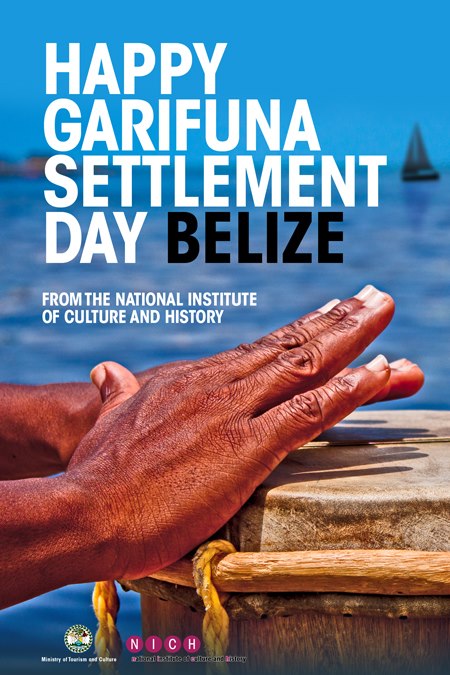
A Journey through Garifuna History:
After 210 years in Belize, “We Keep Going Forward” Towards What Destination? by Jeremy A. Enriquez
Published in Amandala, (www.amandala.com.bz)
Sunday Nov. 18, 2012

Reprinted on twocanview.com with the Permission of Jeremy A. Enriquez

Jeremy A. Enriquez


Jeremy A. Enriquez provides a very important and many times missing part of Belizean History.  Our plight as African descendants (Garinagu and Creoles)  has a very important interwoven historical significance.  Please read as Jeremy present the Garinagu important contribution to the development of Belize.  A.L.


Amidst the challenging socioeconomic realities of Garifuna communities and the constraints of Garifuna leadership to collectively define, promote and pursue development opportunities for their people, the annual revelry that defines Garifuna Settlement Day has served to reaffirm among Garinagu their cultural survival against all odds throughout the two centuries that they have lived in Belize. The mere survival of Garifuna culture after the attempts by the British superpower to exterminate it is still quite an exceptional feat to celebrate.

Following the unsuccessful defense of their homeland territory of St. Vincent against the British invaders in 1797, the Garinagu were rounded up loaded in ships and exiled almost two thousand miles away to the most barren sections of the island of Roatan, then another British territory. About two decades earlier, the British had considered returning this rebellious group of fierce warriors to Africa but that would have been too costly. Roatan was a strategic decision. It ensured that the Garinagu would be permanently separated and kept very far away from their homeland and from other British territories such as Jamaica, Barbados, Dominica or Trinidad and Tobago where slavery still existed. This forced deportation was to ensure that the Garinagu fomented no other rebellion. Those who were allowed to remain in St. Vincent were legally banned from all expressions of their ancestral culture until its extinction.

This year marks 210 years since the Garinagu first arrived in Belize. They came in 1802 as the first group of free people to settle in Belize: – decades before the Mestizos settled the north in the late 1840s and before the Mayas returned in the 1880s in flight from brutally oppressive labor conditions in Guatemala.

Technically, the Garinagu were not welcomed in Belize as the settlement was still a slave society. There was fear amongst the English settlers in Belize Town that the Garinagu, as free blacks who were well known for the fierce war that they fought at St. Vincent only five years earlier, might not be completely loyal to them and might even foment rebellion among the slaves. Consequently, a strict ban was imposed to prevent them from staying in the settlement for more than forty eight hours and a hefty fine was set for anyone who hired or employed any Garifuna within the settlement. In compliance with the law, Garinagu formed their own settlements south of the Sibun River border where they have remained ever since. Seeds of discrimination and mistrust were also planted by the masters among the slaves to ensure that the two groups of Afro-descendants – one enslaved and the other free – remained separated. Such seeds have largely remained firmly rooted in the collective psyche of the royal descendants such that to date there remains the lack of genuine interest in the roots of their common bond and the systemic exclusion of Garinagu from higher offices in the public, judiciary, diplomatic and other services.

Today, relative to all Afro-descendant people throughout all the Americas and the Caribbean, the Garinagu remains one of the very few who have kept their unique African-indigenous hybrid ancestral language, their ancestral spirituality, food, music and other aspects of their traditional culture all intact. For that reason on May 18th 2001, the United Nations Educational, Scientific and Cultural Organization, UNESCO, proclaimed the Garifuna language, music and dance a Masterpiece of the Oral and Intangible Heritage of Humanity. These alone are exceptional accomplishments to proudly celebrate.

Besides all that, however, within the bubble of Belize’s rather colonially-oriented and city-centric versions of its historical awareness and discourse, there seems very little knowledge and appreciation of the critical contribution of the Garinagu in shaping the nation’s economic, territorial, and cultural history.

Shortly after the first group of Garinagu arrived in Belize in 1802 and perhaps as early as 1799, as a rare group of free blacks in the region during the time of slavery, they became the primary agents for two of the most prevailing European interests: – (i) the commercial interest of Belizean woodcutters to expand Belize’s lucrative mahogany interests further south beyond the legally established Sibun River boundary, and (ii) the evangelizing interests of European, later American, priests to expand the Catholic faith to various ethnic groups all over Belize.

By the late 1790s, the major economic activity in the Belize settlement was the harvesting of mahogany for export. Mahogany had replaced logwood which had declined in demand since the 1770s when the use of synthetic dye became more popular. Prior to the arrival of the Garinagu, the Belizean logwood contractors were forced to grapple with two major economic challenges that threatened the very existence of the settlement. Firstly, virtually all the stands of mahogany within Belize’s legally established territory had been depleted. In order to satisfy the steep demand for mahogany in Europe, it was critical for the Belizean contractors to expand their operations south of the Sibun River – a territory which was outside the limits of Belize’s boundary as established in 1786 by the Convention of London.

Secondly, the plan for expansion of the woodcutting operations was constrained by a severe labor shortage in Belize. In the 1790s, several of the slaves (who comprised seventy five percent of the population of the Belize settlement) had escaped to nearby Spanish territory in Mexico or Peten. Given the frequent and heavy losses of slaves, and constant threats of slave rebellion, the woodcutters desperately needed a reliable source of labor. They would either have to import more slaves and risk further losses or hire labor from among the Garinagu. By that time the Garinagu had made themselves well known in the region for their intelligence, independence, resilience, discipline, strong physique, hard work and excellent maritime skills. Consequently, they became eagerly sought after as the prime source of labour for the mahogany industry.

Emboldened by their resistance against Spanish invaders in September 1798, and with the prospect of a new and reliable source of labor, the Belizean contractors decided to ignore the established Sibun River boundary of the Belize settlement and expand their operations further south. In 1802, they sought and were granted permission by the Superintendent of the settlement, R. Basset, to import 150 Garifuna labourers from Roatan to be employed as woodcutters. With some government assistance, many of them were shipped and many more managed to find their way to the southern coast of Stann Creek and Toledo Districts.

The early influx of Garinagu in 1802, and the subsequent major influx in 1823 to seek refuge from civil wars in Central America, provided a major boost in the pool of labor to expand the operations for the Belizean timber contractors. For decades, the eager, hardworking and skilled Garifuna woodcutters penetrated the dense forests south of the Sibun River all the way to the Sarstoon River. The ill-feelings they harboured against the British following their deportation a few years earlier had been set aside as they focused on own their economic survival. It was not unusual for Garifuna women and children to accompany the men to the lumber camps. The stable pool of labor from the Garinagu derived great economic benefits for the Belizean contractors and the settlement. Along with the booming mahogany trade, the communities that the Garinagu established helped to lay the foundation for the expansion of Belize’s territory from the Sibun to the Sarstoon River, until it was formally incorporated as part of Belize in the Anglo-Guatemalan Treaty of 1859.

Given the tremendous involvement of the Garinagu to ensure a lucrative supply of mahogany, it is unfortunate that Belize’s history hardly admits that one of the two black men symbolized in Belize’s Coat of Arms is the Garifuna man. The other is the enslaved African Creole man whose forced labor harvested all the remaining stands of mahogany north of the Sibun. The tremendous labor of both groups formed the backbone of the economic history of Belize – shoulder to shoulder, under the shade of the tree.

As for the Garifuna women, their primary productive work was in agriculture. It was they who produced much of the foodstuffs, chickens and pigs for sale in Belize.

Over decades, the tough rigors of their work in forestry, their strong maritime culture, their harsh history of battle against European powers and subsequent deportation, their Catholic background, as well as their productivity, natural intelligence, facility for language and resilience had all molded among the Garinagu the pioneering spirit and work ethic that made them and their descendants prime candidates for the Catholic church to establish its schools throughout the remotest areas of Belize.

They were the first group of Catholics to arrive in Belize. The first Catholic church was established in 1832 amongst those residing near Mullins River. The earliest date recorded in which a Catholic priest conducted missionary work in Punta Gorda was in 1841. In May 1845 Jesuit priests built a church and established its first mission in P.G. long before there was any mission other parts of the country.

Garifuna men were well known to provide many of the best school teachers in the colony. To be employed as teachers they had to possess a reasonably solid and above average education, qualities of leadership, good character, a pioneering spirit and the physical and mental stamina and adaptability to survive harsh, rugged life in these remote settings. They were also recognized by the Jesuits to possess a natural ability to teach and the mental aptitude to learn different languages. From the 1870s to the 1970s, Garifuna men were trained and deployed by the Jesuits as teachers/catechists to spread education and the faith to rural communities all over Belize. Primary education was the tool used to facilitate indoctrination into, and spreading of, the Catholic faith. It is not surprising then, that as a natural progression from the foundations laid by their ancestors, a number of Garifuna men became priests and a number of women became nuns. Bishop O. P. Martin, formerly a Garifuna teacher, became the first Belizean Roman Catholic Bishop. Although the Garinagu became steeped in Catholicism, however, the secrets and practices of their ancestral spirituality remains firmly rooted, even among their priests and nuns.

Interestingly, as the brightest and the best Garifuna leaders were deployed to serve other people and other communities throughout the length and breadth of Belize over several decades, this brain drain has arguably diluted the likely powerful development impact on their own Garifuna communities to result in the impoverished and vulnerable socioeconomic conditions that these communities face today.

Despite the solid economic and cultural contributions that Garinagu has made to Belize’s development, the legacy of embedded colonial value system has continued to keep them marginalized and often treated as second class citizens in their own country. This same colonial mindset and value system is also evident in the condescending behavior towards indigenous peoples who seek to maintain their own ancestral cultural values. Such state of affairs is yet to be uprooted in order to transform our society into a truly inclusive Belizean one. At the same time as Garinagu remain proudly inspired by the tremendous contribution of their ancestors, someday when the current generation becomes the future ancestors, the new generation will ask: How dedicated and effective were the elders in promoting and pursuing opportunities that ensure the wellbeing of current and future generations? Given the power of ancestors in Garifuna culture, what sort of ancestor will you be? Wawansera Mémeba Lau Lubafu Bungiu hama Áhari – We Keep Going Forward with the Power of God and the Ancestors.

Fundraiser!!!!!! Show This Bird Some Love 11-12-12


King Henry’s Mango Chutney

Earlier this year, my brother Henry D Anderson of Dangriga, Belize passed away. He left behind two families. His first family is here in the US: older step daughter, Kiara, proud college graduate (2012) and oldest son Nyreh, 13 who is in the 8th grade. His second family lives in Placencia, Stann Creek:  younger step daughter, Caroline 9, Henry V, 4 and baby Isak, 2. As you can imagine, being a single mom is already difficult but even more so under these circumstances. So,as a family, the Andersons’ are coming together to raise some much need ca$h!


Available for shipping anywhere in the US, King Henry’s Chutney- 16 oz bottle for $10 plus shipping

This recipe was taught to us by my grandma so there is 50 years of experience going into this exquisite culinary delight! Our chutney is made of mangoes  sugar, spices, and habanero pepper. Traditionally, it is served with curry but we Caribbean people, of course, eat it with lots of other things. Serve it at your holiday party with cheese and crackers or jazz up your turkey dinner and serve chutney instead of cranberry sauce! You can even make ice cream with it! Buy a bottle fi you and then five more as gifts for your friends! 🙂


Not sure you like chutney but would like to contribute anyway? We would very much appreciate any amount you can spare. Every drop full di bucket!


For orders/donations, email me at fayeac@gmail.com for more information. We can accept money orders, cash and PayPal!


If you are anywhere the Twin Cities area,  join us on December 1st for hot tamales, $3 each, fresh homemade chocolate chip cookies, $1 each, $10 a dozen and Doc’s Famous Fruit Punch $3 a glass!

Thank you all for your continued support!

Salima Barrow takes on Cancer…


Salima Barrow

Young Salima Barrow was apprehensive as she witnessed her mother , Mrs. Kim Simplis Barrow, go thru the fight of her life. She wanted to do something to honor her mother and wanted to raise funds while raising Cancer Awareness. I spoke to 7 year old Salima tonight and she is excited to be able to contribute in some way. She said she wanted to do something “a long long long time ago, from she was 3 but her mommy would not let her”. She made me smile.  I am sure in her mind,  her mother must have been battling Cancer for as long as she can remember. Children have simple yet powerful ways of articulating their feelings.    Salima is only 7 and time is relative for her. A year of missed events with her mom must have felt like forever.  Salima knows the importance of raising funds to help with the life saving treatments for kids with Cancer.  Salima is a young lady with a plan to raise “lots of  money”  for cancer. She also wants to meet the kids affected by cancer.  When I was a child myself , I witnessed too many of my own family members afflicted, so I wholeheartedly embrace and endorse her drive.   Please assist Salima, along with a few of her friends,(Haley, Abigail & Gianni) and the generous sponsorship of Bowen and Bowen,  in a worthwhile fund raising event to help fund the Children’s Cancer Wing. I have pledged $100.00 and hope you can donate  or support her initiative by attending the event and purchasing a few drinks.  Remember,  Cancer is a disease that does not discriminate.  Salima’s class from Hummingbird Elementary School will also be having a similar event on November 30, 2012.

AL

October – What it means to me! Reprinted with the permission of Kim Simplis Barrow


Mrs. Kim Simplis Barrow


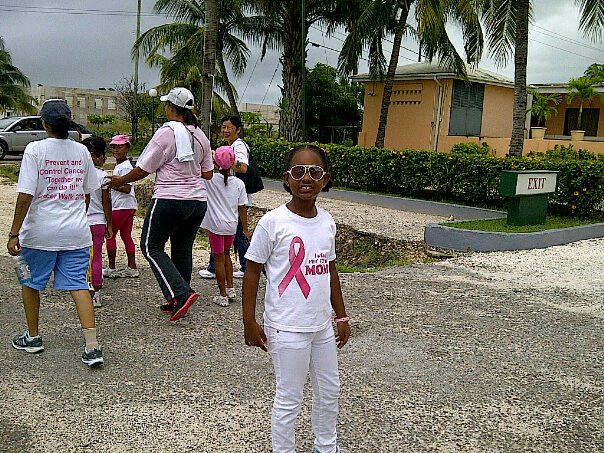
October is a month that will always have a special significance to me. It’s Breast Cancer Awareness Month and everyone will be talking about it; cancer survivors will say thank you Jesus, families and friends of victims will say a prayer in memoriam, and the rest of the world will remain hopeful for a cure. All around the world it will be a sea of pink. Many will remember the infamous cancer and the fear that it evokes in the hearts and souls of women and men all over the world.  This is the month that we most remember to offer support to families enduring this battle and organizations that are trying to find a cure for this awful disease. So we purchase items, support cancer groups, donate and attend fundraisers, give talks, walk for a day, run for miles … and yes, at the same time hoping and praying that we never have an encounter with this deadliest of foes.

Breast cancer is a sneaky, insidious devil. It hides wherever it can and when you least expect, it wreaks havoc on the life of the woman or man it has claimed as “its own”, their family and their friends. It can take over your life, ruling your health like a dictator. However, it is important to remember we have come far and today we know much more about this disease than ever before, making us better prepared to do battle. We know that our only recipe for a successful outcome is to prepare for combat – lace up your boxing gloves and fight with all you’ve got.

Unfortunately, many people don’t realize the presence of cancer and often such late diagnoses cause the kind of pain that lives for an eternity.  Today we are more aware and educated: early detection, yearly mammograms and breast self exams are keys to winning this battle! We also know that some people manifest no physical signs—something I know all too well having lived a healthy lifestyle by eating well and exercising daily.

My cancer journey began on October 22nd, 2011, when I felt a lump during an official trip abroad. Upon my return home, October 28th, I went to the doctor, got a mammogram, and tissue was sent for biopsy.  On November 3rd, I heard the devastating words: “you have cancer”. This disease has consumed my life for an entire year and for the next 5 years I’ll be on medications—for cancer and my heart complications. It has zapped me of my energy, my good health, and my time… but not my LIFE!

It may seem strange, but cancer has given me my greatest gift: it has reminded me of the fragility and brevity of life; that we all need to live everyday to its fullest. The thought that I was slowly dying—and yes we are all going to die one day, but just knowing that I was actually staring death in the face, makes me appreciate and enjoy every minute of every single day. This disease has taught me how to cope with fear; strengthened my faith in God; has emboldened my spirit and restored my faith in humanity. I now know that the only day that really matters is today! Yesterday is gone and tomorrow is but a dream … there is just today!

Over the past year, people saw me bare my soul and lose my hair–those of us with my kind of hair go to the hairdresser at least once a week because we are obsessed with our hair and making it look good. It was not easy and as soon as mine started falling out, I went to my hairdresser and shaved it off. I wanted to lose it completely on MY terms! I was still in control and it was going to affect me the way I wanted it to. I must say I loved being bald. With my daughter’s thumbs up and Dean’s unending support, I never wore a wig. For once I felt free! It was wonderful and comforting to see how people reacted when my most true self was showing. The real me: open, honest and bare to the bones. I saw my soul during this journey …This dreadful disease taught me to love myself and its imperfections, to appreciate me—all of me—for me.

I also know that this is not my final chapter! I will keep on fighting until I have rid my body of cancer’s existence. This is not my final nemesis. Today, I think cancer knows exactly who it’s fighting … It knows I have faith, spirit, courage, hope, and that I fight with all I have. Cancer surely picked on the wrong one!


Kim Simplis Barrow

October 1st, 2012


Women are we failing our children? by Aria Lightfoot


Hi Readers,

I took a pretty long hiatus off the blog to find the time to breathe and create some balance in my life. This summer I got involved with the Obama campaign then got a full time demanding job, full time Grad School program and full time mom.  It has been hectic may be an understatement.  Thank goodness for Faye who continued writing without complaining.  Each time I attempted to write, sleep won the battle. Writing at times can be mentally exhausting, and writing about issues that move you can be emotionally draining.

I have been following the Belize news and issues during my hiatus and even trying to incite discussions to evaluate how people are thinking on some issues.  One of the good things about written discussions is no matter how heated it becomes, it gives one the opportunity to go back and read the words and thoughts of others. It allows one to even examine arguments after tempers have cooled.

On a more serious note and the purpose why I have ended my hiatus is to continue discussing the issues facing Belize and dominating the news cycle lately, namely sexual assault.  Sexual Assault has become a desensitized public issue.  Each victim story is being headlined for a day worth of news, while the victims’ entire lives are permanently ruined. The scary aspect of sexual assault is when it affects our children.

Jasmine ‘s murder is still relatively recent in my mind. To many, her death is already a fading memory.  She became a child martyr who symbolized a fed up society ready to exact justice.  The outraged public has now returned to their daily lives and anger meters reduced to a mere whimper. All the different groups who were motivated to action have become inactive.

And while Jasmine’s accused killer awaits trial, I can’t help but think – how many predators can a small country of Belize have?   Lets examine what is happening in the Jewel that lately seems synonymous with sex crimes.

An 11-year-old child is raped. The doctor certified her rape. The child is found in the presence of the accused. The accused, not a family member of the child, admits to being in the presence of the child. The child tells the court that she is raped by the accused.  A jury of mostly women allowed this predator to walk amidst their own children.   How could a predator walk away from a case with such seemingly strong definitive evidence?

Another little two year old is dead after her tiny body is violently brutalized and raped, possibly a family member. How could a mother not identify her two year old being raped? Except for Mose Hyde who expressed utter and bitter disgust for what happened to this baby, nothing much else.  No candle vigils, speeches, outrage…nothing!

In the midst of it all, a well respected Pastor Willacy, pastor, principal and counselor with daughters himself, admits to a sordid affair with a child he teaches, counsels and pastors to.   The prevailing rumor is that this was not his first affair with a student.  A well-known secret is what I was told.

During all these assaults on our children an irritating pattern is emerging in Belize as it appears to me. It seems Belize has homegrown quite a few insecure competing women who measure their worth by the men in their lives.  Why do I say this you ask?  Apart from the women quarreling endlessly over the same man messing with both of them, lets relate it to the victims I have mentioned.  Pastor Willacy made an interesting claim to the child.  He told the child her own mother was jealous of her youthfulness.  Is he on to something?  Are older women jealous of these young teenagers, forgetting they are mere children?

I am no psychologist, but I know men enjoy these nonsense competitions, where women will fight and quarrel for a man while he enjoys the company of both women.  (I want my sweetheart and my wife to be friends). Women tear each other apart and argue base on what position they play in a man’s life.  It is this same stupidity that a predator enjoys.   He targets the youthful underage girl with supple breast and young curves and a fit body and that negatively affects the self-esteem of the older, sagging breasts, child barren women. In a “man shortage, man sharing society”, instead of seeing the predator for who he is; a manipulative dangerous predator; many women begin to do what Belize men have culturally taught them to do.  Blame the other women, in this case, blame the female child!  The man walks away blameless or the forgiveness comes quickly as he makes her feel special, after each consistent indiscretion.

When I listen to women bicker about men, I use to find it comical, now I find it troubling.  When I read some of these women statements defending Willacy and blaming his 16-year-old child victim, it was quite disgusting and disturbing.  How can any woman, who was once 16-years old ever think any 16 year old can be sophisticated enough to trick a 50 year old plus man?

After children are abused, our society continues the assault by blaming them for being victims.  I have been in court with a woman who blamed her own seven year old daughter for the predatory acts her boyfriend unleashed on her own child.  She preferred to have a man in her bed that gets up middle of the night to rape her child, than to get rid of him and have him prosecuted.  She chastised her daughter for bringing the matter to court.  I have never been more disgusted.

I implore the women in Belize to start looking out for our young women.  When you see a young teenager girl going astray, instead of labeling her a whore, bitch, sketel, quoting Bible to her etc.  Before you dismiss her pain, reach out and find out what pain was inflicted upon her. It may give you some deep insight to the type of predator who may have her life in shambles.   What ever happened to the society where we use to look out for each other?

Vote for Chantae Guy!!!!!!!!


Chantae Guy – Ms. World Belize


PLEASE Click on the link below and vote for CHANTAE GUY to win the People’s Choice Award for North and Central America and then share the link with your friends and ask them to do the same!

http://poll.pollcode.com/efr1


Children who have lived in the Shadows…The US is providing a light…read more


Consideration of Deferred Action for Childhood Arrivals Process

Over the past three years, this Administration has undertaken an unprecedented effort to transform the immigration enforcement system into one that focuses on public safety, border security and the integrity of the immigration system. As the Department of Homeland Security (DHS) continues to focus its enforcement resources on the removal of individuals who pose a danger to national security or a risk to public safety, including individuals convicted of crimes with particular emphasis on violent criminals, felons, and repeat offenders, DHS will exercise prosecutorial discretion as appropriate to ensure that enforcement resources are not expended on low priority cases, such as individuals who came to the United States as children and meet other key guidelines.

Individuals who demonstrate that they meet the guidelines below may request consideration of deferred action for childhood arrivals for a period of two years, subject to renewal, and may be eligible for employment authorization.   You may request consideration of deferred action for childhood arrivals if you:

1. Were under the age of 31 as of June 15, 2012;

2. Came to the United States before reaching your 16th birthday;

3. Have continuously resided in the United States since June 15, 2007, up to the present time;

4. Were physically present in the United States on June 15, 2012, and at the time of making your request for consideration of deferred action with USCIS;

5. Entered without inspection before June 15, 2012, or your lawful immigration status expired as of June 15, 2012;

6. Are currently in school, have graduated or obtained a certificate of completion from high school, have obtained a general education development (GED) certificate, or are an honorably discharged veteran of the Coast Guard or Armed Forces of the United States; and

7. Have not been convicted of a felony, significant misdemeanor, three or more other misdemeanors, and do not otherwise pose a threat to national security or public safety.   Individuals may begin to request consideration of deferred action for childhood arrivals on August 15, 2012.  Please do not file before August 15.  If you file early, your request will be rejected.  Individuals can call USCIS at     1-800-375-5283       with questions or to request more information on the deferred action for childhood arrivals process or visit www.uscis.gov.

Find this page and read more at www.uscis.gov/childhoodarrivals

.

Last updated: 08/14/2012