Men know your Cancer Risk..Women encourage your men to attend.
 This is my birthday week (And Faye’s is next week) and every year I use this time to reflect on my accomplishments, failures, friendships, aspirations and most importantly my family. I am a complex person who have been through many trials and tribulations from a very early age. I have never used it as an excuse but rather a driving force in my life. I treasure my roots and I think I was very blessed to have had such great parents (even though growing up, many days I didn’t think so). Parents who spent the time to show me core values and the appreciation for integrity and love of Belize. I was a well traveled child and was very culturally exposed. My mother and father struggled many days and sacrificed a lot to give us the things they did not have. My parents are responsible for me being the confident, intelligent woman I am today.
This year I will be 38 years old and I decided to do a full health check up before my birthday. At this age my favorite aunt was battling breast cancer, a battle she eventually lost. This year I decided to follow the advice of my husband, my doctors and one of my aunt’s best friends (who is also a doctor), urging me to get my mammogram because of my strong family history with the disease. It has been a test I dreaded all my life and pretty much ignored for many years because of the fear of the results. However, after seeing the struggles of our first lady, who is also battling cancer,and who in many ways remind me of my aunt- young, beautiful, ambitious and smart, and knowing I am reaching that critical age, I decided to take the step and do the mammogram and ultra sound of my breasts.
After my mammogram, my doctor called me to tell me that they saw something suspicious and would require more testing and a biopsy. I did not know how to react or if I should react. As a person who tend not to panic, my first thought was my children and how such a diagnosis would affect my family. I try to envision who I would want in my children’s life and even gave my hubby the list with the type of women I would approve of when I met my fate. My husband was not amused. In fact, he seemed more distraught than I was. I said a silent prayer and went to the specialist and did the biopsy. During the process I met a nurse who was a ten year survivor of breast cancer. She was very supportive and made me feel extremely comfortable during the process. The diagnosis. No cancer. It was relieving to hear the news, but I realize with my family history, it is a diagnosis that is only good for a year. However, it allowed me to take one of the scariest steps in my life. I urge people to find out your status when it comes to any disease that could save your life with early detection. Face your fears and overcome them.
On a different note, it has been four months since Faye and I have been writing our blog. We have had people who encourage us to continue expressing our opinions and highlighting the issues. Conversely, we have also encountered those who want us to shut up. They have been insulting and rude. I am sometimes taken aback at the personal and mean nature of the criticism, but I guess we should expect it when we put our writing in the public arena.
I am a confident person. I don’t write my blog to make friends or enemies, but rather to spark discussions about Belize that need to be said or heard. Someone sent me a private message to share that some people in one forum really don’t like me…I really don’t care. People fail to realize that we should be in a forum to have discussions about issues and ideas, not personalities. I don’t care that some political proponent or someone who plays absolutely no role in my life, thinks about me. They are entitled to their opinions even when riddled with hate and immaturity. My life decisions and accomplishments have nothing to do with the opinions of such people.
As I complete my 38th year of life, I realize there is so much I want to do and contribute. I will continue to advocate for change and advocate for a better Belize. We must realize that no one in life is all good or all bad. We have differing opinions in life and we all come from different backgrounds. That is what makes democracy rich and Belize culture so beautiful and diverse. . It is important as a country that we continue to advance the ideas of all those who are willing to contribute. We should discourage pettiness, hate and jealously that infect our souls. As strong as my opinions are on an issue, I will never hate or disrespect someone because of it. I am vigorous in defending my position. If people cannot engage in healthy debate and need to shut out differing opinions, maybe they are part of the problem why we cant move our country forward. In everything we do in life, Respect!
This blog has been very enriching and I am happy that I decided to write with my friend Faye. I also want to thank those who continue to support us. Please continue reading and commenting. Your input is very important. We all want the same things in life, regardless of age, sex, sexual orientation, religious affiliation, race, ethnicty or political persuasion. We all want the freedom of personal choices, success of our families, peace of mind, a safe, free and enriching life.
Who is Rebecca Stirm?
 Born and raised in Belize, self taught clothing designer, Rebecca Stirm, began sewing her own clothing at the age of 11. “My parents were very supportive, they saw potential in me and managed to get me Brother sewing machine on sale at ‘Courts’. Since I had been sewing by hand for a long time, I was eager to learn to use the machine. I cut apart old clothes to see how they were made, and cut and re-shaped old patterns to make them my size. I basically learnt to make patterns and sew them together through trial and error while sewing for myself as a preteen.”
Sketching designs and sewing were merely a hobby for her until 2009, when she was encouraged by a close friend to hold her first fashion show. In early 2010, she was given the opportunity to show a few dresses in a charity fashion show (Help for Haiti). Inspired by seeing her pieces on the runway for the first time, Rebecca created her first collection of day dresses and cocktail dresses – paying for the fabric and trimmings by working Friday nights playing the acoustic guitar and singing at Perkup Coffee house. Close friends and family pulled in to help Rebecca plan, advertise, and execute her first show. The “August Fashion Show” was a success- and she received her first orders for dresses from her collection.
“After the show, I got my first orders for dresses- it was huge incentive for me- Since now it was more than a hobby, I thought ‘hey, this could be a job’.”
Building on that experience, Rebecca continued on to design a second collection, showing it at her second show (The Sunny Season Fashion Show, May 2011), before re-locating to Vancouver in June for a semester in fashion design and marketing at the Art Institute of Vancouver. Shortly after returning home to Belize, she was accepted to compete in Mission Catwalk (Caribbean designer reality TV show) – against 19 other Caribbean designers – for a chance to “Rule the Catwalk.” The show is currently airing on TVJ and Televisionjamaica.com.
contact info:
501-620-0104
 Lately I have been getting into trouble with several people on discussion boards. I start-out thinking it is a logical, fact-based discussion. I try to use scientific information and studies and findings based on other people’s research or personal knowledge based on my own study. Before the discussion is over, it moves from discussing an issue to a personal attack, name calling analysis of my “immovable position”. People seem to become offended when I question their information and logic. In a discussion, I expect more than feelings and inclinations. In a discussion, I will ask about facts and dispute information or simply point out the flaw in people’s argument. However, when it deteriorates into the personal realm, I retreat, as I realize there is nothing more to discuss.
I was having a conversation last week with someone who said that Belizeans do not accept studies and information when it is presented to them from a fellow Belizean; however, if a foreigner would present the same information, they would be more open to it and more willing to accept it. I am inclined to believe such is true. Prior to elections, Belizeans saw an onslaught of overnight “expert” pollsters who were actively conducting unscientific polls. When I offered my opinion, or asked for scientific data to make a determination, it became a source of contention for some people. I think that Belizeans are not fact loving people. Many people argue points clouded with feelings and emotions, even if good scientific research suggests otherwise. Belizeans dismiss good scientific or expert information as biased, agenda based, unreliable or just unacceptable because it offends their belief system. Instead of examining their own failed logic, they dismiss experts in the field of study and conclude the study is faulty with no supporting evidence. I have seen people dispute information based on the heading of an article without actually reading the article. However, if you dare question positions and information source; and if the person is unable to defend their position, they will attack you as a trouble maker and assert personality defects as opposed to addressing the said subject. It is a phenomenon I have been noticing in many discussion forums.
The information age created a crisis for Libraries everywhere. Suddenly people were no longer conducting research using libraries and as such the information superhighway initially caused libraries to close and book stores to close. Now guess what? Libraries are now making a comeback as the information superhighway is now a cesspool of bad, confusing, and misleading information; creating a generation of pseudo experts reinforced by Wikipedia. This is the age of information and with so much information out there, people are unable to filter out the good from the bad information. As a result, people begin accepting information that supports their position regardless of source or credibility. Imagine spending thousands of dollars to study a subject, to have someone Google search a topic and use Wikipedia to dispute information.
Wikipedia can be a good source to help start a search for information, but it is NOT a reliable information source and just about any Tom, Dick or Harry can update Wikipedia. Case in point, last week I was having a discussion with someone who decided to weigh in on the Trayvon Martin case and update Wikipedia. At no point did the person ever review the basic 911 tapes to form an opinion. His entire opinion was based on opinion pieces that he read from other people, rendering his opinion useless in the matter. However, he updated Wikipedia and many people are likely using his opinions as fact. When searching the internet, there is plethora of opinion based, biased based and non-scientific based information available through Google, Bing or any search engine. When searching a subject, the results will not tell you whether you are getting back reliable information, it is merely giving you back information based on words you put in your search.
Belize has a wealth of intelligent people, but as Belizeans we need to learn to respect people’s expertise. We as Belizeans need to understand that someone who is an attorney, doctor, engineer, Ph.D. and Master’s degree holders are not experts in every subject; however, they are experts in their fields of studies. An attorney with a LLB or JD should have the basic understanding of the laws of the country or state they studied in; a doctor is an expert in medicine etc. We need to start appreciating that people who study for years to gain degrees, knowledge cannot be undone by one internet search. And we need to learn to disagree without becoming disagreeable or personal. Just because someone is an expert doesn’t mean that they are always right. However, when disputing information, use reliable information to support your argument. Which brings be to my next point. We don’t know to effectively argue in Belize.
We engage in debates to get our points across without appreciation for the other side point of view. When our points are failing, we act offended, reduce the argument to derogatory and personal comments. We refuse to examine our weakness in our argument, instead it is just easier to be rude and disparaging with our comments yet we sit and speculate why young people cannot work out their differences! Our society is a reflection of us! We are petty people! Yes I said it!
We seem to be at a stalemate in our development in Belize. Never before have we had so many experts and yet it seems that maybe jealously, immaturity, pettiness, and negativity have hampered our growth. We need to read some more, we need to spend time researching information, open our minds to experts in the field, accept we don’t know it all, respect differences and encourage healthy debate. We need to grow up Belizeans and get over the tender egos that inflict us.
Finally, my last advice is that politicians are never a good source of information; like Wikipedia, you should use the information as a start and not as a conclusion to form an opinion. My hope is that Belizeans can behave with civility and decorum in discussing our future, because we are creating the framework for our children and right now, the future is not looking good when adults are still behaving like a bunch of bickering, temper tantrum throwing 5 year olds!
 There is a theory which equates race and religion to social identity as opposed to actual race or religious belief system. It is an interesting phenomenon as people identify themselves with a certain race or religion even though evidence is contrary to the person’s identity. It may help explain the psyche as to how people function and why people seem to live such duplicitous lives.
I guess I first noticed this in the United States when I was asked to participate in a survey. The survey asked “What race do you closely identify with?” I chose “African American” as a natural choice based on the limited choices offered. I later received a letter stating that I could not identify myself as an “African American”, unless I was an American. I wondered “Whe kind a madness this and who cares so much to send a letter”. It made me realize something else too. Hispanics were identified by region and not race; which suggests manipulative statistics aimed at diminishing the power of certain races in America. Whites in America are not subjected to regional identification. Therefore a white person from Europe adds to the population of the white race; however other races are subjected to division and ultimately does nothing to give a clear picture of the different races that exist in America. This method is cleverly disguised as a statistic where race and culture for minorities are intertwined and used to further separate races while the white race continues to statistically remain dominant. I often questioned how a former slave colony that continued slavery almost 50 years after the rest of the world desisted would have such a small numbers of Black people. Additionally being Black comes with many negative connotations that people prefer to be identified as anything else but Black. Also, by allowing people to self- identify further skews the statistics from the factual to the perceptive. Interestingly, the 2008 Presidential Elections which gave President Obama and unprecedented win brought to light that there are many black races existing in America under the guise of “other”. Many interviews identified blacks from the Caribbean, Africa, and Latin America who were disallowed from identifying as “African Americans”.
I know, you are asking why the nitpicking at race. Simply because the word minority already signal lesser, or less empowered and therefore in some people’s mind hopeless. It is these small indoctrinations of people that have them thinking that their thoughts, words, votes and in some cases lives do not count. By separating minorities based on culture as opposed to race, and the constant bombardment of media demonizing Blacks further divides whatever power people may have. People justifying the murder of Trayvon Martin is a perfect example of how such demonizing has become prevalent and acceptable in the American society. The idea of dividing people into race categories and trying to decipher a common practice is racist in itself. We should be identified as one human race, where individuals are judged based on their individualistic actions and where people rally around each other because we all belong to one human family. When we die, our bodies will fall apart and our souls will be judged according to our individual actions. Not on your race or religion or how much we were actively part of it.
As it relates to religion, we often hear Christians described as “one day Christians’; “hypocrites” or witness them acting and behaving contrary to their religious belief etc. There is actually a simple explanation for this behavior. Many people do not subscribe to their religion based on core belief in their churches’ doctrine; rather, many people belong to religion based on family relationship and social engineering. It is estimated that 60 percent of Catholics disagree with most teaching of the Catholic Church; however, they continue to go to church based on family or social structures or standing within their society. It is an amazing observable fact that many conservative members of the GOP stand on Christian principle but support policies that contradicts every teaching of Jesus Christ.
Even in Belize, people from the same families identify themselves differently based on the region of Belize they grew up, the families they marry into and their dominant language. Some people of the same parents may identify themselves as Creole or Spanish depending on which parent they identify with or complexion they are born with. Belize racial mixing makes identification even more difficult. Likewise as it relates to church, people can quote every scripture that condemns homosexuality but turn a convenient blind eye to adultery, lying, cheating, murder and every scripture that strongly condemn those practices. The same people shouting God’s commandments at the top of their lungs are engaging in breaking quite a few them.
So what does that tell us about humans? We are the product of our social engineering. We identify and worship based on societal norms and not on facts or real belief systems. We love and hate each other based on who we identify with. We form judgments and positions based on how we are socialized rather on basis of right or wrong. People need to wake up and realize that as humans; we all want to belong; we all want to be empowered; we are all seeking the same things; and we are all destined to the same end. Creating categories of separation is as the most limiting and sad part of humanity and further evidence we are victims of a herd mentality.
“Never permit a dichotomy to rule your life, a dichotomy in which you hate what you do so you can have pleasure in your spare time…”
Pablo Picasso

The election season should be over in Belize; however, the Opposition feels slighted and has taken on a mandate to contest every conceivable angle available to them. I see both ridiculous and possibly legitimate challenges. The online forums that once promoted legal and political thought, advocacy, discussions, suggestions and challenges have taken a turn for the worse. Enter those forums now at your own risk; remember to put on your thick skins as the discussions have moved from issues to personal attacks. Party advocates are in no mood for logic, discussions or challenges. Instead of addressing the issues, it has become a “bush doctor” psychological and accusatory evaluation of your position and if and when all else fails; some good ole finger pointing, get out of here approach with a good mix of insults. I have deemed it the “bitch and whine club” (excuse the profanity). The opposition has literally hijacked certain social media forums and put out the “you are not welcome mat if you have differing opinions” approaches and tactics. . Their agenda is now set to promote their court cases through social media. They have no patience for discussion. Social media has become the battleground for free advertisements and agenda promotion. A few people have confided in me that they now avoid certain sites because they have become attack sites for differing opinions. With that said, there were many issues that played out in the elections of 2012. There were mistakes made by both parties and both expected to win. Every dirty trick was pulled out of the hat and only one winner prevailed. C’est la vie! Such is life! Be the change in the system; but crying foul after engaging is the same behavior is hypocritical! I feel all the advocacy to promote party agenda disguised as social advocacy leads me to the following thinking.
Many times I have questioned the possibility for anyone, especially attorneys, to advocate positions which are contradictory to their party positions, and their personal belief systems. It suggests to me that having contradictory positions is having no position at all; rather the person takes on a position based on public opinion, party trends or paid advocacy. Such a clinical approach to advocacy forces me to make an observation that I think will manifest itself eventually.
I have much respect, unbeknownst to her, for one feisty legal advocate and party faithful. Her tenacity and ability to argue positions, even if it differed from previous positions just a month prior amazes me. And I am in no way being cynical. She is the true legal advocate. She can argue from any position. She has proven her legal abilities to win hearts even if she loses court cases. However, I feel that her dual roles will eventually catch up with her. The church agenda is popular in Belize and especially Belize City. I wonder how much the issue of gay rights played out in voting patterns. Everyone made an assumption that the elections was bought without ever conducting the necessary ‘after election’ poll to garner voter thinking. A good friend of mine from a traditional PUP family and avid Catholic, refused to vote PUP because of the UNIBAM issue. She said it was the first time her family voted UDP because they saw the issue as of utmost importance to save Belize. I tried to reason with her logic but religion is a powerful brainwashing tool. I anticipate that my “friend’ the legal advocate and party faithful will be forced to make a choice very soon. I sense these barrage of legal challenges signal political aspirations. If she has political aspirations, she will have to take a position on the issue. She will have to decide whether to advocate from the heart or to follow the drum of the party. Both parties have distanced themselves from the unpopular issue. Some members of both parties have come out strongly against the UNIBAM position and no party wants one of their prominent members being a part of it. So here lies the dichotomy of the legal advocate and party faithful. How can you promote an unpopular position that your party prefers to distance itself from; how can you contest elected office on an unpopular issue and how can you continue to advocate from the heart? Whose heart will be broken?
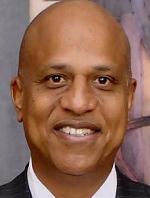 Leadership is the ability to guide, energize or direct an organization, movement or country towards the accomplishment of a common goal. Leaders shape the destiny of that organization, movement or country and many times the organization, movement or country is defined by such leadership. Leaders are the force that determines the success of their organizations, movements and countries. The study of leaders and leadership qualities is vast and expands centuries. It covers numerous factors such as religion, politics, socio-economics, etc. It would be difficult to cover all the different types of leadership styles and theories in this piece.
Researchers have agreed that there are certain traits and characteristics that are normally associated with being a successful leader. The physical attributes are height, age, appearance, sex appeal, as well as, character traits such as honesty, integrity, vision, competence, integrity, enthusiasm and persistence. Leaders must be intelligent, progressive, decisive, and inspire confidence, trust and loyalty. Political scientist, James McGregor Burns, has examined presidents and world leaders and he came up with two distinctive type of leaders. He classified leaders as either transactional leaders or transformational leaders. A transactional leader motivates followers by recognizing their needs and providing rewards to fulfill these needs in exchange for performance and support. A transformational leader raises his/her followers’ aspirations to focus on “transcendental, higher level goals akin to self-actualization needs” .
Martin Luther King Jr. is an example of a transformational leader. He inspired followers to look forward to a new vision; to reject the status quo and to work for greater social justice. Barrack Obama inspired and raised the spirits of all Americans, especially African Americans, to once again believe that, regardless of station he/she is born into, regardless of race, anyone can rise to the highest position or status as long as he/she works hard. His rallying cry “Yes, we can” was shouted all over the world as supporters watched the United States elect its first African American president. George Price, implored Belizeans to break the grip of the colonial government and fight for and eventually win independence in 1981 so that today he is called “The Father of the Nation”.
The Prime Minister of Belize, Honorable Dean Barrow, despite criticism and naysayers is proving himself to be a powerful transformational leader. On March, 24, 2012, Twocanview had the privilege of interviewing the Prime Minister to get his perspective and to examine his leadership style. Twocanview has observed that much of the criticism aimed at our leaders is done without ever talking to the leaders. Getting a personal perspective before judgment is passed is definitely an important exercise.
The Prime Minister’s manner was very cordial, warm and inviting. This allowed us to just dive right in and begin our interview. Our first question to the Prime Minister was “why politics?” His answer was that he was born into politics. His grandparents, parents, uncle were actively involved in politics so that he grew up listening to animated and in depth discussions about current affairs right there in his living room. He watched as the different parties developed, declined and eventually, three of them would merge into the United Democratic Party (UDP). His involvement was a natural progression. He started as a legal advisor for the UDP was asked to run in city council elections,(which he won) then shortly thereafter in 1984, the general elections. His success in Belize politics is undeniable. He is the first Black Prime Minister of the Central American region and also the first leader of the UDP to win two terms consecutively.
The PM leads both his party, the UDP and the Government of Belize. Each has its own separate and particular challenges. He claims that at this juncture, the members of the UDP have coalesced to a strong cohesive unit, with no personality conflicts or serious grumbling. His biggest challenge is to maintain equilibrium, balancing expectations with conflicts.
As the Prime Minster of Belize, conversely, the challenges are innumerous. Belize is a small open economy. International trends can and do affect Belize: Europe’s struggle to balance its weakest members with the strongest in the union; shaky confidence in the United States’ leadership as the country faces an election year; the downturn of international tourism as a result of the worldwide recession. Surprisingly, Belize has not been as negatively impacted as other countries and our country actually did enjoy quite a healthy tourism trade last year, 2011. However, debt such as the “superbond” continues to obscure this progress. This creates increasing pressure to renegotiate terms so as to alleviate the strain on the economy and release funds for the continued development of our social programs.
Other pressing issues continue to include the Guatemalan claim, a complex conundrum spanning centuries which poses a constant threat to our borders and our resources as Guatemalan citizens ignore the laws of our land regarding immigration, agriculture and forestry. There is also the encroaching influence of the Mexican mafia infiltrating our justice system as they seek to cultivate means of transporting their illegal drugs and arms. Related gang violence is a real concern for many in urban areas and now even in the more rural villages.
Domestically, the PM faces the difficult task of providing immediate relief to our most impoverished while trying to develop sustainable, long term solutions for employment, education and proper medical care. All the while he is diligently pursuing these goals, he is bombarded by rambunctious advocacy groups with different agendas. Critics weigh in on his decisions and policies relentlessly and seemingly without any real purpose but to detract and create disharmony and fear. The Prime Minister must take account for it all, navigate a philosophical and realistic course with purpose and effectuate policy that is beneficial for all Belizeans.
When we asked the PM in what direction would like to take Belize, he said that social justice is the hallmark of his government. He wants to uplift the marginalized people of Belize. He describes his ideology as being similar to that of the democratic party of the United States. He was emphatic in juxtaposing the Republican philosophy against the Democrats’ in order to state that he does not believe that government should stand back and just let the corporations dictate the people’s fate. He believes that “government must function to alleviate the hardships in people’s lives”. His government believes in the ‘pro-poor programs” such as the Food Pantry Program in Belize, Cayo, Toledo Districts where the working poor can buy food at a reduced cost. He assists heads of households, mostly single mothers, with a monthly subsidy called Boost in exchange for compliance with truancy laws etc. He is determined to continue to develop more social programs in this second term of government.
A priority for the Prime Minister is increasing the growth of the private sector. As the world economy gradually improves, Mr. Barrow plans to seek ways of helping the private sector to pick up the pace through increase production. This translates into more taxes which benefits the people of Belize through funding of more social programs. He admits that one of the biggest impediments has been the increasing fuel cost. Although the government may benefit from exporting crude, Belize must turn around and import the refined oil at high cost. The Prime Minister tells us there are plans for a refinery. Belize National Energy (BNE) is the only company that has found oil and presently exporting crude oil so BNE will be initiating plans to build the refinery. It is the Prime Minister’s intention that Belizeans will benefit from the refinery through ownership of shares. He plans to ensure that BNE continues to act in the best interest of Belize by allowing for a certain percentage of the shares are owned by Belizeans.
We then asked the Prime Minster what he considers his leadership style. The Prime Minster said that he is not a “micro-manager”. He believes that people should be allowed to do their jobs without constant interference from him. He said that given the magnitude of his own responsibilities, that would make for an impossible situation. He has an expectation of professionalism, honesty, and utmost respect for the people. He admits he is a forthright person. He will directly address issues as they present themselves but it is not his style to be arbitrary or condescending to his staff.
This brought us then to the question of what the Prime Minister thinks about criticism branding him as arrogant. He said that he doesn’t consider himself to be arrogant but rather thinks of his approach as direct and confident. However, if his critics insist on labeling him as such, he would prefer to be known as arrogant rather than dishonest. He reiterated that he conducts his office professionally and with rigorous honesty. No one can accuse him of receiving bribes or collusion. He is honest with the public about difficulties we face as a nation. He refuses to conceal the truth and does not hide behind rhetoric. He further went on to claim that there is absolutely no incidence or occurrence of fact to substantiate the rampant accusations of antagonists. He feels that “independent and fair minded voters” could easily identify the strengths of his character. He believes that regardless of all the negative information that is propagated out there, people who believe in facts, will know the truth and that truth wins out in the end. Ultimately, he feels that he will be judged by his integrity and openness to the public.
We followed this by asking the Prime Minster if there was any one leader with whom he identifies. He said that he is a voracious reader and as such, he is familiar with many well-known leaders, but he feels that at this moment he can most relate to the President of the United States, Barrack Obama. He acknowledges that the population size of Belize is nowhere near that of the US nor is our government near the scope of that of the US. Nevertheless, he feels that like Obama, he was hailed as the agent of change and as they both began their terms, he watched, that similarly to himself, President Obama’s high approval ratings gradually declined as time progressed. The recession dashed hopes, demanded compromises and spurred economic crisis. He said that while Belize’s parliamentary system does not face the gridlock of the United States’ governing body, Belizeans are faced with similar economic conditions, expectations and challenges, thereby creating similar tensions, disappointments, negativity and disharmony. The Prime Minster said that despite the tense atmosphere and barrage of allegations cast his way, the President’s eloquence, persuasive nature and the way he balances his rhetoric is admirable. Along with paying keen attention to the goings on in our neighbour’s government, the Prime Minister also does a lot of reading. In order to keep up with world events and to make decisions with an accurate perspective of Belize’s place within a global context, the Prime Minster reads much about world politics and world economy in papers such as The New Yorker, The Wall Street Journal as well as magazines and books. As for light reading, he prefers classics such as George Elliot, Charles Dickens and Charlotte Bronte.
The final question was more personal in nature as we asked the Prime Minister about the effects that a diagnosis like that of Mrs. Kim Simplis-Barrow has had on him. He said it was a tremendously difficult moment when he found out she had cancer. He describes the worst night of his life as when they were waiting for the results of the scan which would determine if the cancer had spread. Her diagnosis was Stage 3, but could have also possibly had advanced to Stage 4. He was absolutely relieved to find out that it was not a Stage 4 diagnosis. He said that even though he has had a tough time watching his wife undergo this fight for her life, he can only imagine that “it is a million times rougher on her”. He said Mrs. Barrow has been a “trooper” so that even though she has had some low moments during the course of her treatment, her courage has been a powerful testimony to her character. She is brave, unrelenting, calm and positive.
At the end of our interview, he thanked us for the opportunity to add clarity and definition to his position and that of his government. We in turn, thanked him for the opportunity to provide our readers with such an up close look into the inner workings of our leader. We also wished him, the First Lady and their family, all the best for the upcoming medical visit this week.
Our Impressions of the Interview:
Leadership is a process. It is such an arduous task that in fact, given the opportunity, most people could not function as leaders. In addition, leadership today is made even more difficult as society has grown cynical, disrespectful and doubtful. We are now in an information age where lies and propaganda can be disseminated in a matter of seconds. People can damage a person’s credibility and reputation in a matter of minutes.
I (Aria Lightfoot) met Justice Clarence Thomas in 2011 and he said something that resonated with me. “We can no longer raise a generation of children believing the game is fixed and raise them in a cynical society and cynical about leaders”. He said that children must believe in hope and possibilities for them to chart the future of the United States. As builders of Belize’s future, we must learn to be respectful in our approach to all our leaders. Prime Minister, the Right Honourable Dean Barrow, has given his entire life to the betterment of Belize. In spite of all the unfavourable political rhetoric that is out there, Belize’s democracy is more vigourous, informative and louder than any other time in our history. We have freedom of speech so our leaders are under constant scrutiny and criticism. Therein lies the most precious gift of our time: the freedom to be who we want to be, the freedom to want what we want and the freedom to demand it from our leaders.
In light of our economic crisis, crime rate, poverty and this recent underlying divisive agenda of anti-government proponents, Belize needs confident, skilled, experienced and unifying leadership. Benjamin Franklin once said “any fool can criticize, complain and condemn and most fools do”. We should be offering solutions to help build Belize. We are at a moment in our society where pettiness, vendettas and irrelevance should not enter into our public debate. We need to agitate for changes but we should not agitate with the sole purpose of undermining our society. We keep reading sentiments such as “this is not my PM or government, I did not vote for him”. Whether or not you want to accept it, once elections are over, the government of the day is each and every Belizean’s government.
We, at Twocanview, only have the best interest of all Belizeans at heart and wish only the best and most progressive leadership for our nation. Is the Right Honourable, Dean O. Barrow, that leadership we seek and need? Only time will tell. In the meantime, let’s lend our best efforts to the development and growth of our country.
“Ask not what your country can do for you, ask what you can do for your country.”
-John F. Kennedy, Inaugural Address, January 20, 1961

What is Propaganda?
Propaganda is literally translated into the “dissemination of information” and is the deliberate spreading of rumors to help or harm a person, group, movement, institution, nation etc. to influence a person or community toward a certain position. The information is many times geared towards telling the audience what to think about the issue or many times innuendos are used in a strategic way to get the audience to come to their desired conclusion. Many times the propagandist appeals to your sense of emotions rather than intellect.
Where does the term come from?
The term originates from a committee of cardinals established in 1622 by Pope Gregory XV, having supervision over foreign ministries and the training of priests for these missions. After Pope Gregory XV passed away, he was succeeded by Pope Urban VII who established a school for the education of priest for foreign missions called the College of Propaganda. Pope Urban VII waged war and propaganda to spread the “good news” …today, the Catholic Religion is still the most powerful religion in the world.
What are the tactics?
How to overcome propaganda?
Remember, the propagandist may be your parents, who have held on to age old belief systems; or your political parties, whose agenda is to win elections; or your priest or pastor, who interpret the Bible for you; or your spouse that tell you how to think; or some trouble maker gossiper. Propaganda fails when the audience demands accountability and facts. Simply by asking questions instead of tacitly accepting information one can undo the propagandist. If you ask too many questions the propagandist may become unraveled and unleash negative comments your way because they may not even know they are repeating unsubstantiated information. When we begin as a society to demand sources and evidence we will begin to appreciate real integrity in communication. When we accept propaganda, we diminish our capacity to think critically. So my questions are…Do you accept everything you hear? Do you ask for proof? Or are you sheep?
Cancer is one of the most heart wrenching diseases that exist. It does not discriminate amongst its victims. It has no sympathy for children, mothers, fathers, friends, cousins or loved ones. It cares not about your personality, political, religious or economic status. Cancer is described in the A.D.A.M. Medical Encyclopedia as the uncontrolled growth of abnormal cells in the body. Cancerous cells are also called malignant cells. Cancer grows out of normal cells in the body. Normal cells multiply when the body needs them, and die when the body doesn’t need them. Cancer appears to occur when the growth of cells in the body is out of control and cells divide too quickly. It can also occur when cells forget how to die. Cancer then can affect any part of the body since cells are the body’s building block and whilst some have symptoms and can be diagnosed and treated early, some cancers do not show symptoms until it is well advanced and treatment is futile.
The first time I encountered this disease was at the age of 12 when my grandfather was diagnosed with Cancer. I remember as a kid, he left Belize a healthy man and came back in a wheelchair and a mere fraction of his former self. I remember my grandmother privately cried but presented a brave face when she administered care to him. I can still visualize him grimacing in pain, and fading in weight and size. He quickly deteriorated and finally succumbed to the disease in less than a year after diagnosis. Who would think cells that refuse to die can cause such a slow painful death. It was the first time I was confronted with losing someone I loved so much.
In two short years, my mother was diagnosed with the same deadly disease. Her initial prognosis was positive. It was breast cancer and early diagnosis was good. She underwent a recommended mastectomy but she did not do any other treatment as I recall. The surgery left her emotionally scarred but her spirit was upbeat because she survived. I was also comforted after reading a home encyclopedia that seemed to minimize the effects and alleviated any fears of losing her. She was physically scarred but she was still as beautiful as ever and most importantly, she was still here and that was all that mattered. I remember she told me that all she cared about was her children and her surgery was a small price to pay to be in our lives. She resumed work and life as normal.
As life resumed to “normal”, my mother’s work life consumed her; she did not follow up on her checkups because time away did not allow her to. In two very short years later, she began experiencing excruciating back pains and discovered another lump in her second breast. This time when she went for treatment, the prognosis was not good. The doctor initially predicted she would live for two weeks because the cancer had spread to her brain, but after a second look, there was no brain cancer and the doctors could not explain what happened, however, their prediction was still dire. Prior to the cancer years, I had never seen my mother sick with a cold or flu but yet she succumbed to this disease in nine short months later. My mother suffered the same deterioration as my grandfather, her father; she grew weaker and weaker until she uttered her last words before she passed away: “ I am so tired!”
The memory that haunts me through is her doctor in Belize. My mother’s doctor in Canada called a very prominent doctor in Belize to discuss her treatment and chemotherapy options. He wanted to ensure he would maintain her treatment in a last ditch effort to save her life. The Belize doctor promised the Canadian doctor to take over my mother’s treatment, however he never showed up one day to administer any treatment. My aunt, in a moment of desperation, visited him at his home to ask why he is not treating her; she emerged with tears streaming from her eyes. The doctor told her he did not have time to waste because she was not going to survive anyway. He was cold, callous and uncaring. I don’t think I have hated anyone so much in my life. As I write this piece I reflect on the lack of civility and care the doctor displayed towards my mother, who considered him a personal friend. She was vulnerable and he was an asshole for lack of a better term. I later found out that my mother was not the only person he showed this level of disparagement towards. I met someone who shared a similar story about the “good” doctor’s treatment towards her father who also suffered and died from Cancer. I still find him contemptible after reflecting 20 years later; his despicable behavior is maybe why I have the tendency to blow anyone “out the water” that act in such a manner towards victims.

Site Seven Belmopan - This list is limited to the people we are aware of.


The story of Cancer gets no better in my family. Within a decade’s time, I lost my grandfather, mother, and two aunts. This may sound like a tragic story of the Branche/Gillett family, sad to say it is not exclusive to my family. In the area I grew up in Belmopan, every single street in the Site Seven area has had a Cancer victim.(see picture above). I formed a cancer group on Facebook(What is causing Cancer in Belize, Let’s investigate) and I am trying to create an ad hoc database and map to give a visual of the frightening impact. My maps are exclusive to Belmopan. If you look at the map you will see the astronomical number of victims in site seven, a small community of maybe 500 families. As we venture outside the Site Seven area in Belmopan, the picture becomes even more alarming. (The picture is limited to our personal knowlege, many more victims exist) I am sure that this problem may also be as staggering in other areas of Belize, however, there is no empirical evidence to support this.
Janelle Chanona did a news piece called Cancer in Children, where two little girls were diagnosed with an extremely rare form of cancer in Belize. (http://www.7newsbelize.com/sstory.php?nid=17843) You have to question what the odds of two people are in a small community from different families developing the same rare form of cancer. I feel uncomfortable not knowing. There are now too many victims to recall each triumph or tragedy as much I would love to do it here. We need to investigate what is causing cancer in Belize. The causes could be diet, environmental, genetic or mere coincidence, however, the lack of concrete evidence leaves us speculating the causes and making it impossible to create effective prevention and treatment programs. I write this letter pleading for some investigation and hoping to bring to light the long reach of this deadly disease. The first lady is doing an excellent job forcing and inspiring us to confront the disease. Her approach is revolutionary for Belize. My intention is that we have a database for all cancer victims, support groups and effective prevention and treatment options for Belizeans. The database would also serve as a footprint for future investigators to take up the task and help us determine our root causes.

 Twocanview LLC